
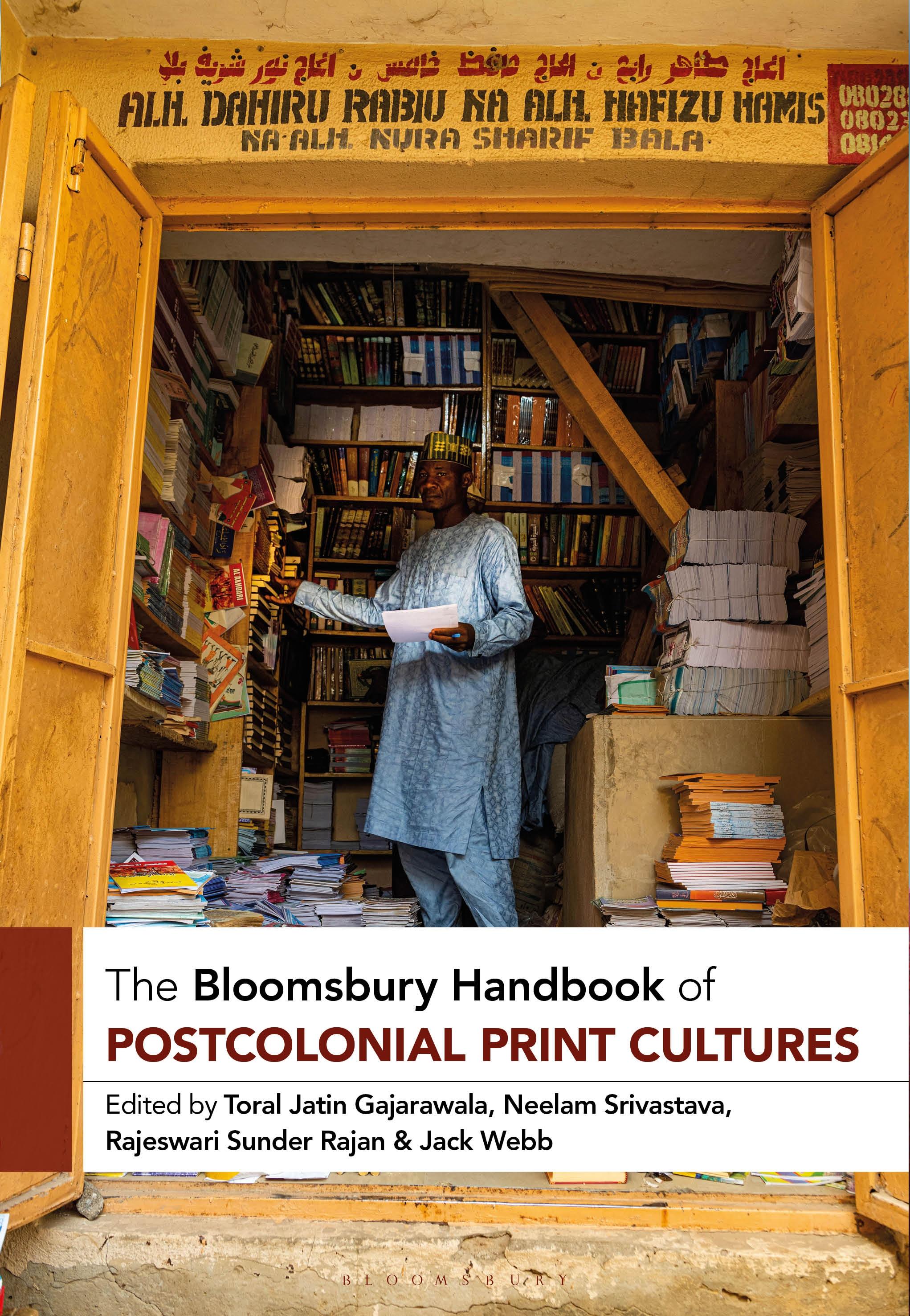
The texts that make up postcolonial print cultures are often found outside the archival catalogue, and in lesser-examined repositories such as personal collections, the streets, or appendages to established collections. This volume examines the published and unpublished writing, magazines, pamphlets, paratexts, advertisements, cartoons, radio, and street art that serve as the intellectual forces behind opposition to colonial orders, as meditations on the futures of embryonic nation states, and as visions of new forms of equality.
The print cultures examined here are necessarily anti-institutional; they serve as a counterpoint to the colonial archive and, relatedly, to more traditional genres and text formats coming out of large-scale publishers. This means that much of the primary material analyzed in this book has not been scrutinized before. Many of these print productions articulate collective liberation projects with origins in the grassroots. They include debates around the shape of the postcolonial nation and the new state formation that necessarily draw on a diverse and contentious public sphere of opinion. Their rhetoric ranges from the reformist to the revolutionary.
Reflecting the diversity, indeed the disorderliness, of postcolonial print cultures this book covers local, national, and transnational cultures from Asia, Africa, Europe and the Americas. Its wide-ranging essays offer a nuanced and, taken together, a definitive (though that is not to say comprehensive or systematic) study of a global phenomenon: postcolonial print cultures as a distinct literary field. The chapters recover the efforts of writers, readers and publishers to produce a postcolonialism 'from below', and thereby offer a range of fresh perspectives on the meaning and history of postcolonialism.
The print cultures examined here are necessarily anti-institutional; they serve as a counterpoint to the colonial archive and, relatedly, to more traditional genres and text formats coming out of large-scale publishers. This means that much of the primary material analyzed in this book has not been scrutinized before. Many of these print productions articulate collective liberation projects with origins in the grassroots. They include debates around the shape of the postcolonial nation and the new state formation that necessarily draw on a diverse and contentious public sphere of opinion. Their rhetoric ranges from the reformist to the revolutionary.
Reflecting the diversity, indeed the disorderliness, of postcolonial print cultures this book covers local, national, and transnational cultures from Asia, Africa, Europe and the Americas. Its wide-ranging essays offer a nuanced and, taken together, a definitive (though that is not to say comprehensive or systematic) study of a global phenomenon: postcolonial print cultures as a distinct literary field. The chapters recover the efforts of writers, readers and publishers to produce a postcolonialism 'from below', and thereby offer a range of fresh perspectives on the meaning and history of postcolonialism.
Paga facilmente con carta, Klarna, Apple Pay o Google Pay. Non sei soddisfatto? Hai sempre 14 giorni per il rimborso. Leggi di più nei nostri termini. Per qualsiasi domanda, scrivici a hello@memmo.org.
Memmo rende lo studio più facile, ovunque tu sia nel mondo. Qui trovi i tuoi libri di testo e strumenti di studio intelligenti, tutto in un unico posto: riassunti, quiz, podcast e flashcard. E poi c'è Ted, il tuo compagno di studio che risponde a ogni tua domanda. Oltre 50.000 studenti studiano già qui: è stato creato per aiutarti a imparare più velocemente e a stressarti meno.