
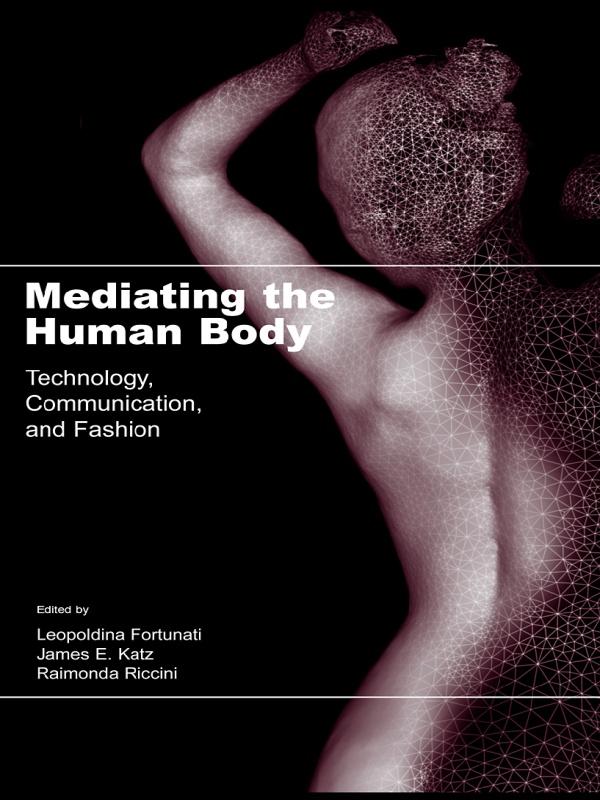
The ever-increasing integration of technology and the human body is attracting attention from religious, business, and political leaders around the world, and the topic promises to be a significant social issue in the 21st century. In Mediating the Human Body: Technology, Communication, and Fashion, editors Leopoldina Fortunati, James E. Katz, and Raimonda Riccini bring together a thoughtful group of leading international scholars and analysts to explore the effects of new technologies on human beings. They focus specifically on the intersection of new communication technologies and the body, and offer novel insights based on recent theoretical progress and current research on new interpersonal technology.
Through literary analysis, historical comparisons, analytical reports, and speculative interpretations, the contributors to this volume seek to understand the experience of the body as it is mediated among competing forces and intellectual domains. Arising from The Human Body Between Technologies, Communication and Fashion symposium held in Milan, Italy, contributions cover a wide array of topics and offer varied perspectives on how communication technologies are assimilated into people's lives, bodies, and homes, and thus become part of individuals' self-images and social relationships. From this multidisciplinary, multi-national base, the volume illuminates the sense and dimension of this interpenetration between body and technology. In its broad scope, the topics range from the wellsprings of consciousness to the use of technology as a fashion statement.
Bringing together scholarship from a variety of disciplines, including communication, medicine, technology, and human-computer interaction, this distinctive anthology will provide new insights to scholars and advanced students exploring body-technology intersections and the attendant implications. Mediating the Human Body offers a unique contribution to future discussions, and will be relevant to continuing study and research in communication and technology, human-computer interaction, gender studies, social psychology, and design.
Paga facilmente con carta, Klarna, Apple Pay o Google Pay. Non sei soddisfatto? Hai sempre 14 giorni per il rimborso. Leggi di più nei nostri termini. Per qualsiasi domanda, scrivici a hello@memmo.org.
Memmo rende lo studio più facile, ovunque tu sia nel mondo. Qui trovi i tuoi libri di testo e strumenti di studio intelligenti, tutto in un unico posto: riassunti, quiz, podcast e flashcard. E poi c'è Ted, il tuo compagno di studio che risponde a ogni tua domanda. Oltre 50.000 studenti studiano già qui: è stato creato per aiutarti a imparare più velocemente e a stressarti meno.