
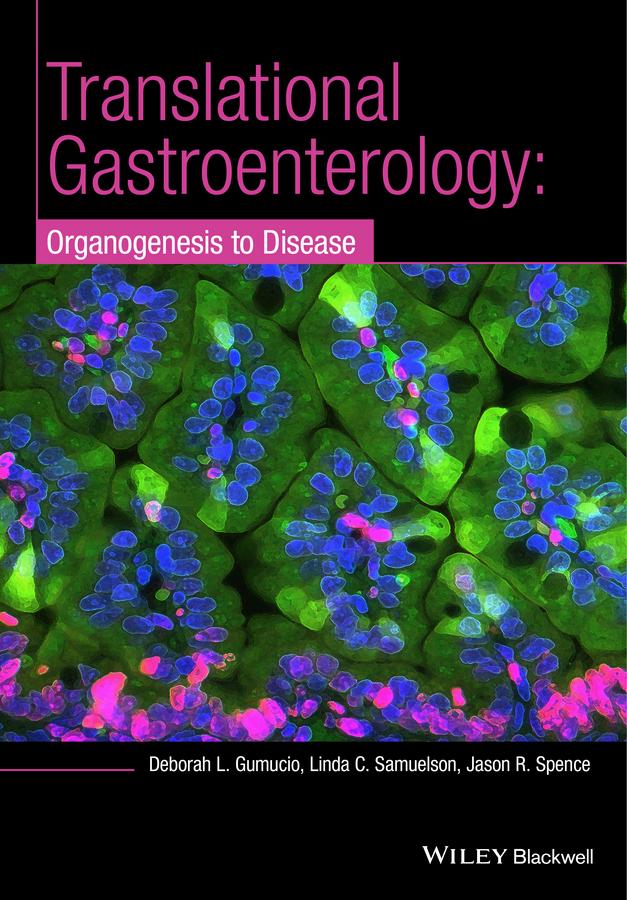
Translational Gastroenterology: Organogenesis to Disease bridges the gap between basic and clinical research by providing information on GI (gastrointestinal) organ development discovered through scientific inquiry, alongside clinical observations of acquired and congenital abnormalities. Paired chapters, written from basic science and clinical viewpoints, review the major biological pathways and molecules at work in organ ontogeny and disease. In addition to a comprehensive survey of GI organ development and pathologies, the book also highlights model organisms and new areas of research, with chapters devoted to recent advances in the field of GI stem cell biology, and the potential for tissue engineering of GI organs.
The topics covered provide a unique window onto current activity in the field of gastroenterology, fostering enhanced knowledge for developmental biologists as well as for clinical practitioners.
Notable features include the following:
• Basic science chapters review the molecular and cellular pathways of GI organ development alongside clinical chapters examining organ-based diseases, closing the gap between the bench and the clinic.
• Derivative organs – esophagus, stomach, pylorus, small intestine, colon, liver, and pancreas –as well as tissues such as serosa and enteric nervous system that are common to multiple GI organs.
• Chapters detailing the use of model organisms – Drosophila, sea urchin, zebrafish, C. elegans, Xenopus – for basic discovery studies are included.
• Chapters on GI stem cells and the potential for tissue engineering of the GI organs provide a view to the future of research and therapy in these organs.
Paga facilmente con carta, Klarna, Apple Pay o Google Pay. Non sei soddisfatto? Hai sempre 14 giorni per il rimborso. Leggi di più nei nostri termini. Per qualsiasi domanda, scrivici a hello@memmo.org.
Memmo rende lo studio più facile, ovunque tu sia nel mondo. Qui trovi i tuoi libri di testo e strumenti di studio intelligenti, tutto in un unico posto: riassunti, quiz, podcast e flashcard. E poi c'è Ted, il tuo compagno di studio che risponde a ogni tua domanda. Oltre 50.000 studenti studiano già qui: è stato creato per aiutarti a imparare più velocemente e a stressarti meno.