
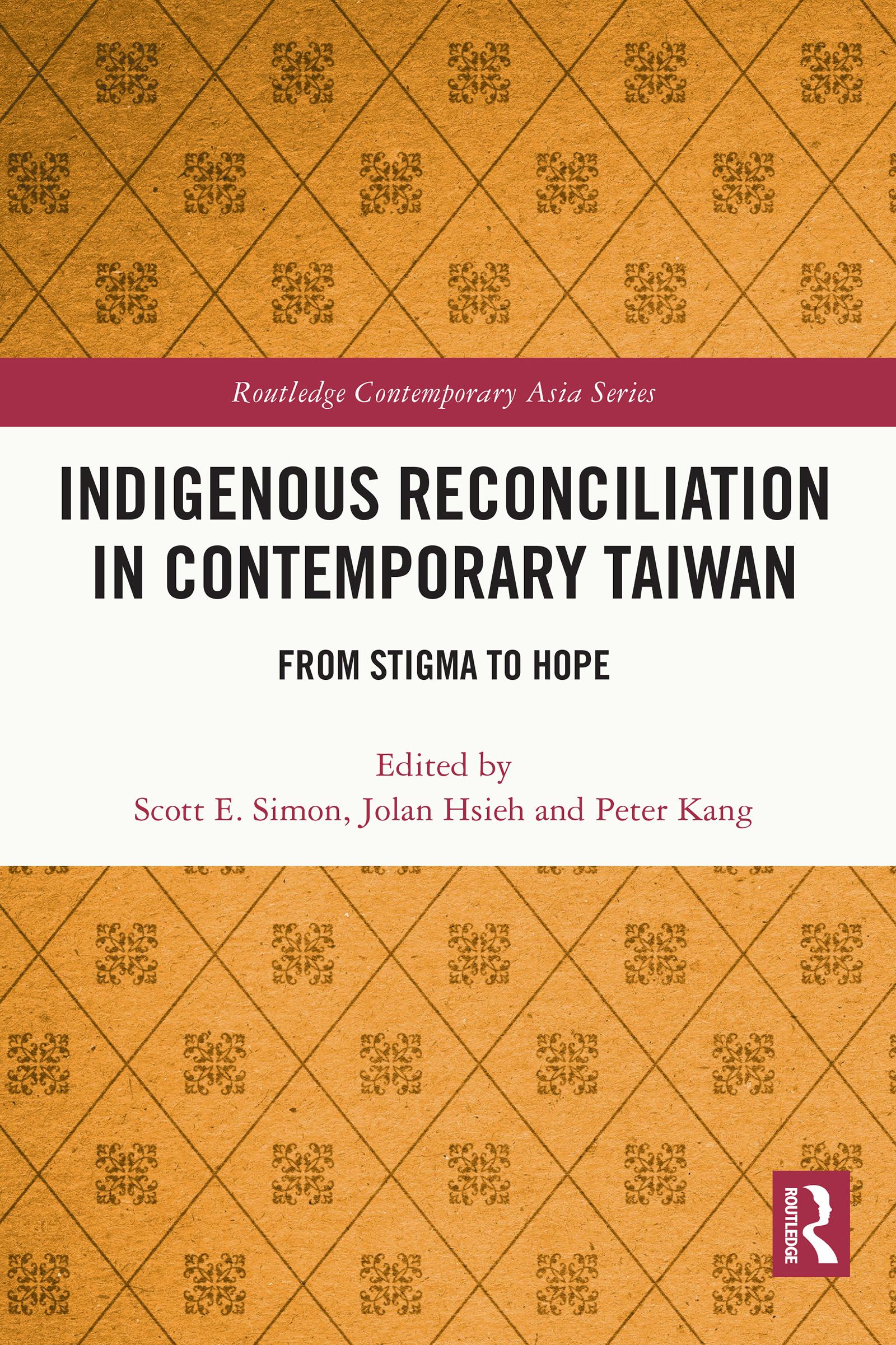
This book draws attention to the issues of Indigenous justice and reconciliation in Taiwan, exploring how Indigenous actors affirm their rights through explicitly political and legal strategies, but also through subtle forms of justice work in films, language instruction, museums, and handicraft production.
Taiwan’s Indigenous peoples have been colonized by successive external regimes, mobilized into war for Imperial Japan, stigmatized as primitive “mountain compatriots” in need of modernization, and instrumentalized as proof of Taiwan’s unique identity vis-à-vis China. Taiwan’s government now encapsulates them in democratic institutions of indigeneity. This volume emphasizes that there is new hope for real justice in an era in which states and Indigenous peoples seek meaningful forms of reconciliation at all levels and arenas of social life. The chapters, written by leading Indigenous, Taiwanese, and international scholars in their respective fields, examine concrete situations in which Indigenous peoples seek justice and decolonization from the perspectives of territory and sovereignty, social work and justice.
Illustrating that there is new hope for real justice in an era in which states and Indigenous peoples seek meaningful forms of reconciliation, this book is an invaluable resource for students and scholars of Taiwan Studies, Indigenous Studies, and Social Justice Studies.
Paga facilmente con carta, Klarna, Apple Pay o Google Pay. Non sei soddisfatto? Hai sempre 14 giorni per il rimborso. Leggi di più nei nostri termini. Per qualsiasi domanda, scrivici a hello@memmo.org.
Memmo rende lo studio più facile, ovunque tu sia nel mondo. Qui trovi i tuoi libri di testo e strumenti di studio intelligenti, tutto in un unico posto: riassunti, quiz, podcast e flashcard. E poi c'è Ted, il tuo compagno di studio che risponde a ogni tua domanda. Oltre 50.000 studenti studiano già qui: è stato creato per aiutarti a imparare più velocemente e a stressarti meno.