
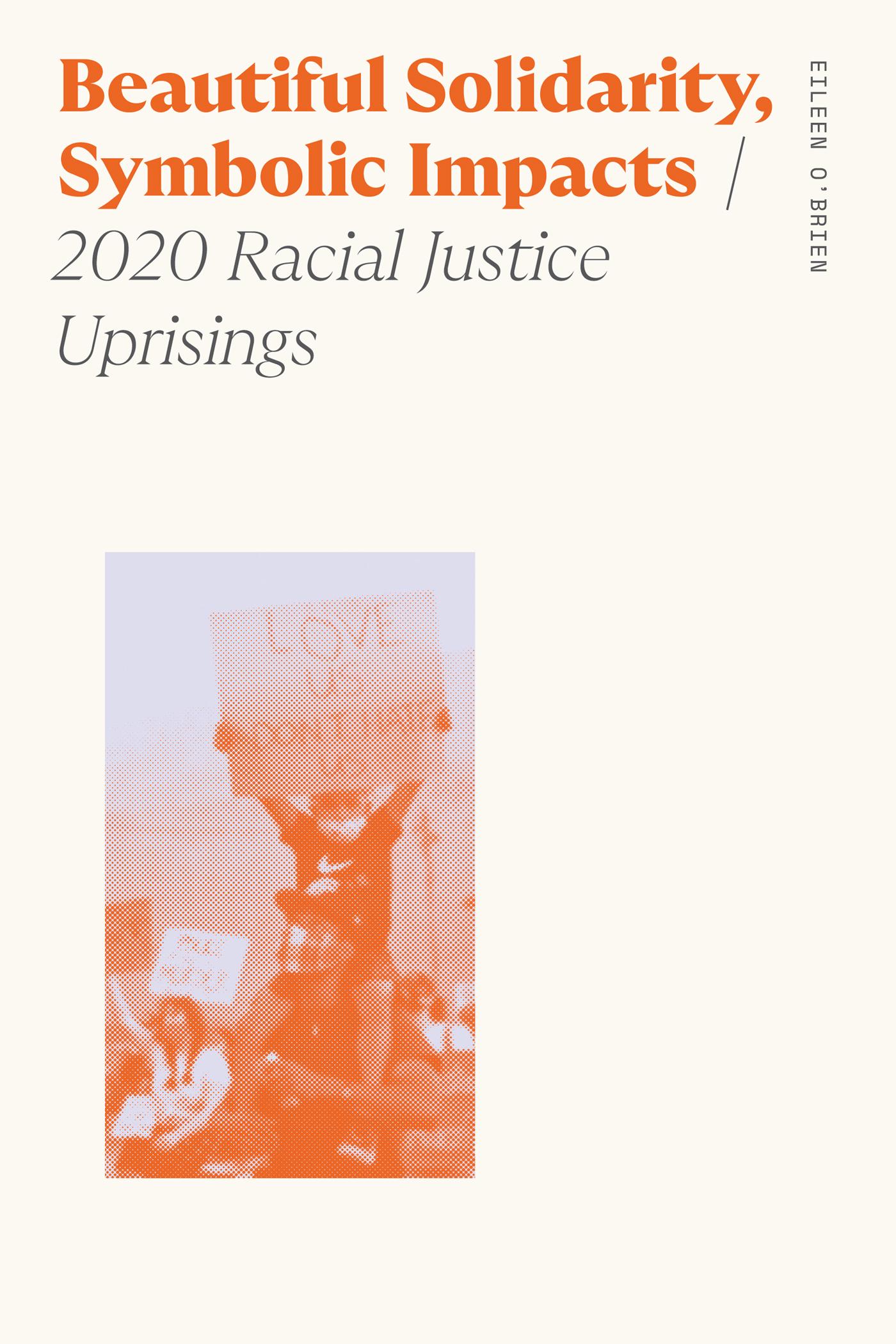
For activists working for racial justice for decades, the year 2020 stood out from the rest. More people seemed to care about racism than ever before. Due to this unprecedented surge, was anything more accomplished than in prior efforts?
Through interviews with uprising participants (a mix of first-time protesters and seasoned veterans; from both large cities and smaller towns), participant observation from three U.S. cities, and secondary data sources on U.S. and global 2020 protest actions, Eileen O’Brien documents what exactly was different about 2020 from a boots-on-the-ground vantage point.
Participants in the uprising drew a sense of meaning being part of something larger than themselves and were able to grieve racist violence collectively during a lockdown. They also created beautiful protest art out of plywood made necessary by white supremacist counter-protesters’ destruction of local businesses. They toppled Confederate monuments and felt that sentences like Derek Chauvin’s murder conviction or the three killers of Ahmaud Arbery on federal hate crime charges were rare victories only made possible through their activism. Later, many went back to business as usual after 2020, broader societal antiracist changes proved elusive, and backlash was swift. Yet, cross-racial interest convergence occurred for a brief antiracist moment, and “the struggle itself was redemptive.”
Paga facilmente con carta, Klarna, Apple Pay o Google Pay. Non sei soddisfatto? Hai sempre 14 giorni per il rimborso. Leggi di più nei nostri termini. Per qualsiasi domanda, scrivici a hello@memmo.org.
Memmo rende lo studio più facile, ovunque tu sia nel mondo. Qui trovi i tuoi libri di testo e strumenti di studio intelligenti, tutto in un unico posto: riassunti, quiz, podcast e flashcard. E poi c'è Ted, il tuo compagno di studio che risponde a ogni tua domanda. Oltre 50.000 studenti studiano già qui: è stato creato per aiutarti a imparare più velocemente e a stressarti meno.