
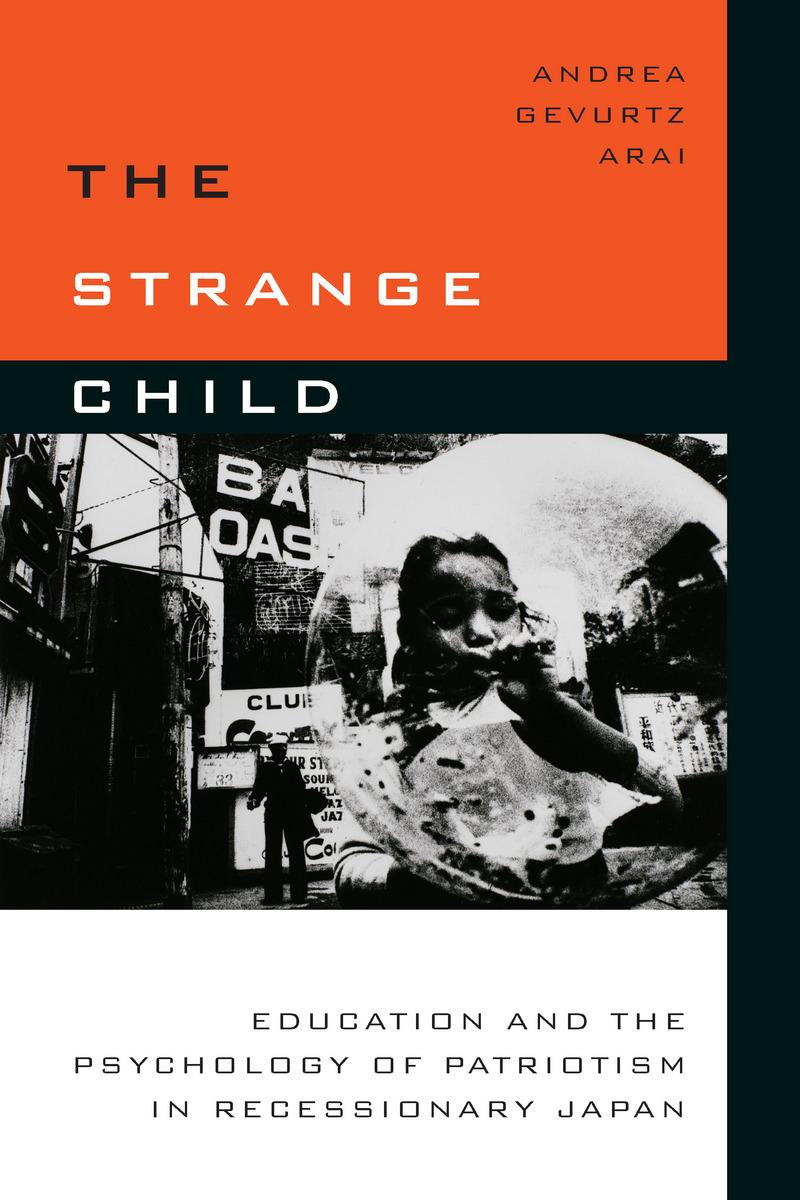
The Strange Child examines how the Japanese financial crisis of the 1990s gave rise to "the child problem," a powerful discourse of social anxiety that refocused concerns about precarious economic futures and shifting ideologies of national identity onto the young.
Andrea Gevurtz Arai's ethnography details the different forms of social and cultural dislocation that erupted in Japan starting in the late 1990s. Arai reveals the effects of shifting educational practices; increased privatization of social services; recessionary vocabulary of self-development and independence; and the neoliberalization of patriotism. Arai argues that the child problem and the social unease out of which it emerged provided a rationale for reimagining governance in education, liberalizing the job market, and a new role for psychology in the overturning of national-cultural ideologies. The Strange Child uncovers the state of nationalism in contemporary Japan, the politics of distraction around the child, and the altered life conditions of—and alternatives created by—the recessionary generation.
Paga facilmente con carta, Klarna, Apple Pay o Google Pay. Non sei soddisfatto? Hai sempre 14 giorni per il rimborso. Leggi di più nei nostri termini. Per qualsiasi domanda, scrivici a hello@memmo.org.
Memmo rende lo studio più facile, ovunque tu sia nel mondo. Qui trovi i tuoi libri di testo e strumenti di studio intelligenti, tutto in un unico posto: riassunti, quiz, podcast e flashcard. E poi c'è Ted, il tuo compagno di studio che risponde a ogni tua domanda. Oltre 50.000 studenti studiano già qui: è stato creato per aiutarti a imparare più velocemente e a stressarti meno.