
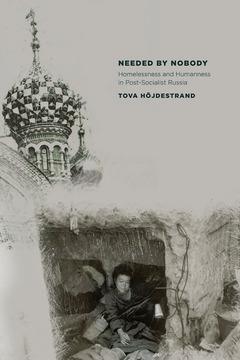
Homelessness became a conspicuous facet of Russian cityscapes only in the 1990s, when the Soviet criminalization of vagrancy and similar offenses was abolished. In spite of the host of social and economic problems confronting Russia in the demise of Soviet power, the social dislocation endured by increasing numbers of people went largely unrecognized by the state. Being homeless carries a special burden in Russia, where a permanent address is the precondition for all civil rights and social benefits and where homelessness is often regarded as a result of laziness and drinking, rather than external factors.
In Needed by Nobody, the anthropologist Tova Höjdestrand offers a nuanced portrait of homelessness in St. Petersburg. Based on ethnographic work at railway stations, soup kitchens, and other places where the homeless gather, Höjdestrand describes the material and mental world of this marginalized population. They are, she observes, "not needed" in two senses. The state considers them, in effect, as noncitizens. At the same time they stand outside the traditionally intimate social networks that are the real safety net of life in postsocialist Russia. As a result, they are deprived of the prerequisites for dealing with others in ways that they themselves value as "decent" and "human."
Höjdestrand investigates processes of social exclusion as well as the remaining "world of waste": things, tasks, and places that are wanted by nobody else and on which "human leftovers" are forced to survive. In this bleak context, Höjdestrand takes up the intimate worlds of the homeless—their social relationships, dirt and cleanliness, and physical appearance. Her interviews with homeless people show that the indigent have a very good idea of what others think of them and that they are liable to reproduce the stigma that is attached to them even as they attempt to negotiate it. This unique and often moving portrait of life on the margins of society in the new Russia ultimately reveals how human dignity may be retained in the absence of its very preconditions.
Paga facilmente con carta, Klarna, Apple Pay o Google Pay. Non sei soddisfatto? Hai sempre 14 giorni per il rimborso. Leggi di più nei nostri termini. Per qualsiasi domanda, scrivici a hello@memmo.org.
Memmo rende lo studio più facile, ovunque tu sia nel mondo. Qui trovi i tuoi libri di testo e strumenti di studio intelligenti, tutto in un unico posto: riassunti, quiz, podcast e flashcard. E poi c'è Ted, il tuo compagno di studio che risponde a ogni tua domanda. Oltre 50.000 studenti studiano già qui: è stato creato per aiutarti a imparare più velocemente e a stressarti meno.