
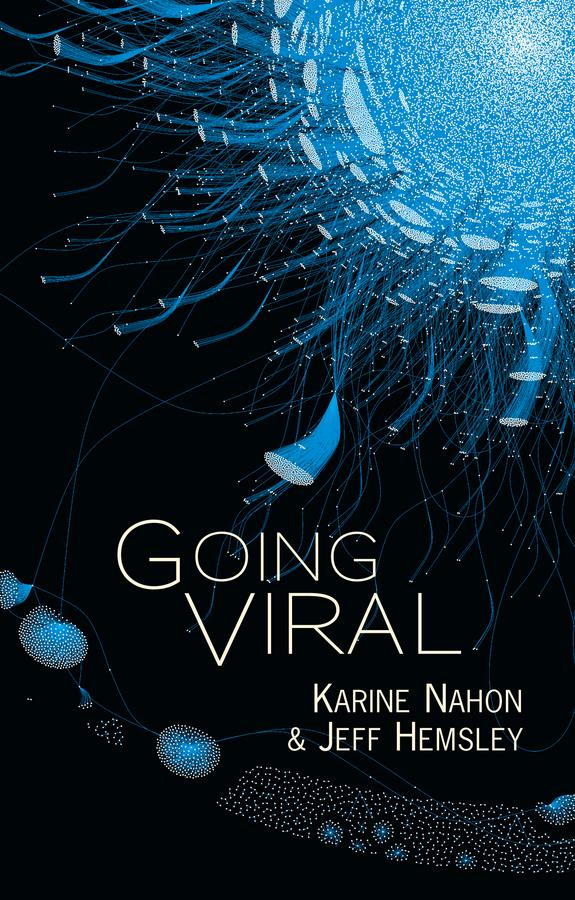
We live in a world where a tweet can be instantly retweeted and read by millions around the world in minutes, where a video forwarded to friends can destroy a political career in hours, and where an unknown man or woman can become an international celebrity overnight. Virality: individuals create it, governments fear it, companies would die for it.
So what is virality and how does it work? Why does one particular video get millions of views while hundreds of thousands of others get only a handful? In Going Viral, Nahon and Hemsley uncover the factors that make things go viral online. They analyze the characteristics of networks that shape virality, including the crucial role of gatekeepers who control the flow of information and connect networks to one another. They also explore the role of human attention, showing how phenomena like word of mouth, bandwagon effects, homophily and interest networks help to explain the patterns of individual behavior that make viral events.
Drawing on a wide range of examples, from the Joseph Kony video to the tweet that spread the news that Osama Bin Laden was dead, from the video of Homer Simpson voting in the US elections to the photo of a police officer pepper-spraying students at the University of California Davis, this path-breaking account of viral events will be essential reading for students, scholars, politicians, policymakers, executives, artists, musicians and anyone who wants to understand how our world today is being shaped by the flow of information online.
So what is virality and how does it work? Why does one particular video get millions of views while hundreds of thousands of others get only a handful? In Going Viral, Nahon and Hemsley uncover the factors that make things go viral online. They analyze the characteristics of networks that shape virality, including the crucial role of gatekeepers who control the flow of information and connect networks to one another. They also explore the role of human attention, showing how phenomena like word of mouth, bandwagon effects, homophily and interest networks help to explain the patterns of individual behavior that make viral events.
Drawing on a wide range of examples, from the Joseph Kony video to the tweet that spread the news that Osama Bin Laden was dead, from the video of Homer Simpson voting in the US elections to the photo of a police officer pepper-spraying students at the University of California Davis, this path-breaking account of viral events will be essential reading for students, scholars, politicians, policymakers, executives, artists, musicians and anyone who wants to understand how our world today is being shaped by the flow of information online.
Paga facilmente con carta, Klarna, Apple Pay o Google Pay. Non sei soddisfatto? Hai sempre 14 giorni per il rimborso. Leggi di più nei nostri termini. Per qualsiasi domanda, scrivici a hello@memmo.org.
Memmo rende lo studio più facile, ovunque tu sia nel mondo. Qui trovi i tuoi libri di testo e strumenti di studio intelligenti, tutto in un unico posto: riassunti, quiz, podcast e flashcard. E poi c'è Ted, il tuo compagno di studio che risponde a ogni tua domanda. Oltre 50.000 studenti studiano già qui: è stato creato per aiutarti a imparare più velocemente e a stressarti meno.
Potrebbe interessarti anche
Acquista il libro0