
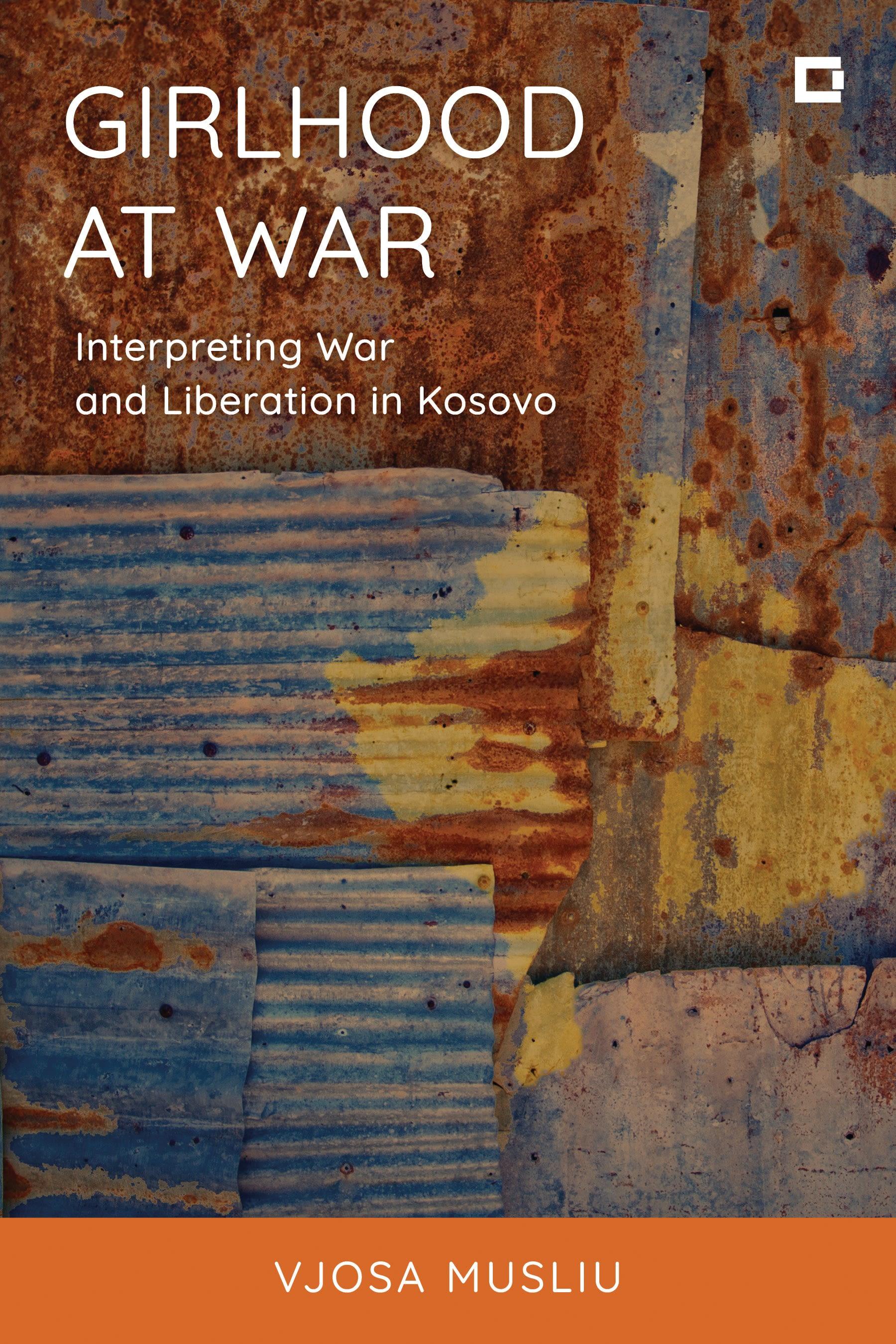
This book tells the true story of a young girl growing up during the Kosovo war and its immediate aftermath following Kosovo's liberation by NATO troops in 1999. Through her embodied experiences, the book exposes the tangible and everyday acts and events of the war, providing brutal insight into the impact of war and the politics of subjugation.
At the outset of the book (in 1998), Vjosa's view of the world, as a young child, is organized in clear dichotomies: the good Albanians and the evil Serbs; the brutal Serbian military shelling Albanian civilians and the angelic NATO airplanes bombing Serbian military sites. This Manichean worldview starts to unravel after Vjosa and her family are chased away from their home by the Serbian military and moved to the suburbs. There, surrounded by mostly poor and uneducated fellow Albanians, she gradually discovers the layers of her family's socio-economic privileges. Though unequipped with the language to verbalize it, she is tormented by the idea that her family's comparatively higher socio-economic status is the reason why they are spared by the Serbian military.
When the war ends in 1999, and the NATO tanks fill the narrow streets of her hometown as Serbian military tanks leave, Vjosa believes she received her own 'happily ever after'. She celebrates her thirteenth birthday happily wearing a US military uniform, holding an unbearably heavy unloaded gun as she becomes the favorite interpreter of the American NATO troops. She spends several months after the war occasionally translating between angry Albanians who now seek revenge against Serbs and NATO troops who insist on not picking sides; showcasing the impossibility of (re)building Kosovo with “both-sides-ism” becoming the modus operandi of the international intervening structures.
At the outset of the book (in 1998), Vjosa's view of the world, as a young child, is organized in clear dichotomies: the good Albanians and the evil Serbs; the brutal Serbian military shelling Albanian civilians and the angelic NATO airplanes bombing Serbian military sites. This Manichean worldview starts to unravel after Vjosa and her family are chased away from their home by the Serbian military and moved to the suburbs. There, surrounded by mostly poor and uneducated fellow Albanians, she gradually discovers the layers of her family's socio-economic privileges. Though unequipped with the language to verbalize it, she is tormented by the idea that her family's comparatively higher socio-economic status is the reason why they are spared by the Serbian military.
When the war ends in 1999, and the NATO tanks fill the narrow streets of her hometown as Serbian military tanks leave, Vjosa believes she received her own 'happily ever after'. She celebrates her thirteenth birthday happily wearing a US military uniform, holding an unbearably heavy unloaded gun as she becomes the favorite interpreter of the American NATO troops. She spends several months after the war occasionally translating between angry Albanians who now seek revenge against Serbs and NATO troops who insist on not picking sides; showcasing the impossibility of (re)building Kosovo with “both-sides-ism” becoming the modus operandi of the international intervening structures.
Payez facilement par carte, Klarna, Apple Pay ou Google Pay. Pas satisfait ? Vous avez toujours une garantie de remboursement de 14 jours. En savoir plus dans nos conditions. Si vous avez des questions, envoyez-nous un e-mail à hello@memmo.org.
Memmo facilite tes études, où que tu sois dans le monde. On rassemble tes manuels de cours et des outils d'étude intelligents au même endroit : résumés, quiz, podcasts et flashcards. Et il y a Ted, ton compagnon d'étude qui répond à toutes tes questions. Plus de 50 000 étudiants étudient déjà ici – conçu pour t'aider à apprendre plus vite et à moins stresser.