
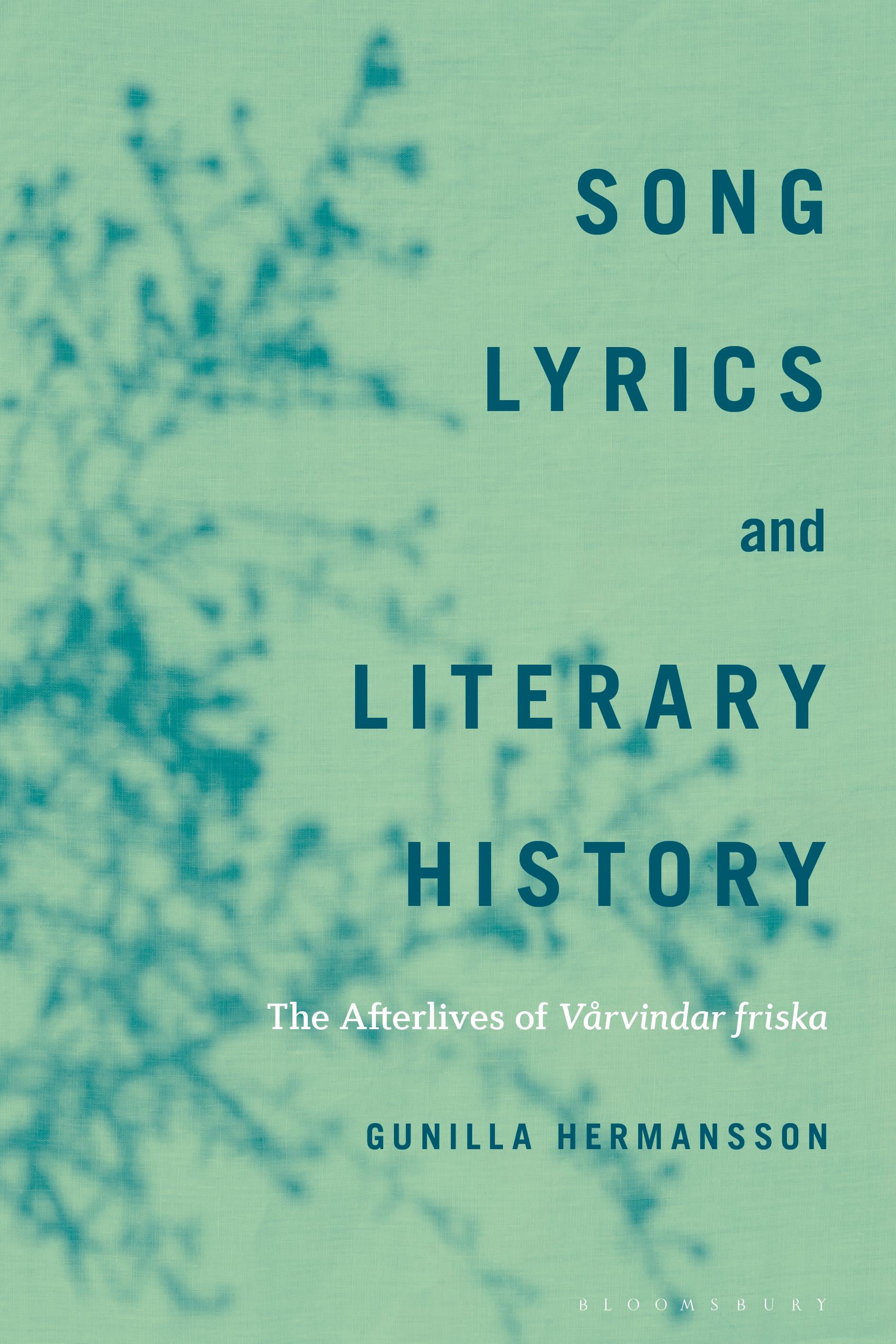
Paving new paths for the study of the history of literature, this study explores the intricate networks of one single poem across two centuries – the 'Vårvindar friska', a poem meant to be sung.
The Swedish song 'Vårvindar friska' (Fresh Spring Breezes) started its public life in 1828 between the covers of a book, as a poem written to a traditional melody. Since then, it has been reprinted, translated, performed, and used in the most surprising contexts, in different corners of the world. This particular case may be rather exceptional, but Gunilla Hermansson argues that the underlying dynamics are not – and yet they have been underexposed in studies of literary history. This exploration of 'Vårvindar friska' reveals the rich and intricate network of one text and uncovers new facets of how people have engaged with word art in their everyday lives in the modern era.
This network includes untraditional yet widespread uses of poetry and lyrics in lonely hearts columns and railway work – and seemingly strange bedfellows, such as a constellation of Nordic 'folk songs' and American plantation songs. The afterlives of this song evoke questions concerning class, gender, race, citizenship, technology, and modernity from new angles, as well as theoretical and methodological questions of circulation, textual instability, canonization, paradigmatic turns, uses and 'misuses'.
Song Lyrics and Literary History demonstrates how poetry is transformed when shared across time, borders, media and social and ideological divides. Being attentive to poetry-meant-to-be-sung, Hermansson argues, opens to a fuller and more representative picture of the cultural history of literature.
The Swedish song 'Vårvindar friska' (Fresh Spring Breezes) started its public life in 1828 between the covers of a book, as a poem written to a traditional melody. Since then, it has been reprinted, translated, performed, and used in the most surprising contexts, in different corners of the world. This particular case may be rather exceptional, but Gunilla Hermansson argues that the underlying dynamics are not – and yet they have been underexposed in studies of literary history. This exploration of 'Vårvindar friska' reveals the rich and intricate network of one text and uncovers new facets of how people have engaged with word art in their everyday lives in the modern era.
This network includes untraditional yet widespread uses of poetry and lyrics in lonely hearts columns and railway work – and seemingly strange bedfellows, such as a constellation of Nordic 'folk songs' and American plantation songs. The afterlives of this song evoke questions concerning class, gender, race, citizenship, technology, and modernity from new angles, as well as theoretical and methodological questions of circulation, textual instability, canonization, paradigmatic turns, uses and 'misuses'.
Song Lyrics and Literary History demonstrates how poetry is transformed when shared across time, borders, media and social and ideological divides. Being attentive to poetry-meant-to-be-sung, Hermansson argues, opens to a fuller and more representative picture of the cultural history of literature.
Pages: 312
Catégorie: Litteraturvetenskap & Teori
e-ISBN: 9798765127360
Poids d'expédition: 1.2 kg
Expédié sous: 1-2 jours
Payez facilement par carte, Klarna, Apple Pay ou Google Pay. Pas satisfait ? Vous avez toujours une garantie de remboursement de 14 jours. En savoir plus dans nos conditions. Si vous avez des questions, envoyez-nous un e-mail à hello@memmo.org.
Memmo facilite tes études, où que tu sois dans le monde. On rassemble tes manuels de cours et des outils d'étude intelligents au même endroit : résumés, quiz, podcasts et flashcards. Et il y a Ted, ton compagnon d'étude qui répond à toutes tes questions. Plus de 50 000 étudiants étudient déjà ici – conçu pour t'aider à apprendre plus vite et à moins stresser.