
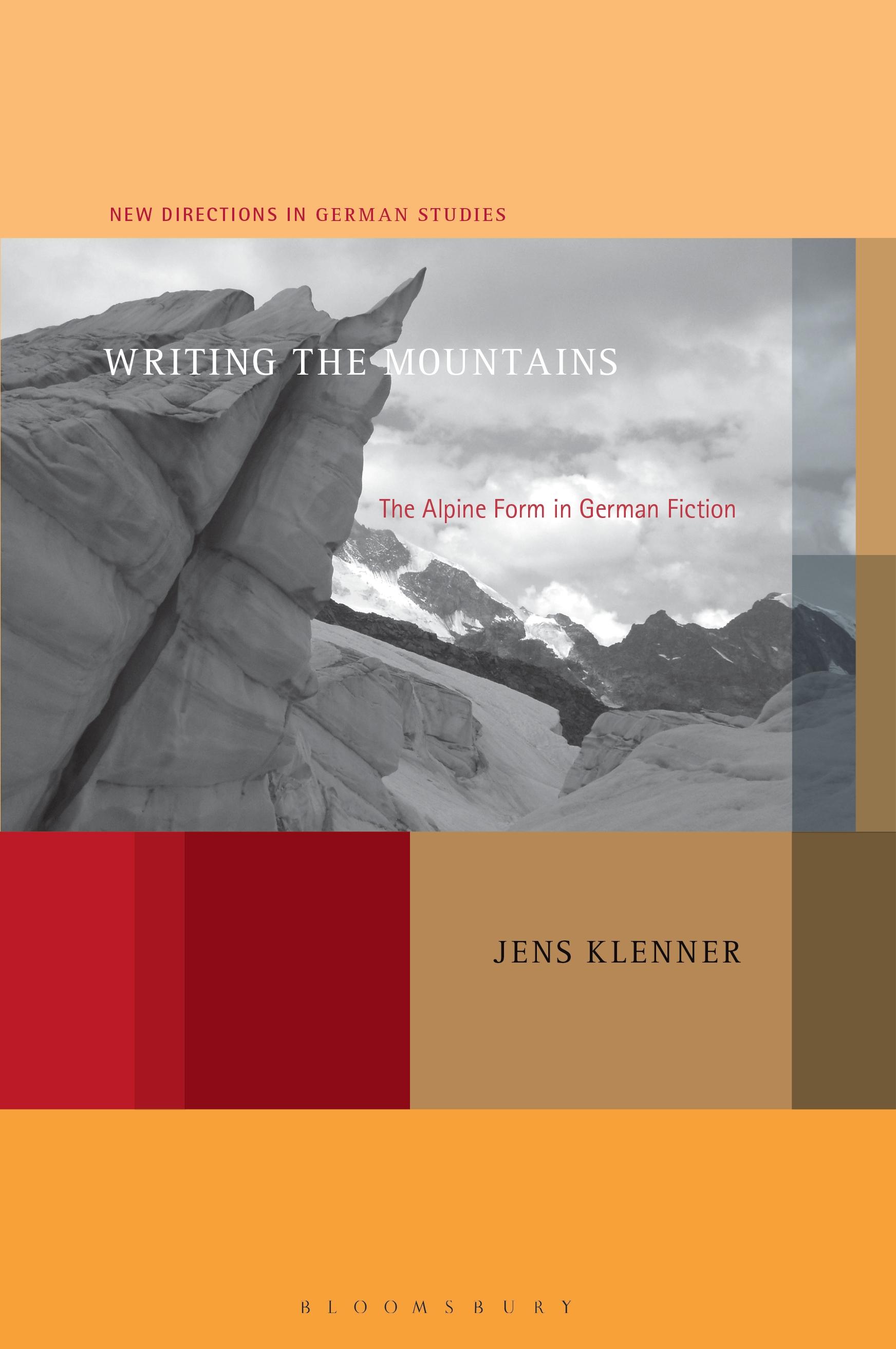
Writing the Mountains reconsiders the role of mountains in German language fiction from 1800 to the present and argues that in a range of texts, from E.T.A. Hoffmann's “Die Bergwerke zu Falun” (1819) to Elfriede Jelinek's Die Kinder der Toten (1995) and beyond, mountains serve as dynamic spaces of material change that generate aesthetic and narrative innovation. In contrast to dominant critical approaches to the Alpine landscape in literature, in which mountain ranges often features as passive settings, or which trace the influence of geographical and geological sciences in literary productions, this study argues for the dynamic role in literature of presumably rigid mineral structures.
In German-language fiction after 1800, the counter-intuitive topology of rocky mountain ranges and unfathomable subterranean depths of the Alpine imaginary functions as a space of exception which appears to reconfirm and radically challenge the foundations of Enlightenment thought. Writing the Mountains reads the mountain range as a rigid yet permeable liminal space. Within this zone, semiotic orders are unsettled, as is the division between organic and inorganic, between the human and the other.
In German-language fiction after 1800, the counter-intuitive topology of rocky mountain ranges and unfathomable subterranean depths of the Alpine imaginary functions as a space of exception which appears to reconfirm and radically challenge the foundations of Enlightenment thought. Writing the Mountains reads the mountain range as a rigid yet permeable liminal space. Within this zone, semiotic orders are unsettled, as is the division between organic and inorganic, between the human and the other.
Payez facilement par carte, Klarna, Apple Pay ou Google Pay. Pas satisfait ? Vous avez toujours une garantie de remboursement de 14 jours. En savoir plus dans nos conditions. Si vous avez des questions, envoyez-nous un e-mail à hello@memmo.org.
Memmo facilite tes études, où que tu sois dans le monde. On rassemble tes manuels de cours et des outils d'étude intelligents au même endroit : résumés, quiz, podcasts et flashcards. Et il y a Ted, ton compagnon d'étude qui répond à toutes tes questions. Plus de 50 000 étudiants étudient déjà ici – conçu pour t'aider à apprendre plus vite et à moins stresser.