
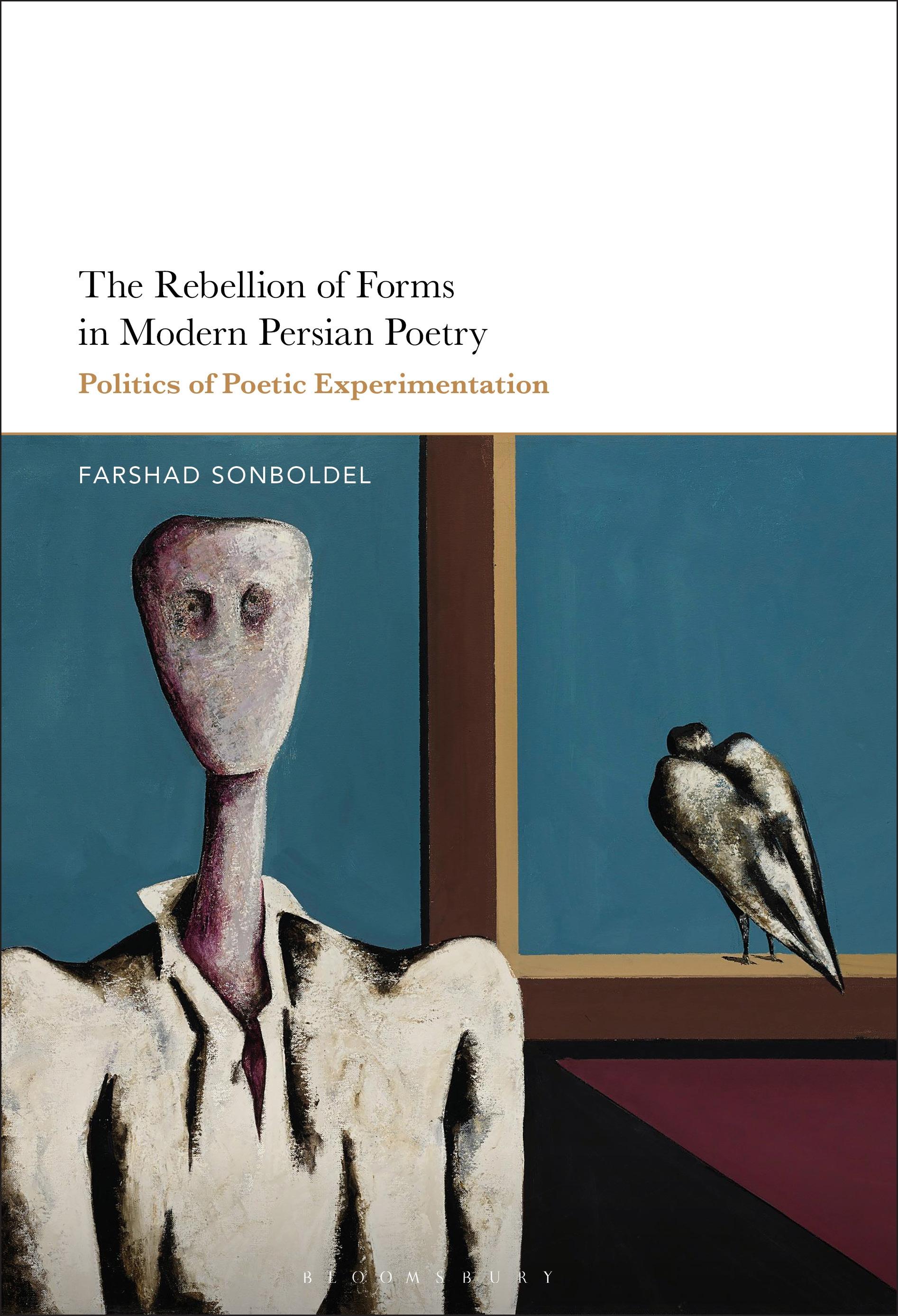
An analysis of the aesthetic, cultural and political aspects of alternative poetic movements and individual poets in three periods: the Constitutional Revolution (1900–1920), the post-constitutional era (1920–1940), and the ascendency of modernism (1940–1960).
Farshad Sonboldel shines new light on the history of modern Persian poetry by re-imagining the roles that the aesthetic experimentations of alternative poets played in different phases of the literary revolution in modern Persian poetry. Dominant narratives portray modern Persian poetry as a gradual, rational, and moderate change in the classical regime of aesthetics as well as a response to – and reflection of – cultural and socio-political changes within Iranian society. They also disregard the significance of radical experiments by alternative poets and undervalue the part they played in the initiation and progress of the so-called "literary revolution." These mainstream narratives minimize the socio-political engagement of literary works with the direct reflection of the social reality, and thus neglect the way many alternative poems struggle with socio-political issues through deconstructing the old and constructing new aesthetic systems.
Each chapter of The Rebellion of Forms in Modern Persian Poetry is centred around poems chosen for their potential to showcase notable experiments of pioneer movements and individuals in each given period. Examining the formal and thematic aspects of these poems, this book reformulates the story of modern Persian poetry and unravels the relationship between radical aesthetic changes in the practice of poetry and resistance against political and cultural domination in society.
Farshad Sonboldel shines new light on the history of modern Persian poetry by re-imagining the roles that the aesthetic experimentations of alternative poets played in different phases of the literary revolution in modern Persian poetry. Dominant narratives portray modern Persian poetry as a gradual, rational, and moderate change in the classical regime of aesthetics as well as a response to – and reflection of – cultural and socio-political changes within Iranian society. They also disregard the significance of radical experiments by alternative poets and undervalue the part they played in the initiation and progress of the so-called "literary revolution." These mainstream narratives minimize the socio-political engagement of literary works with the direct reflection of the social reality, and thus neglect the way many alternative poems struggle with socio-political issues through deconstructing the old and constructing new aesthetic systems.
Each chapter of The Rebellion of Forms in Modern Persian Poetry is centred around poems chosen for their potential to showcase notable experiments of pioneer movements and individuals in each given period. Examining the formal and thematic aspects of these poems, this book reformulates the story of modern Persian poetry and unravels the relationship between radical aesthetic changes in the practice of poetry and resistance against political and cultural domination in society.
Payez facilement par carte, Klarna, Apple Pay ou Google Pay. Pas satisfait ? Vous avez toujours une garantie de remboursement de 14 jours. En savoir plus dans nos conditions. Si vous avez des questions, envoyez-nous un e-mail à hello@memmo.org.
Memmo facilite tes études, où que tu sois dans le monde. On rassemble tes manuels de cours et des outils d'étude intelligents au même endroit : résumés, quiz, podcasts et flashcards. Et il y a Ted, ton compagnon d'étude qui répond à toutes tes questions. Plus de 50 000 étudiants étudient déjà ici – conçu pour t'aider à apprendre plus vite et à moins stresser.