
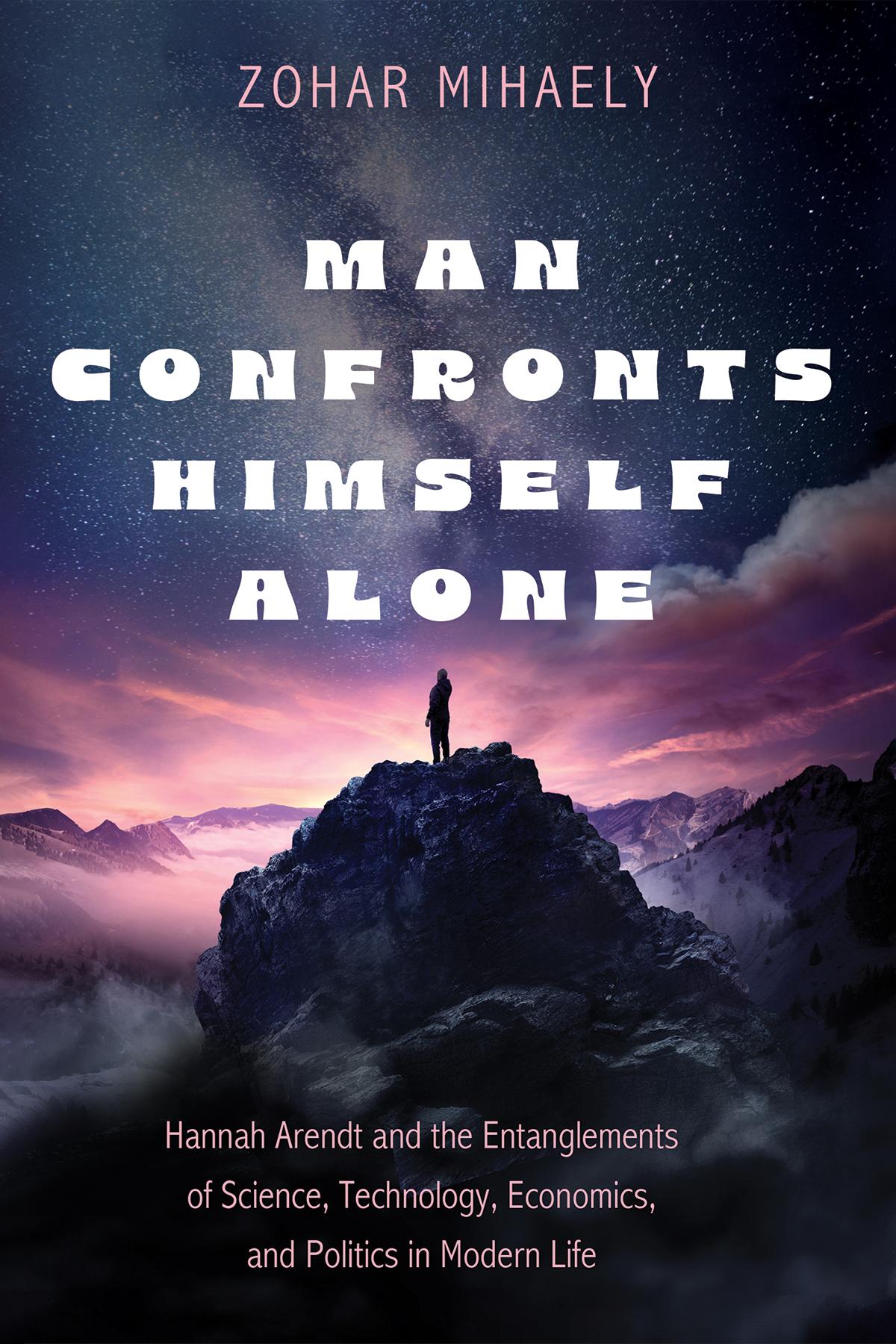
In 1957, the Russians launched the first satellite into space, marking the first time a man-made object broke through nature's limitations. In her iconic book The Human Condition, Hannah Arendt made the attempt to figure out the political implications of that seeming achievement. Her conclusion is that the astonishing scientific achievement of unprecedented control over terrestrial nature through the adoption of an outside-the-world "universal" perspective has shaped a prevailing mentality that sees the world, in which we have felt at home throughout history, as only optional. This has resulted in socioeconomic and political changes throughout modernity, ultimately reducing human ability to act politically. Many people today feel comfortable in a world shaped by science and technology. But Arendt warns us that there is hope for modern society if we can envision ways to make our active life worldly again. Mihaely's examination of Arendt's thoughts on science and politics stimulates the reader to rethink the authenticity of their freedom today.
Payez facilement par carte, Klarna, Apple Pay ou Google Pay. Pas satisfait ? Vous avez toujours une garantie de remboursement de 14 jours. En savoir plus dans nos conditions. Si vous avez des questions, envoyez-nous un e-mail à hello@memmo.org.
Memmo facilite tes études, où que tu sois dans le monde. On rassemble tes manuels de cours et des outils d'étude intelligents au même endroit : résumés, quiz, podcasts et flashcards. Et il y a Ted, ton compagnon d'étude qui répond à toutes tes questions. Plus de 50 000 étudiants étudient déjà ici – conçu pour t'aider à apprendre plus vite et à moins stresser.
Tu pourrais aussi aimer
Acheter le livre0