
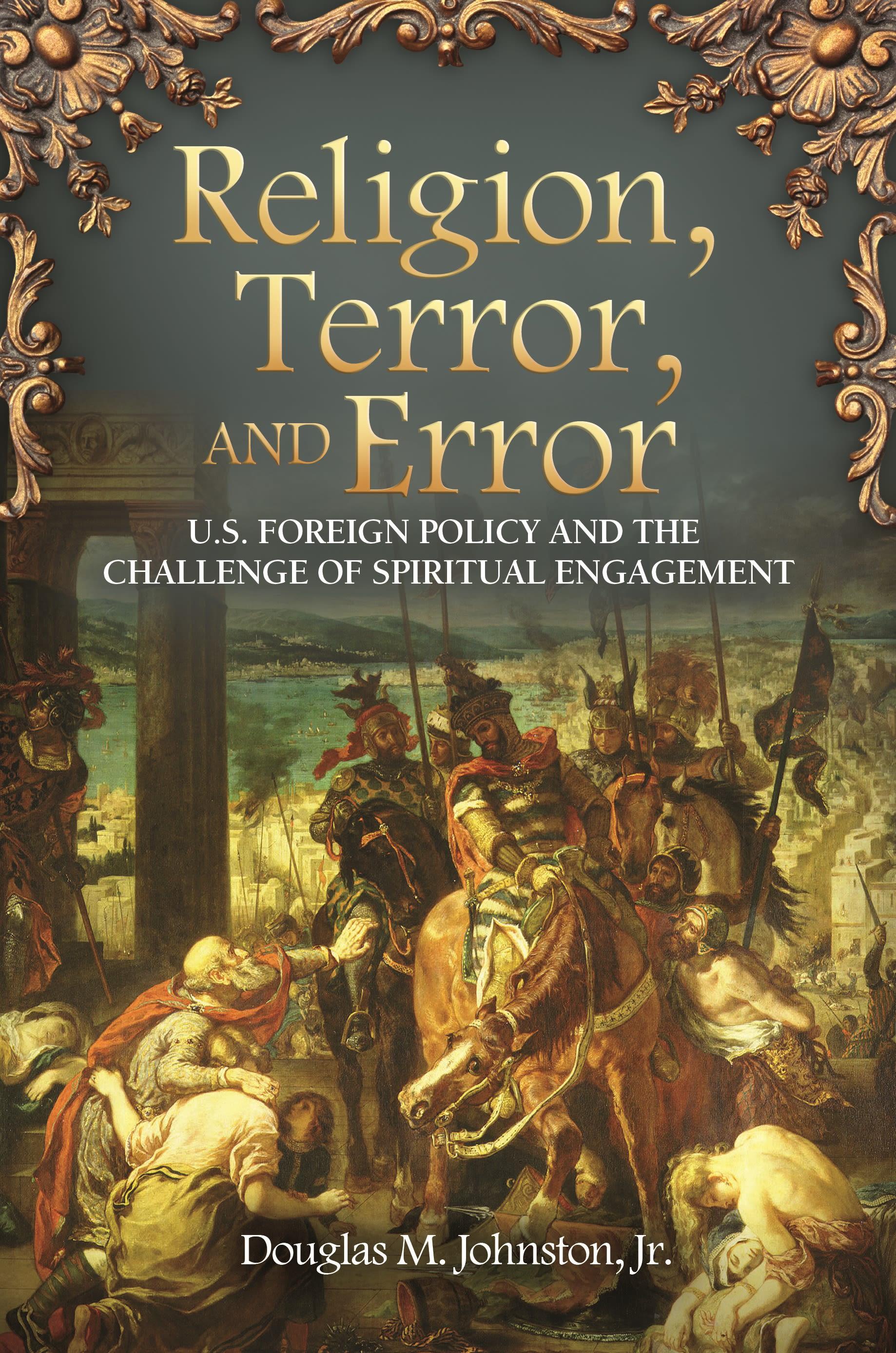
This book describes how the United States can integrate religious considerations into its foreign policy, moving towards a new leadership paradigm that effectively counters the challenge of Islamist extremism.
How should the United States deal with the jihadist challenge and other religious imperatives that permeate today's geopolitical landscape? Religion, Terror, and Error: U.S. Foreign Policy and the Challenge of Spiritual Engagement argues that what is required is a longer-term strategy of cultural engagement, backed by a deeper understanding of how others view the world and what is important to them. The means by which that can be accomplished are the subject of this book.
This work achieves three important goals. It shows how religious considerations can be incorporated into the practice of U.S. foreign policy; offers a successor to the rational-actor model of decision-making that has heretofore excluded "irrational" factors like religion; and suggests a new paradigm for U.S. leadership in anticipation of tomorrow's multipolar world. In describing how the United States should realign itself to deal more effectively with the causal factors that underlying religious extremism, this innovative treatise explains how existing capabilities can be redirected to respond to the challenge and identifies additional capabilities that will be needed to complete the task.
How should the United States deal with the jihadist challenge and other religious imperatives that permeate today's geopolitical landscape? Religion, Terror, and Error: U.S. Foreign Policy and the Challenge of Spiritual Engagement argues that what is required is a longer-term strategy of cultural engagement, backed by a deeper understanding of how others view the world and what is important to them. The means by which that can be accomplished are the subject of this book.
This work achieves three important goals. It shows how religious considerations can be incorporated into the practice of U.S. foreign policy; offers a successor to the rational-actor model of decision-making that has heretofore excluded "irrational" factors like religion; and suggests a new paradigm for U.S. leadership in anticipation of tomorrow's multipolar world. In describing how the United States should realign itself to deal more effectively with the causal factors that underlying religious extremism, this innovative treatise explains how existing capabilities can be redirected to respond to the challenge and identifies additional capabilities that will be needed to complete the task.
Payez facilement par carte, Klarna, Apple Pay ou Google Pay. Pas satisfait ? Vous avez toujours une garantie de remboursement de 14 jours. En savoir plus dans nos conditions. Si vous avez des questions, envoyez-nous un e-mail à hello@memmo.org.
Memmo facilite tes études, où que tu sois dans le monde. On rassemble tes manuels de cours et des outils d'étude intelligents au même endroit : résumés, quiz, podcasts et flashcards. Et il y a Ted, ton compagnon d'étude qui répond à toutes tes questions. Plus de 50 000 étudiants étudient déjà ici – conçu pour t'aider à apprendre plus vite et à moins stresser.