
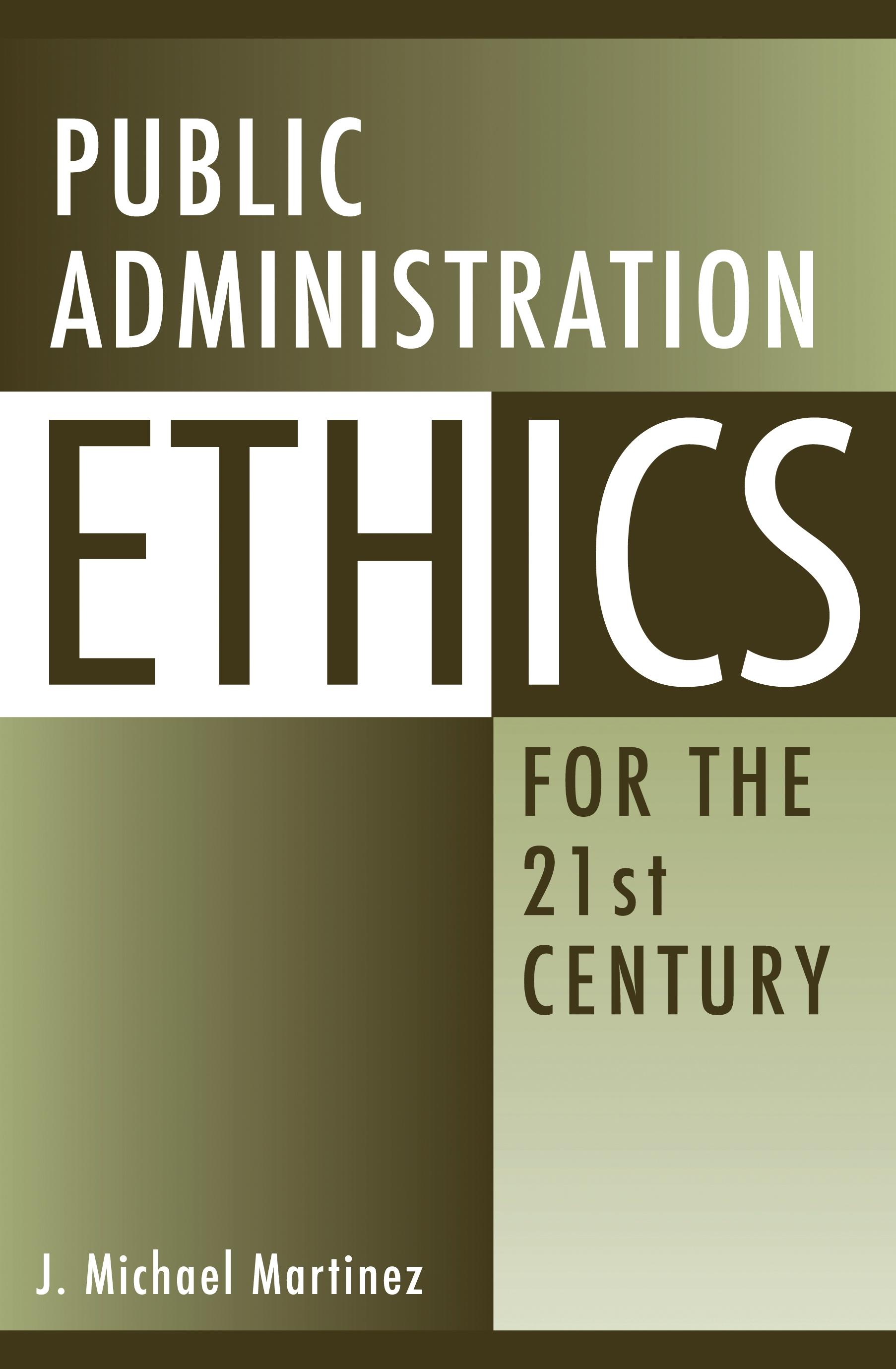
This volume establishes a foundation for a uniform code of professional ethics for public administrators in the United States.
Public Administration Ethics for the 21st Century lays the ethical foundations for a uniform professional code of ethics for public administrators, civil servants, and non-profit administrators in the US. Martinez synthesizes five disparate schools of ethical thought as to how public administrators can come to know the good and behave in ways that advance the values of citizenship, equity, and public interest within their respective organizations. Using case studies, he teaches American administrators how to combine the approaches of all five schools to evaluate and resolve complex ethical dilemmas within the constraints of the U.S. democratic values set.
Martinez enunciates the common ethical principles that guide public administrators in their practice within the specific ethical parameters and organizational cultures of a myriad entities at the federal, state, and local levels of government in the United States, as well as in non-profit organizations. Along the way, Martinez addresses a number of crucial issues, including personal gain, conflict of interest, transparency, democratic impartiality, hiring, hierarchical discipline, media relations, partisan pressure, appointments by elected officials, and whistle-blowing. The striking, high-profile case studies—Nathan Bedford Forrest, Adolph Eichmann, Lieutenant William Calley, and Mary Ann Wright—illustrate ethical dilemmas where, for better or worse, the individual was at odds with the organization.
Public Administration Ethics for the 21st Century lays the ethical foundations for a uniform professional code of ethics for public administrators, civil servants, and non-profit administrators in the US. Martinez synthesizes five disparate schools of ethical thought as to how public administrators can come to know the good and behave in ways that advance the values of citizenship, equity, and public interest within their respective organizations. Using case studies, he teaches American administrators how to combine the approaches of all five schools to evaluate and resolve complex ethical dilemmas within the constraints of the U.S. democratic values set.
Martinez enunciates the common ethical principles that guide public administrators in their practice within the specific ethical parameters and organizational cultures of a myriad entities at the federal, state, and local levels of government in the United States, as well as in non-profit organizations. Along the way, Martinez addresses a number of crucial issues, including personal gain, conflict of interest, transparency, democratic impartiality, hiring, hierarchical discipline, media relations, partisan pressure, appointments by elected officials, and whistle-blowing. The striking, high-profile case studies—Nathan Bedford Forrest, Adolph Eichmann, Lieutenant William Calley, and Mary Ann Wright—illustrate ethical dilemmas where, for better or worse, the individual was at odds with the organization.
Pages: 216
Catégorie: Statsvetenskap & Politik
e-ISBN: 9798216134039
Poids d'expédition: 1.2 kg
Expédié sous: 1-2 jours
Payez facilement par carte, Klarna, Apple Pay ou Google Pay. Pas satisfait ? Vous avez toujours une garantie de remboursement de 14 jours. En savoir plus dans nos conditions. Si vous avez des questions, envoyez-nous un e-mail à hello@memmo.org.
Memmo facilite tes études, où que tu sois dans le monde. On rassemble tes manuels de cours et des outils d'étude intelligents au même endroit : résumés, quiz, podcasts et flashcards. Et il y a Ted, ton compagnon d'étude qui répond à toutes tes questions. Plus de 50 000 étudiants étudient déjà ici – conçu pour t'aider à apprendre plus vite et à moins stresser.