
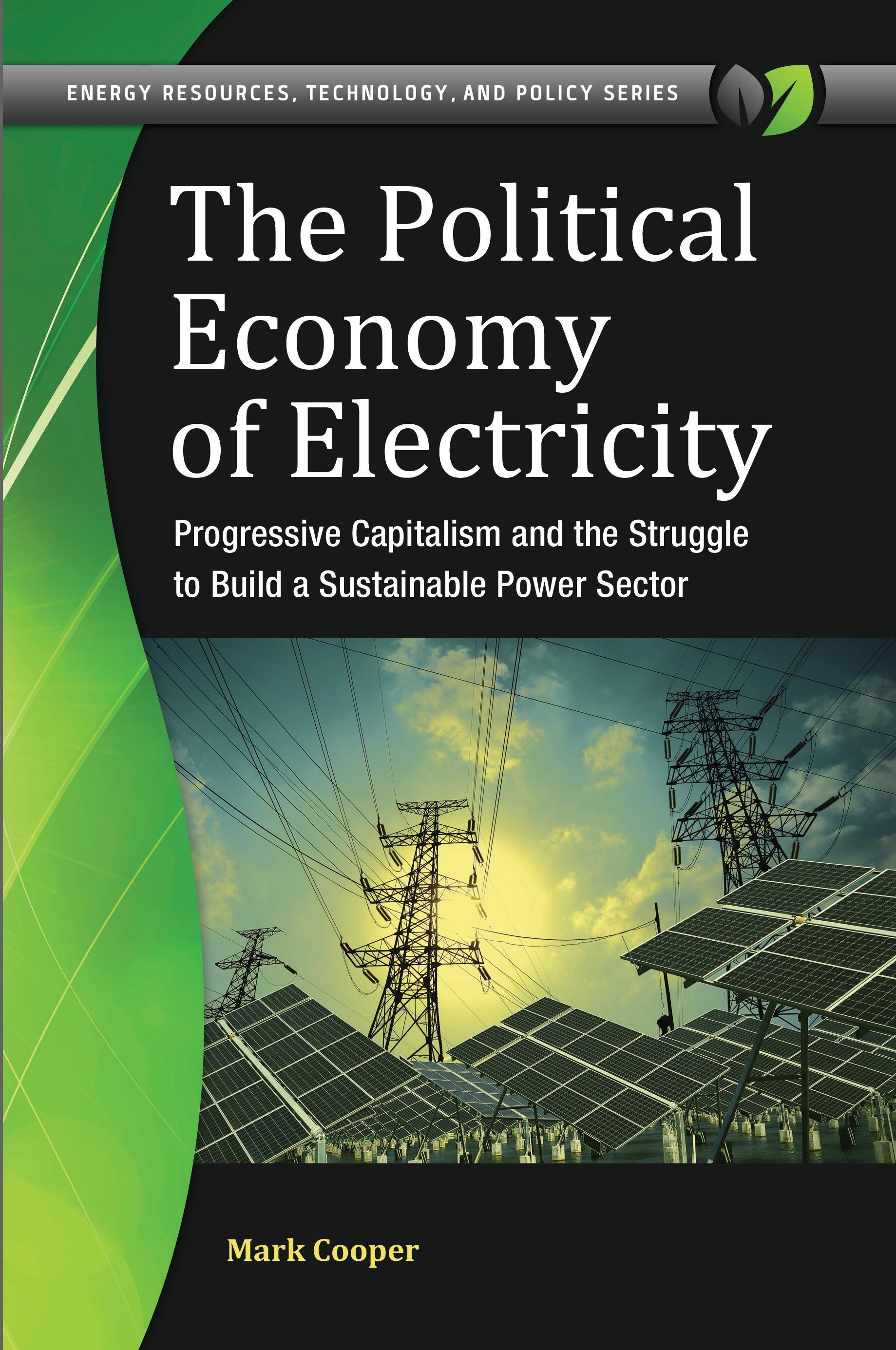
Providing critical insights that will interest readers ranging from economists to environmentalists, policymakers, and politicians, this book analyzes the economics and technology trends involved in the dilemma of decarbonization and addresses why aggressive policy is required in a capitalist political economy to create a sea change away from fossil fuels.
The environmental damage across the globe is a result of the success of capitalist industrialism—250 years of carbon pollution resulting from consumption of fossil fuels to drive the economy and the worldwide aspiration to ever-increasing levels of economic development. But capitalism has also produced the tools to solve the problems it has created in the form of a technological revolution in low-carbon renewables, distributed resources, and intelligent systems to integrate supply and demand. This book comprehensively examines the political economy of electricity and analyzes the challenge of transforming today's electricity sector to meet the dual goals of decarbonization and development expressed in the Paris Agreement.
Author Mark Cooper defines the dilemma of development and decarbonization as the great challenge facing the electricity industry and documents how the economic resources costs of a 100 percent-renewable portfolio has declined to the point that decarbonization can pay for itself, making the low-carbon renewable technologies that enable desired environmental and public-health benefits an easy sell. He identifies the substantial benefit of increasing use of information, communications, and advanced control technologies; shows how targeted innovation could speed the transition by a decade or two and lower the overall cost of the transition by as much as half; and explains why the flexible, multi-stakeholder approach of the Paris Agreement is the correct approach.
The environmental damage across the globe is a result of the success of capitalist industrialism—250 years of carbon pollution resulting from consumption of fossil fuels to drive the economy and the worldwide aspiration to ever-increasing levels of economic development. But capitalism has also produced the tools to solve the problems it has created in the form of a technological revolution in low-carbon renewables, distributed resources, and intelligent systems to integrate supply and demand. This book comprehensively examines the political economy of electricity and analyzes the challenge of transforming today's electricity sector to meet the dual goals of decarbonization and development expressed in the Paris Agreement.
Author Mark Cooper defines the dilemma of development and decarbonization as the great challenge facing the electricity industry and documents how the economic resources costs of a 100 percent-renewable portfolio has declined to the point that decarbonization can pay for itself, making the low-carbon renewable technologies that enable desired environmental and public-health benefits an easy sell. He identifies the substantial benefit of increasing use of information, communications, and advanced control technologies; shows how targeted innovation could speed the transition by a decade or two and lower the overall cost of the transition by as much as half; and explains why the flexible, multi-stakeholder approach of the Paris Agreement is the correct approach.
Pages: 472
Catégorie: Ekonomi & Utveckling
e-ISBN: 9798216129325
Poids d'expédition: 1.2 kg
Expédié sous: 1-2 jours
Payez facilement par carte, Klarna, Apple Pay ou Google Pay. Pas satisfait ? Vous avez toujours une garantie de remboursement de 14 jours. En savoir plus dans nos conditions. Si vous avez des questions, envoyez-nous un e-mail à hello@memmo.org.
Memmo facilite tes études, où que tu sois dans le monde. On rassemble tes manuels de cours et des outils d'étude intelligents au même endroit : résumés, quiz, podcasts et flashcards. Et il y a Ted, ton compagnon d'étude qui répond à toutes tes questions. Plus de 50 000 étudiants étudient déjà ici – conçu pour t'aider à apprendre plus vite et à moins stresser.