
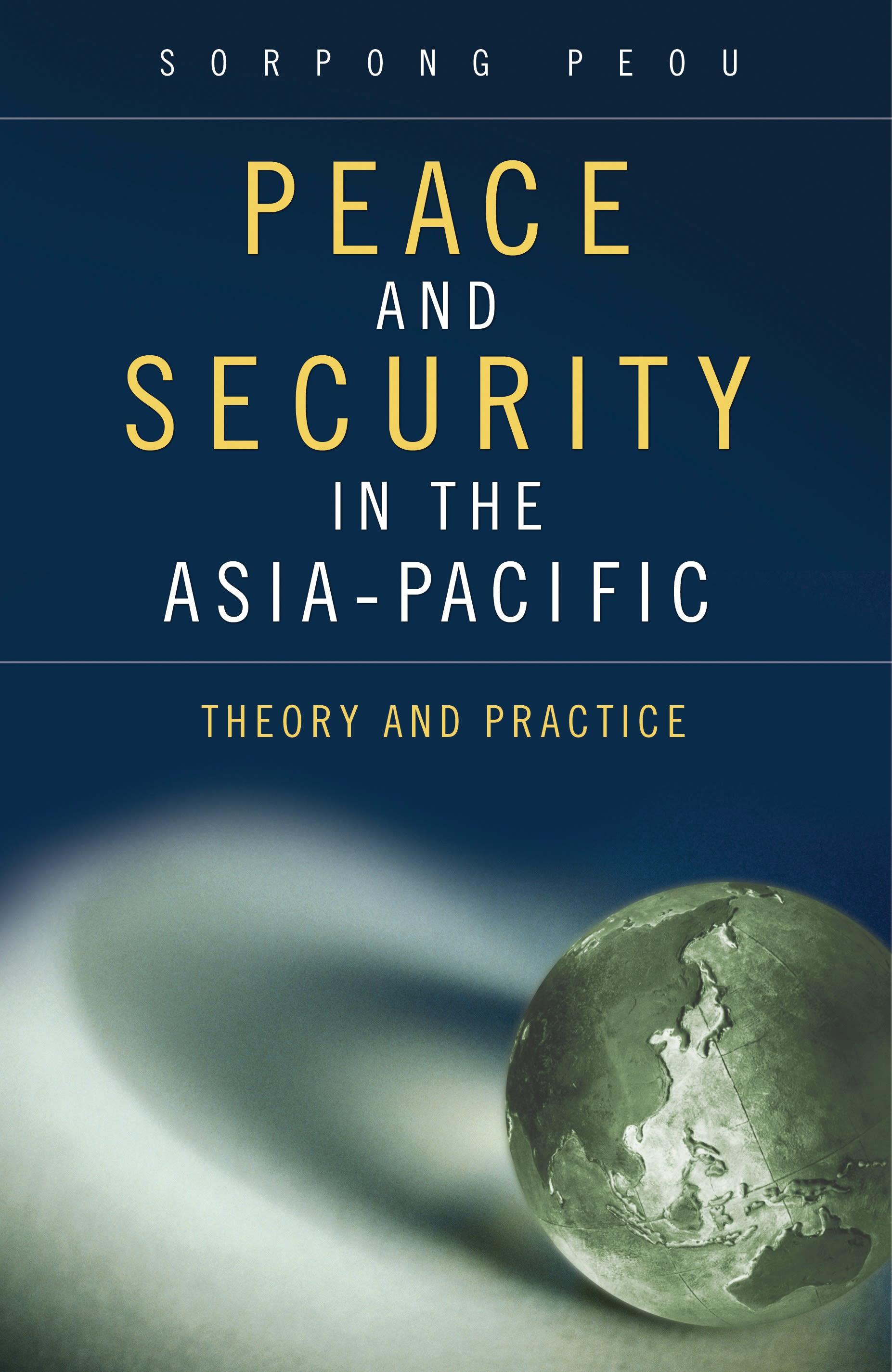
Demonstrating that none of the various perspectives under review has emerged as the clear winner in the struggle for theoretical hegemony in security studies, this book shows that eclectic perspectives, like democratic realist institutionalism, can better explain peace and security in the Asian Pacific.
The Asian Pacific has emerged as one of the most important regions in the world, causing scholars to pay increased attention to the various challenges, old and new, to peace and security there. Peace and Security in the Asia-Pacific: Theory and Practice is a comprehensive, critical review of the established theoretical perspectives relevant to contemporary peace and security studies in the light of recent experiences.
Illuminating ongoing debates in the field, the book covers some 20 theoretical perspectives on peace and security in the Asian Pacific, including realist, liberal, socialist, peace and human security, constructivist, feminist, and nontraditional security studies. The first section of the book discusses perspectives in realist security studies, the second part covers perspectives critical of realism. The author's goal is to assess whether any of the perspectives found in nonrealist security studies are capable of undermining realism. His conclusion is that each theoretical perspective has its strengths and weaknesses, leaving eclecticism as the best way to understand the region's dynamics.
The Asian Pacific has emerged as one of the most important regions in the world, causing scholars to pay increased attention to the various challenges, old and new, to peace and security there. Peace and Security in the Asia-Pacific: Theory and Practice is a comprehensive, critical review of the established theoretical perspectives relevant to contemporary peace and security studies in the light of recent experiences.
Illuminating ongoing debates in the field, the book covers some 20 theoretical perspectives on peace and security in the Asian Pacific, including realist, liberal, socialist, peace and human security, constructivist, feminist, and nontraditional security studies. The first section of the book discusses perspectives in realist security studies, the second part covers perspectives critical of realism. The author's goal is to assess whether any of the perspectives found in nonrealist security studies are capable of undermining realism. His conclusion is that each theoretical perspective has its strengths and weaknesses, leaving eclecticism as the best way to understand the region's dynamics.
Payez facilement par carte, Klarna, Apple Pay ou Google Pay. Pas satisfait ? Vous avez toujours une garantie de remboursement de 14 jours. En savoir plus dans nos conditions. Si vous avez des questions, envoyez-nous un e-mail à hello@memmo.org.
Memmo facilite tes études, où que tu sois dans le monde. On rassemble tes manuels de cours et des outils d'étude intelligents au même endroit : résumés, quiz, podcasts et flashcards. Et il y a Ted, ton compagnon d'étude qui répond à toutes tes questions. Plus de 50 000 étudiants étudient déjà ici – conçu pour t'aider à apprendre plus vite et à moins stresser.