
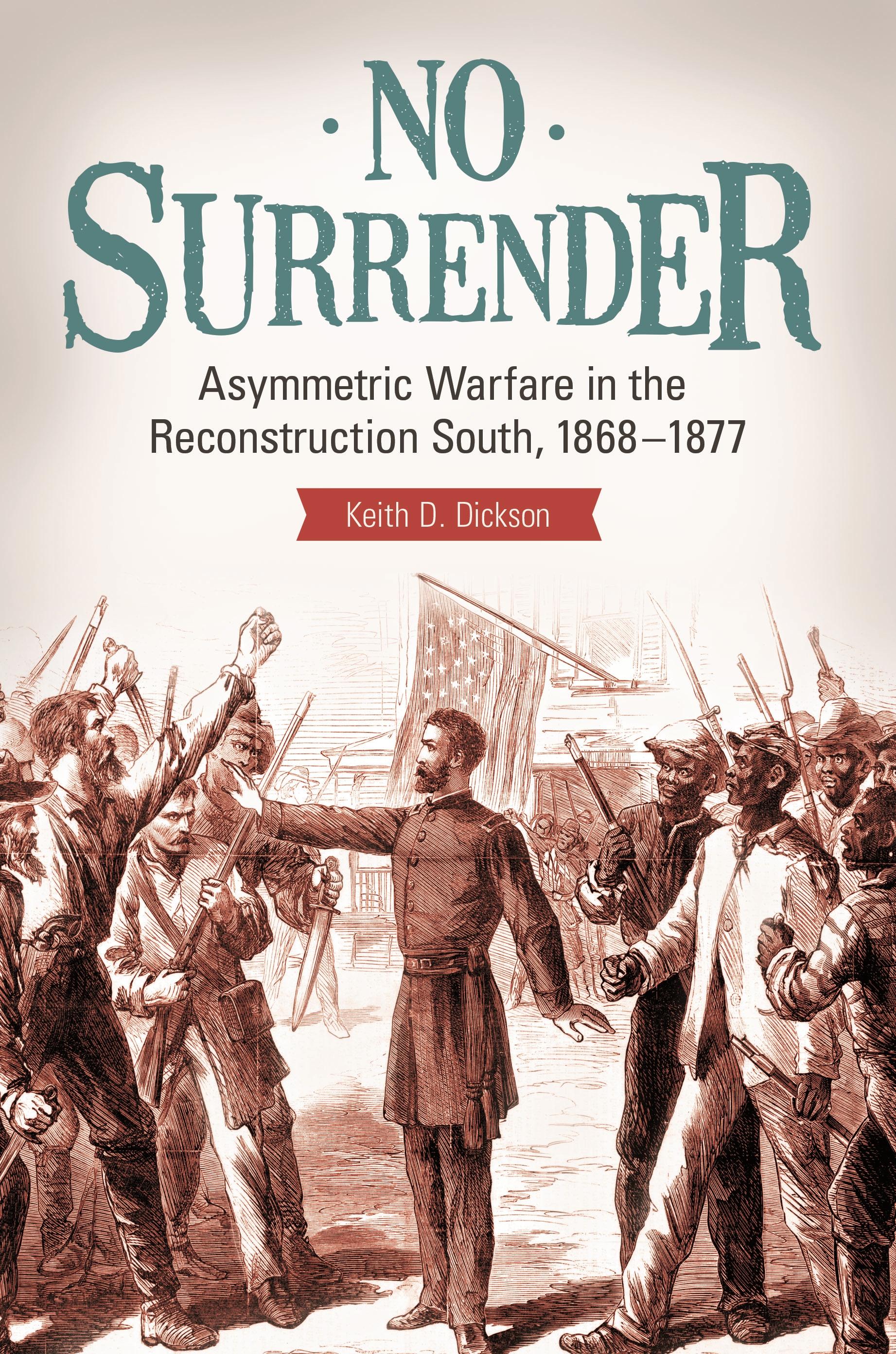
A modern and current examination of Reconstruction that explains how the South in the aftermath of defeat in a total war, was still able to exhaust the will of the powerful North using asymmetric warfare.
The end of the Civil War may have marked the end of the official fighting, but the Congressional strategy to remake the South during Reconstruction led to a new period of warfare—asymmetric warfare in which the defeated Confederacy became the Southern resistance. Despite all the power at its disposal, the North failed to change the South after nearly 11 years of effort and instead accepted a political-social equilibrium dictated by the South. This book presents Reconstruction through an unconventional lens to explain the process of transition from war to warfare, and finally to equilibrium represented by the emergence of the New South.
Author Keith D. Dickson explains how Reconstruction created a false equilibrium in the immediate aftermath of the Civil War and was reversed by Congressional action that imposed a new social and political order. By resistance of these actions through asymmetric warfare, the white South was able to establish a new equilibrium—one dictated by the South that opened the path to the New South.
Providing insights from an author who is both a respected academic military historian as well as a former practitioner of unconventional warfare as a Special Forces officer, the book covers the historical period 1865–1877, casting the Reconstruction period as an example of protracted asymmetric warfare. This asymmetric warfare was conducted in phases against the Republican state governments. As both the U.S. Congress and the Grant administration abandoned the lofty goals for Reconstruction, a bitterly contested presidential election provided the opportunity to establish conditions favorable to the white South that would in turn lead to a political-social equilibrium that allowed reconciliation to begin.
The end of the Civil War may have marked the end of the official fighting, but the Congressional strategy to remake the South during Reconstruction led to a new period of warfare—asymmetric warfare in which the defeated Confederacy became the Southern resistance. Despite all the power at its disposal, the North failed to change the South after nearly 11 years of effort and instead accepted a political-social equilibrium dictated by the South. This book presents Reconstruction through an unconventional lens to explain the process of transition from war to warfare, and finally to equilibrium represented by the emergence of the New South.
Author Keith D. Dickson explains how Reconstruction created a false equilibrium in the immediate aftermath of the Civil War and was reversed by Congressional action that imposed a new social and political order. By resistance of these actions through asymmetric warfare, the white South was able to establish a new equilibrium—one dictated by the South that opened the path to the New South.
Providing insights from an author who is both a respected academic military historian as well as a former practitioner of unconventional warfare as a Special Forces officer, the book covers the historical period 1865–1877, casting the Reconstruction period as an example of protracted asymmetric warfare. This asymmetric warfare was conducted in phases against the Republican state governments. As both the U.S. Congress and the Grant administration abandoned the lofty goals for Reconstruction, a bitterly contested presidential election provided the opportunity to establish conditions favorable to the white South that would in turn lead to a political-social equilibrium that allowed reconciliation to begin.
Payez facilement par carte, Klarna, Apple Pay ou Google Pay. Pas satisfait ? Vous avez toujours une garantie de remboursement de 14 jours. En savoir plus dans nos conditions. Si vous avez des questions, envoyez-nous un e-mail à hello@memmo.org.
Memmo facilite tes études, où que tu sois dans le monde. On rassemble tes manuels de cours et des outils d'étude intelligents au même endroit : résumés, quiz, podcasts et flashcards. Et il y a Ted, ton compagnon d'étude qui répond à toutes tes questions. Plus de 50 000 étudiants étudient déjà ici – conçu pour t'aider à apprendre plus vite et à moins stresser.