
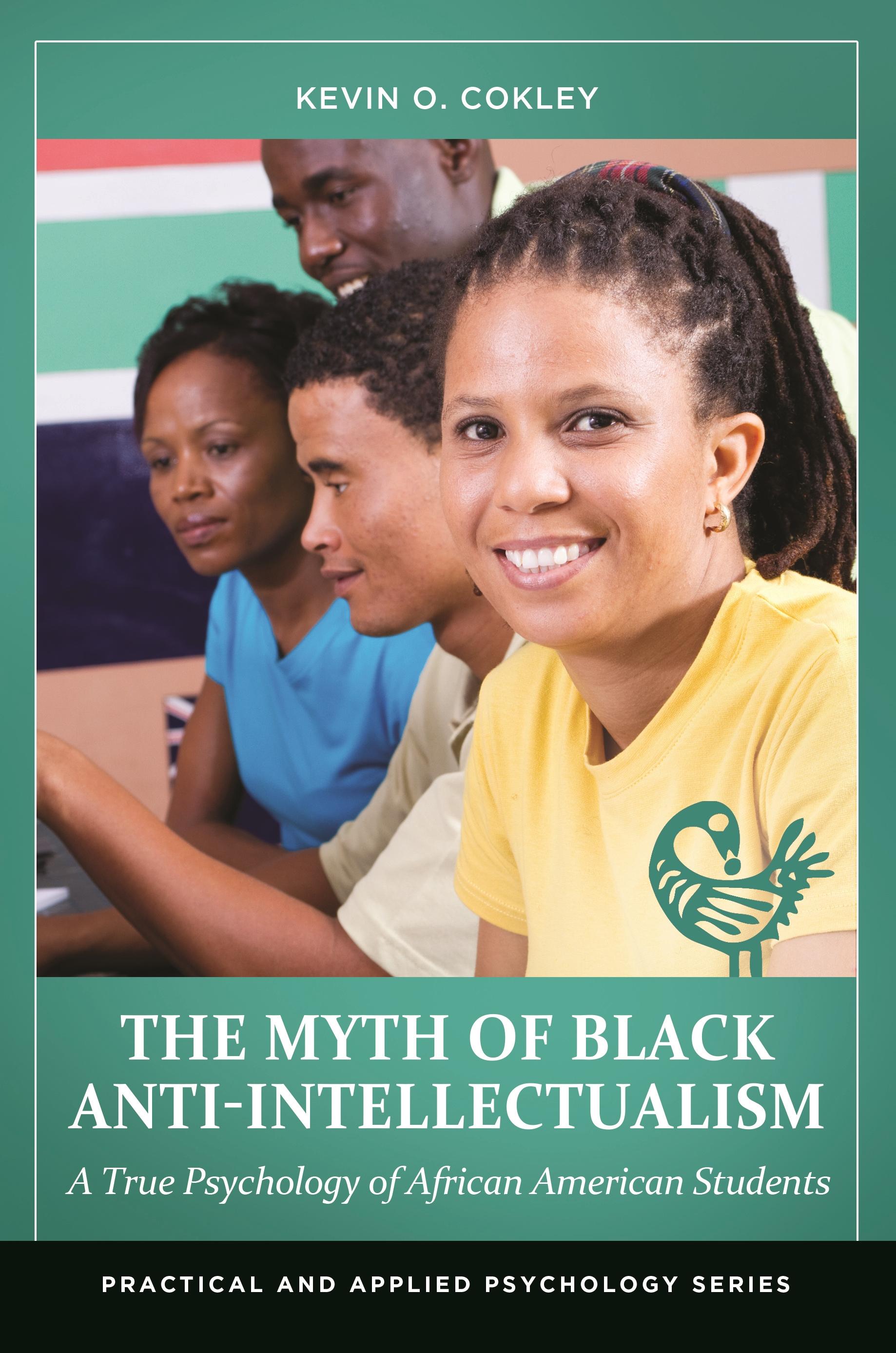
Why do students who belong to racial minority groups—particularly black students—fall short in school performance? This book provides a comprehensive and critical examination of black identity and its implications for black academic achievement and intellectualism.
No other group of students has been more studied, more misunderstood, and more maligned than African American students. The racial gap between White and African American students does exist: a difference of roughly 20 percent in college graduation rates has persisted for more than the past two decades; and since 1988, the racial gap on the reading and mathematics sections of the Scholastic Aptitude Test (SAT) has increased from 189 points to 201 points. What are the true sources of these differences?
In this book, psychology professor and editor-in-chief of the Journal of Black Psychology Kevin Cokley, PhD, delves into and challenges the dominant narrative regarding black student achievement by examining the themes of black identity, the role of self-esteem, the hurdles that result in academic difficulties, and the root sources of academic motivation. He proposes a bold alternate narrative that uses black identity as the theoretical framework to examine factors in academic achievement and challenge the widely accepted notion of black anti-intellectualism. This book will be valuable to all educators, especially those at the high school through undergraduate college/university level, as well as counselors associated with academic and community institutions, social service providers, policy makers, clergy and lay staff within the faith-based community, and parents.
No other group of students has been more studied, more misunderstood, and more maligned than African American students. The racial gap between White and African American students does exist: a difference of roughly 20 percent in college graduation rates has persisted for more than the past two decades; and since 1988, the racial gap on the reading and mathematics sections of the Scholastic Aptitude Test (SAT) has increased from 189 points to 201 points. What are the true sources of these differences?
In this book, psychology professor and editor-in-chief of the Journal of Black Psychology Kevin Cokley, PhD, delves into and challenges the dominant narrative regarding black student achievement by examining the themes of black identity, the role of self-esteem, the hurdles that result in academic difficulties, and the root sources of academic motivation. He proposes a bold alternate narrative that uses black identity as the theoretical framework to examine factors in academic achievement and challenge the widely accepted notion of black anti-intellectualism. This book will be valuable to all educators, especially those at the high school through undergraduate college/university level, as well as counselors associated with academic and community institutions, social service providers, policy makers, clergy and lay staff within the faith-based community, and parents.
Payez facilement par carte, Klarna, Apple Pay ou Google Pay. Pas satisfait ? Vous avez toujours une garantie de remboursement de 14 jours. En savoir plus dans nos conditions. Si vous avez des questions, envoyez-nous un e-mail à hello@memmo.org.
Memmo facilite tes études, où que tu sois dans le monde. On rassemble tes manuels de cours et des outils d'étude intelligents au même endroit : résumés, quiz, podcasts et flashcards. Et il y a Ted, ton compagnon d'étude qui répond à toutes tes questions. Plus de 50 000 étudiants étudient déjà ici – conçu pour t'aider à apprendre plus vite et à moins stresser.