
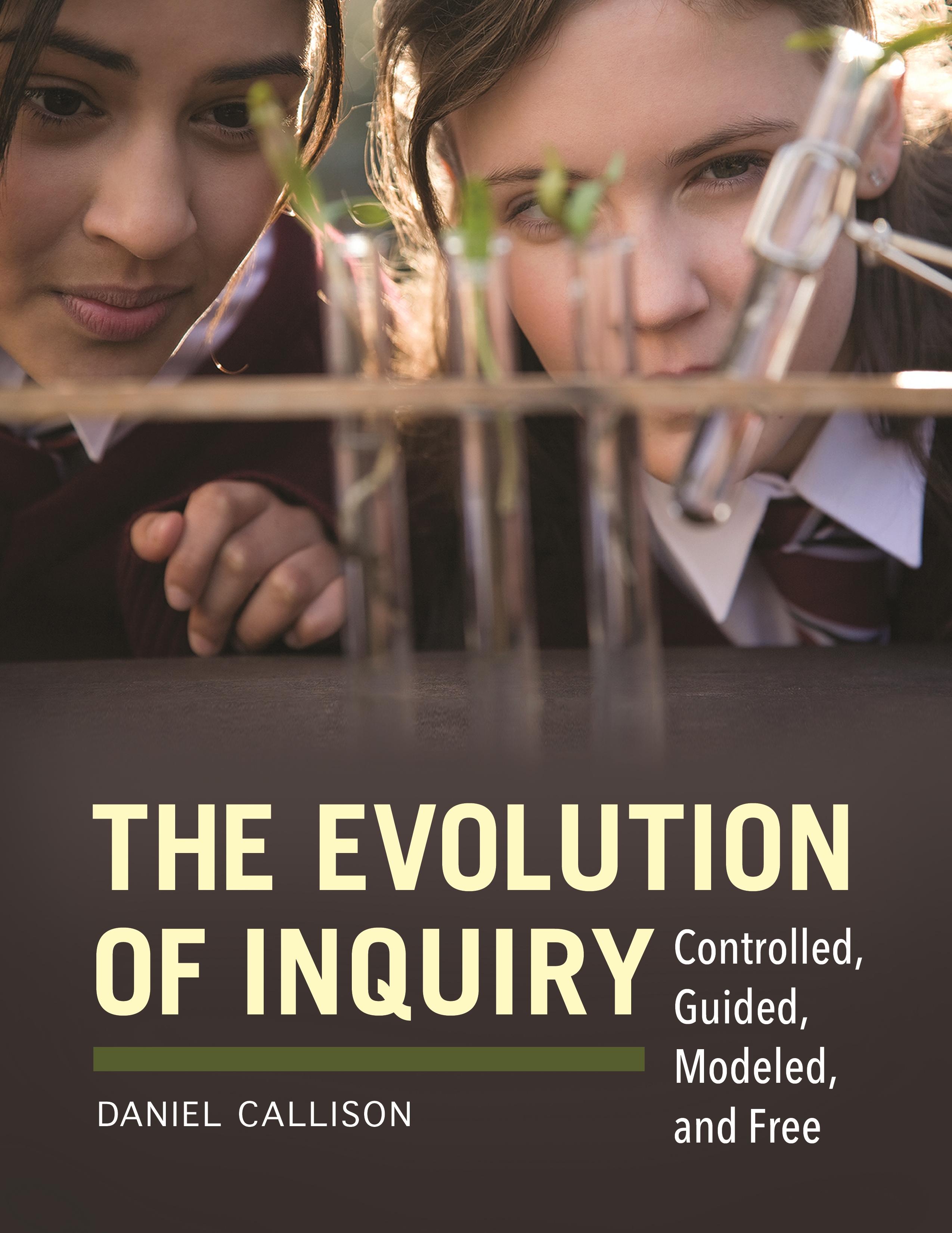
Defining the progression toward inquiry learning, this book provides an extensive overview of the past five decades and the evolution of inquiry in science, history, language arts, and information literacy studies.
Information inquiry is a basic skill for those who examine information as a science, and its principles can be applied across the K-12 curriculum. Built around reflective reviews of more than two dozen articles from School Library (Media Activities) Monthly, this helpful book shows the evolution, adoption, and application of the inquiry learning process to the school library teaching/learning environment. Four levels of inquiry—controlled, guided, open, and free—are explored in association with the emerging national Common Core curriculum and the Standards for the 21st-Century Learner from the American Association of School Librarians.
With the growing interest in the concept of inquiry and inquiry learning, you may find yourself needing to distinguish between the existing models and their applications. To help you do that, the book provides you with rich, historical context that clarifies the models, and it also projects future applications of inquiry and learner-centered teaching through school information literacy programs. These new applications, such as graphic inquiry, argumentation for inquiry, and the student as information scientist, offer tangible examples you can use to enrich the expanding information literacy curriculum.
Information inquiry is a basic skill for those who examine information as a science, and its principles can be applied across the K-12 curriculum. Built around reflective reviews of more than two dozen articles from School Library (Media Activities) Monthly, this helpful book shows the evolution, adoption, and application of the inquiry learning process to the school library teaching/learning environment. Four levels of inquiry—controlled, guided, open, and free—are explored in association with the emerging national Common Core curriculum and the Standards for the 21st-Century Learner from the American Association of School Librarians.
With the growing interest in the concept of inquiry and inquiry learning, you may find yourself needing to distinguish between the existing models and their applications. To help you do that, the book provides you with rich, historical context that clarifies the models, and it also projects future applications of inquiry and learner-centered teaching through school information literacy programs. These new applications, such as graphic inquiry, argumentation for inquiry, and the student as information scientist, offer tangible examples you can use to enrich the expanding information literacy curriculum.
Payez facilement par carte, Klarna, Apple Pay ou Google Pay. Pas satisfait ? Vous avez toujours une garantie de remboursement de 14 jours. En savoir plus dans nos conditions. Si vous avez des questions, envoyez-nous un e-mail à hello@memmo.org.
Memmo facilite tes études, où que tu sois dans le monde. On rassemble tes manuels de cours et des outils d'étude intelligents au même endroit : résumés, quiz, podcasts et flashcards. Et il y a Ted, ton compagnon d'étude qui répond à toutes tes questions. Plus de 50 000 étudiants étudient déjà ici – conçu pour t'aider à apprendre plus vite et à moins stresser.