
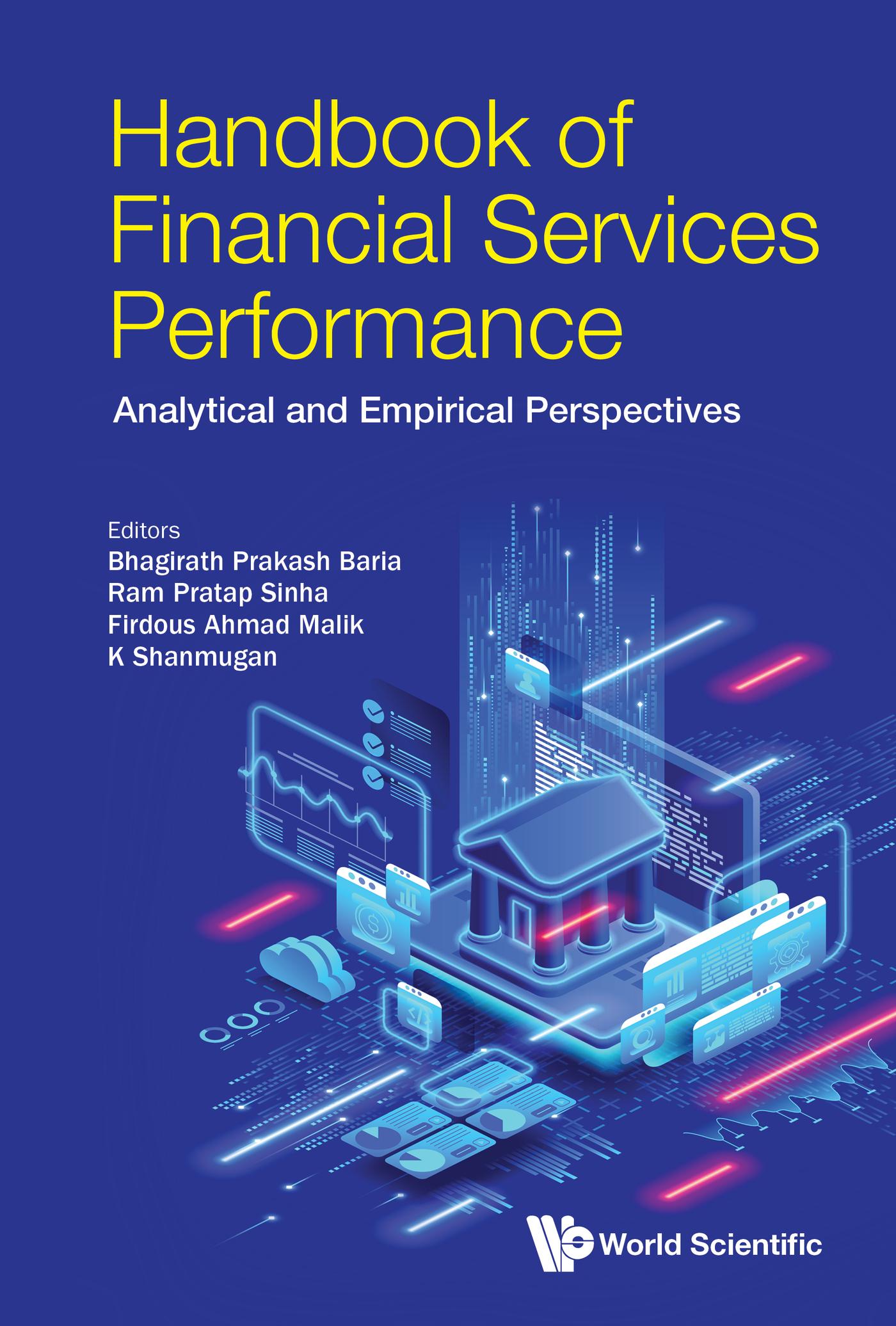
This book examines how emerging technologies are reshaping performance measurement in financial services. It delivers an integrated and authoritative treatment of the subject, encompassing conceptual foundations, methodological innovations, empirical evidence, and bibliometric analyses. Special attention is given to the transformative role of AI, Machine Learning, and Big Data in improving predictive accuracy, operational benchmarking, and strategic decision-making. Unlike conventional performance analysis, this book focuses on the unique structural and operational complexities of financial service firms where inputs and outputs often overlap, are intangible, and resist traditional quantification. The contributors bring deep expertise and diverse regional perspectives, positioning this volume as a benchmark in global financial services research. With its extensive literature reviews and curated citations, the book is an indispensable reference for academics, policymakers, and industry analysts seeking to navigate the evolving landscape of performance measurement in the digital era.
Contents:
- Theory of Performance Analysis for Financial Services:
- Decoding Output Measurement for Banking and Insurance Services: A Scholarly Peek into the Literature (Bhagirath Prakash Baria and Firdous Ahmad Malik)
- Mapping Performance Analysis of Financial Services: Systematic Insights and Perspectives (Violeta Cvetkoska and Bojan Kitanovikj)
- The Bank as a Production Unit: Illuminating Two Genres of Banking Theory (K V Bhanu Murthy)
- Analytical Perspectives:
- Review of Performance Evaluation in Insurance and Reinsurance Industries (Narinder Kumar and Tuhin S Banerjee)
- Impact of Technology on Performance Analysis in the Financial Services Domain: A Survey of the Literature (Güneş Topçu, Can Bekaroğlu, and İsmail Elagöz)
- The Role of India's Digital Public Infrastructure in Advancing Financial Inclusion: A Policy Perspective (Neeraj Kumar and Neha Mangla)
- The Impact of Financial Technologies (Fintech) on Financial Services Performance in Emerging Markets (Nelson Lawrence, Garikayi Emmanuel Gondo, and Prof Ravinder Rena)
- Empirical Perspectives:
- Addressing the Legalization of Criminal Proceeds within the Banking Sector of the Republic of Belarus: Insights and Development Strategies (Volha Rudkouskaya)
- Data Envelopment Analysis in the Financial Services Industry (Alireza Amirteimoori and Maryam Nematizadeh)
- Efficiency of Indian Private Commercial Banks: Evaluation and Explanation (Ram Pratap Sinha, and Prof K Shanmugan)
- Efficiency of ASEAN Banks: A Novel Analysis Using the Non-Convex Frontier Approach (Thanh Ngo, Tu Le, and Thi-Linh Pham)
- The Future of Banking Performance Evaluation: An Empirical Study of AI-Enhanced KPI Prediction Models and Their Implementation Framework (Frédéric Mirindi and Derrick Mirindi)
- Are Iran Stock Market Banks Always More Efficient than Iran Fara Bourse Banks? A Super-Efficiency DEA Approach (Bahareh Vaisi)
- Predictive Ability of ARIMA and LSTM Models for Blockchain-Based Cryptocurrency Price Changes (Magesh Kumar, Ravinder Rena, V Sindhu, and Srinivasan Pazhamalai)
- Advanced DEA-R Models for Performance Evaluation in the Banking Sector: Handling Ratio and Negative Data with Inverse DEA Approaches (Mojtaba Ghiyasi and Mehdi Soltanifar)
- Financial Services Performance Through Machine Learning Approaches (Pedro Pablo Chambi Condori and Telma Saravia Ticona)
- Threshold Effects of Finance–Growth Nexus: A Case Study of Nigeria (Apanisile Olumuyiwa Tolulope and Adesina Kehinde Elizabeth)
- Sensitivity in the Cryptocurrency Market: Evidence from the Asian Countries (Ruchita Verma, Shiney Sam, and Dhanraj Sharma)
- Assessing the Impact of Parliamentary Elections, Political Stability, and Government Effectiveness on Bank Risk in India: An Empirical Study (Tarika Singh Sikarwar, Surjeet Singh, and Sandeep Singh)
- Return, Tracking Error, and Intraday Volatility under Asset Allocation: Evidence from ETFs in Iran (Meysam Kaviani and Seyyed Ahmad Edalatpanah)
- Litigation Risk and Financial Performance of Banks: Do Internal Corporate Governance Mechanisms Matter? (Mohsen Imeni, and Seyyed Ahmad Edalatpanah)
Readership: Students and academics in areas like financial management, financial economics, general economics, macroeconomics; professionals working in National income accounting institutions, official agencies engaged in financial services data collection and professional research institutions working on macro/finance/development economics as well as libraries, educational and research institutions.
Payez facilement par carte, Klarna, Apple Pay ou Google Pay. Pas satisfait ? Vous avez toujours une garantie de remboursement de 14 jours. En savoir plus dans nos conditions. Si vous avez des questions, envoyez-nous un e-mail à hello@memmo.org.
Memmo facilite tes études, où que tu sois dans le monde. On rassemble tes manuels de cours et des outils d'étude intelligents au même endroit : résumés, quiz, podcasts et flashcards. Et il y a Ted, ton compagnon d'étude qui répond à toutes tes questions. Plus de 50 000 étudiants étudient déjà ici – conçu pour t'aider à apprendre plus vite et à moins stresser.