
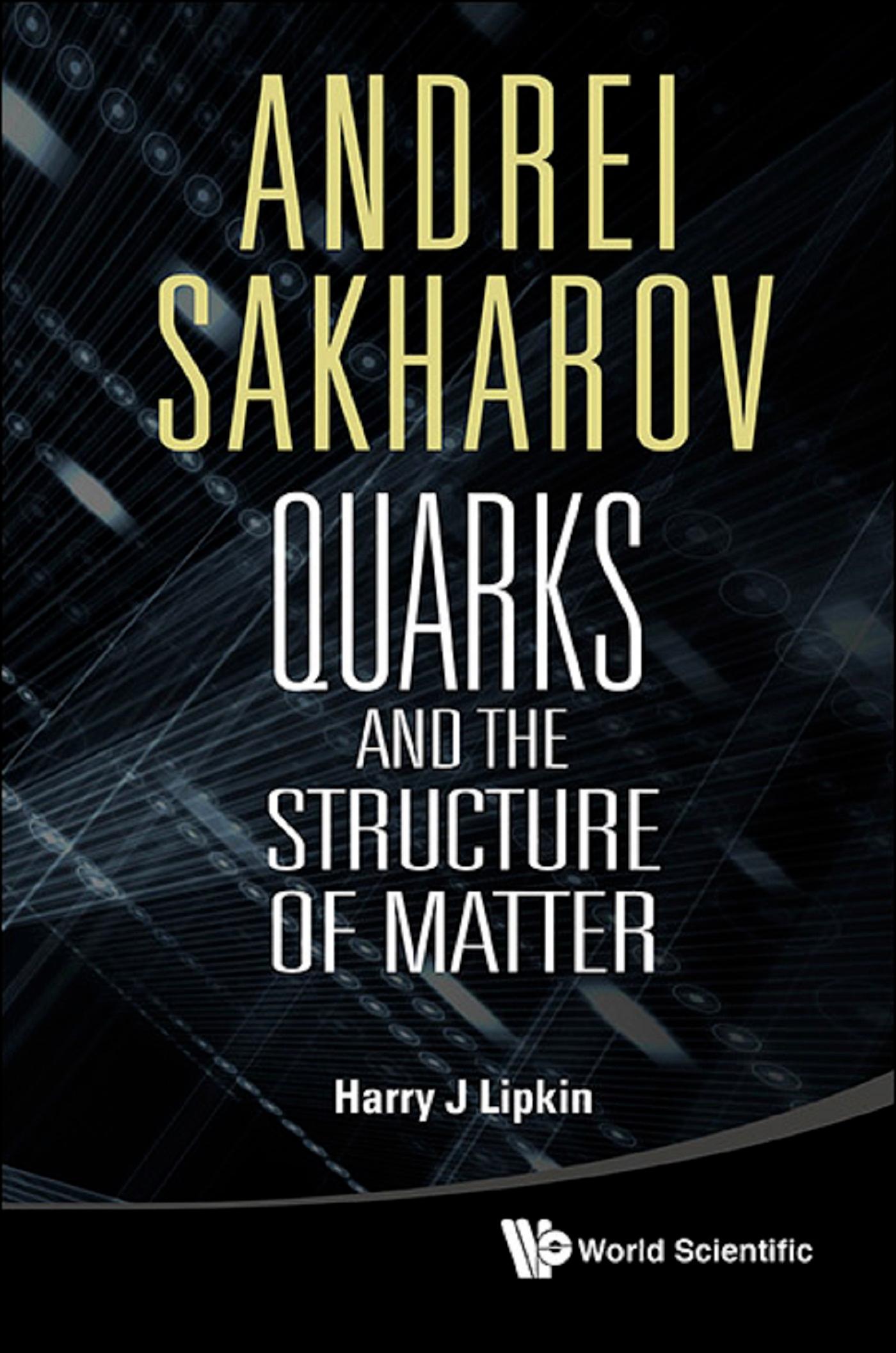
In 1980, the Cold War was in full bloom. The Soviet father of the hydrogen bomb and Nobel Peace Laureate turned dissident physicist, Andrei Sakharov, had been exiled to Gorki by the Soviet authorities. Called “senile” and under heavy Soviet censorship, Sakharov had a hard time communicating his latest scientific results to readers outside of Gorki. Some smuggled results reached the author, Harry Lipkin, who then realized that he and Sakharov were both pioneers in a new revolution on our understanding the structure of matter. The particle physics community had resisted their revelation that the accepted building blocks of matter, neutrons and protons, were composed of tinier building blocks called “quarks”. What followed was a remarkable adventure in which both scientists fought the Soviet censors, smuggling postcards and manuscripts into and out of the Soviet Union while trying to further scientific progress.Against a backdrop of politics, suppression, and genius, Andrei Sakharov, Quarks and the Structure of Matter details the search for the basic building blocks of matter, the path to understanding the forces that bind them together, and how scientific knowledge is learned, communicated and passed from one group of investigators to another.
Payez facilement par carte, Klarna, Apple Pay ou Google Pay. Pas satisfait ? Vous avez toujours une garantie de remboursement de 14 jours. En savoir plus dans nos conditions. Si vous avez des questions, envoyez-nous un e-mail à hello@memmo.org.
Memmo facilite tes études, où que tu sois dans le monde. On rassemble tes manuels de cours et des outils d'étude intelligents au même endroit : résumés, quiz, podcasts et flashcards. Et il y a Ted, ton compagnon d'étude qui répond à toutes tes questions. Plus de 50 000 étudiants étudient déjà ici – conçu pour t'aider à apprendre plus vite et à moins stresser.
Tu pourrais aussi aimer
Acheter le livre0