
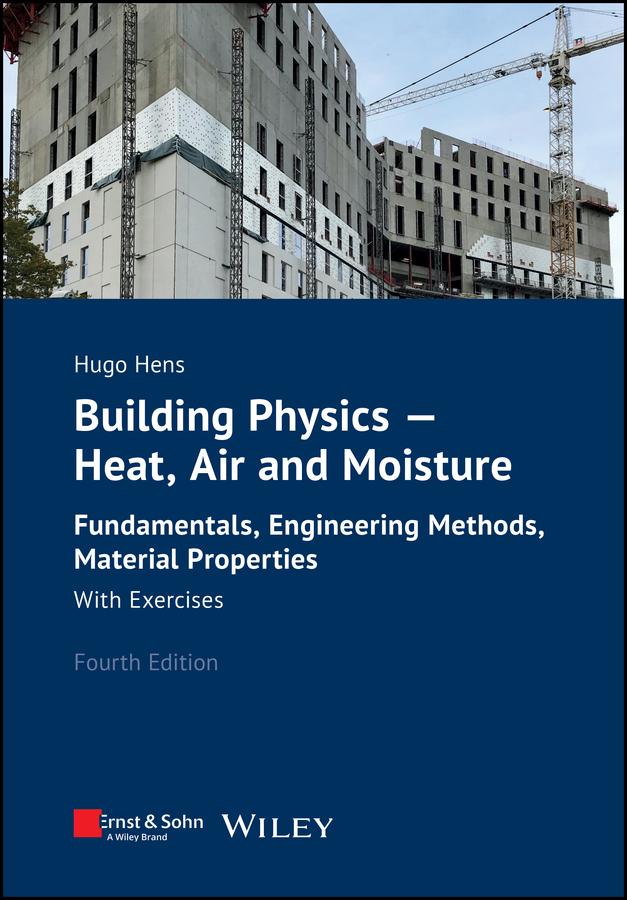
Bad experiences with construction quality, the energy crises of 1973 and 1979, complaints about "sick buildings", thermal, acoustical, visual and olfactory discomfort, the need for good air quality, the move towards energy efficiency, decarbonization and sustainability ? all these have accelerated the development of a discipline that, for a long time, was hardly more than an academic exercise: building physics. The discipline embraces domains such as heat and mass transfer, building acoustics, lighting, indoor environmental quality, energy efficiency, and, in some countries, fire safety. Through the application of physical knowledge and its combination with information coming from other disciplines, building physics helps to under-stand the physical phenomena governing building parts, building envelope, whole building and built environment performance ? called urban physics. Today, building physics has be-come a key player on the road to highly performing new buildings and renovations.
This book deals with heat, air and moisture transport in building parts or assemblies and whole buildings with emphasis on the building engineering applications.
Compared to the third edition, this fourth edition has been expanded in chapter 1 to include the physical determination of the thermal conductivity of materials, together with an in-depth discussion of all the effects of thicker insulation layers. In chapter 2, additional information has been added on wind pressure and the evaluation of condensation inside the building com-ponents, while a new chapter 4 on material properties has been included. The whole book, including the figures, has been revised and restructured where necessary.
This book deals with heat, air and moisture transport in building parts or assemblies and whole buildings with emphasis on the building engineering applications.
Compared to the third edition, this fourth edition has been expanded in chapter 1 to include the physical determination of the thermal conductivity of materials, together with an in-depth discussion of all the effects of thicker insulation layers. In chapter 2, additional information has been added on wind pressure and the evaluation of condensation inside the building com-ponents, while a new chapter 4 on material properties has been included. The whole book, including the figures, has been revised and restructured where necessary.
Pages: 400
Catégorie: Ingenjörsvetenskap
e-ISBN: 9783433611845
Poids d'expédition: 1.2 kg
Expédié sous: 1-2 jours
Payez facilement par carte, Klarna, Apple Pay ou Google Pay. Pas satisfait ? Vous avez toujours une garantie de remboursement de 14 jours. En savoir plus dans nos conditions. Si vous avez des questions, envoyez-nous un e-mail à hello@memmo.org.
Memmo facilite tes études, où que tu sois dans le monde. On rassemble tes manuels de cours et des outils d'étude intelligents au même endroit : résumés, quiz, podcasts et flashcards. Et il y a Ted, ton compagnon d'étude qui répond à toutes tes questions. Plus de 50 000 étudiants étudient déjà ici – conçu pour t'aider à apprendre plus vite et à moins stresser.