
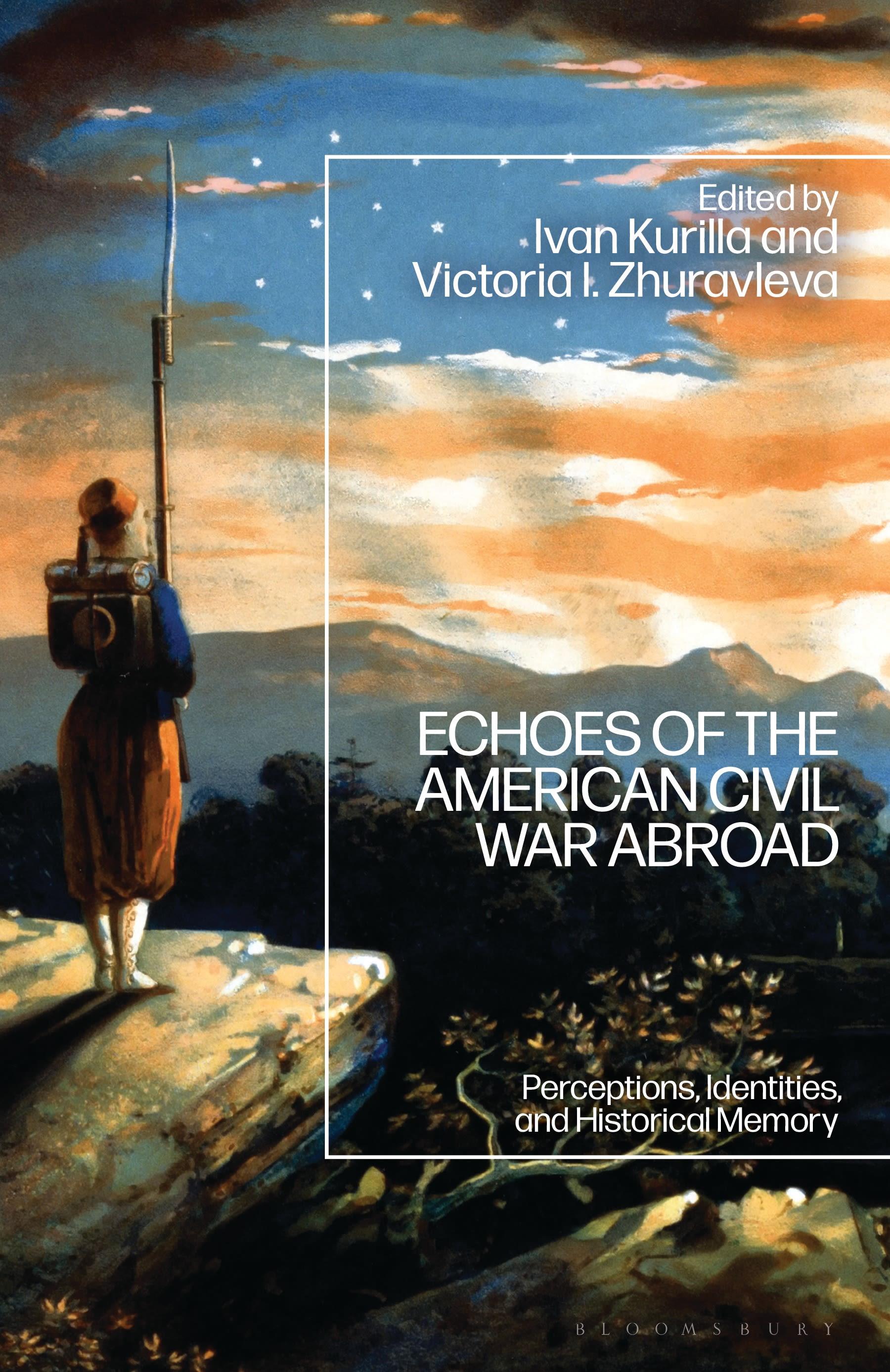
Through a constructivist approach, this book views the era of the American Civil War as a transnational phenomenon, emphasizing its role in shaping national identities and historical memory worldwide.
Extending identity narratives across time, contributors from Brazil, Canada, France, Mexico, Russia, the United Kingdom, and the United States analyze a wide range of primary sources, including diplomatic correspondence, periodicals, memoirs, intellectual writings, fiction, political cartoons, and murals in order to untangle the international impact of the U.S. Civil War. The countries selected for analysis vary typologically, yet each provides particularly rich material for reconstructing national identity discourses-within a transatlantic framework, as explored in the first two parts of the volume, and within the broader context of the American continents, as addressed in the third part. Russia is treated in a separate section as a distinctive case-at once European, “the Other Europe,” and non-European-not only due to the parallels in the domestic and international developments of the Russian Empire and the United States, but also because of the enduring impact of the American Civil War on bilateral relations and mutual perceptions. Taken together, the volume's three sections intersect and reinforce one another, demonstrating how both the Union and the Confederacy were invoked as symbolic Others to shape national self-understandings, grounded in evolving configurations of interests, ideologies, and values.
Extending identity narratives across time, contributors from Brazil, Canada, France, Mexico, Russia, the United Kingdom, and the United States analyze a wide range of primary sources, including diplomatic correspondence, periodicals, memoirs, intellectual writings, fiction, political cartoons, and murals in order to untangle the international impact of the U.S. Civil War. The countries selected for analysis vary typologically, yet each provides particularly rich material for reconstructing national identity discourses-within a transatlantic framework, as explored in the first two parts of the volume, and within the broader context of the American continents, as addressed in the third part. Russia is treated in a separate section as a distinctive case-at once European, “the Other Europe,” and non-European-not only due to the parallels in the domestic and international developments of the Russian Empire and the United States, but also because of the enduring impact of the American Civil War on bilateral relations and mutual perceptions. Taken together, the volume's three sections intersect and reinforce one another, demonstrating how both the Union and the Confederacy were invoked as symbolic Others to shape national self-understandings, grounded in evolving configurations of interests, ideologies, and values.
Payez facilement par carte, Klarna, Apple Pay ou Google Pay. Pas satisfait ? Vous avez toujours une garantie de remboursement de 14 jours. En savoir plus dans nos conditions. Si vous avez des questions, envoyez-nous un e-mail à hello@memmo.org.
Memmo facilite tes études, où que tu sois dans le monde. On rassemble tes manuels de cours et des outils d'étude intelligents au même endroit : résumés, quiz, podcasts et flashcards. Et il y a Ted, ton compagnon d'étude qui répond à toutes tes questions. Plus de 50 000 étudiants étudient déjà ici – conçu pour t'aider à apprendre plus vite et à moins stresser.