
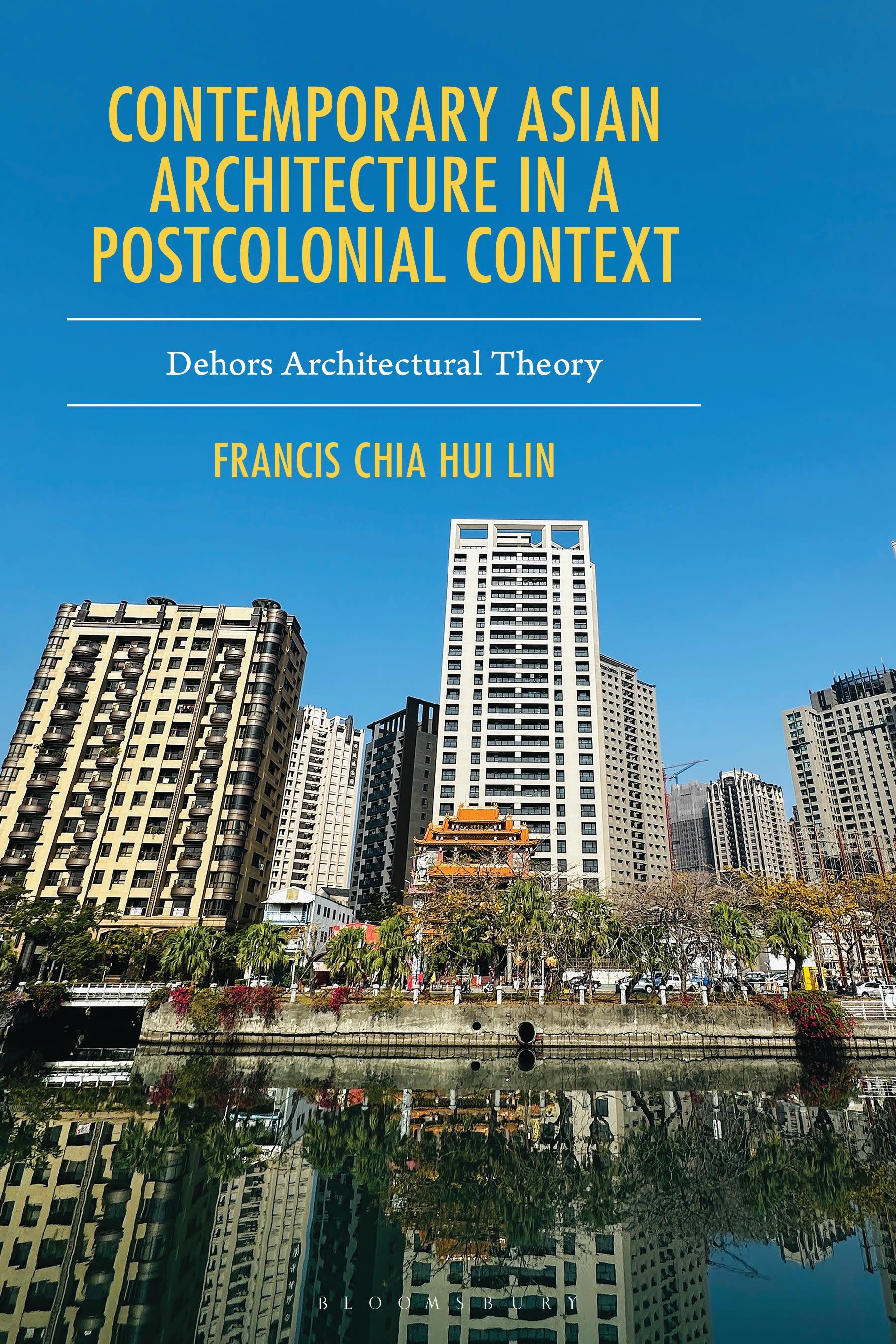
Offering a broader understanding of contemporary architecture and urbanism in Asia, Francis Chia Hui Lin raises questions from 'non-conventional' ('non-Western') perspectives that can adapt and enrich conventional understanding in an Asian context.
With a strategic focus on urban maritime Asia, this book highlights key postcolonial concepts, locales, and the agency of the postcolonial condition of Asian architecture in a global context. Addressing the conventional ideologies by which architecture is assessed, the author outlines an epistemic bridge that situates the colonial character of Asian architecture within a global historical and theoretical context.
Contemporary Asian architectural histories are marked not only by the influence of the Western architectural canon but also by a sense of temporality that reflects an ongoing process of subjectivation. Providing insight into these histories, the author proposes a methodology that extends the notion of the postcolonial comportment beyond its conventional historical context and into the spatial register of theorisation. By interviewing critical postcolonial theory with empirical analysis of contemporary Asian architecture and urbanisation, this book offers a critical lens for understanding Asia not simply as a site of architectural production, but as a theoretical interlocutor in the global rethinking of space, time and power.
With a strategic focus on urban maritime Asia, this book highlights key postcolonial concepts, locales, and the agency of the postcolonial condition of Asian architecture in a global context. Addressing the conventional ideologies by which architecture is assessed, the author outlines an epistemic bridge that situates the colonial character of Asian architecture within a global historical and theoretical context.
Contemporary Asian architectural histories are marked not only by the influence of the Western architectural canon but also by a sense of temporality that reflects an ongoing process of subjectivation. Providing insight into these histories, the author proposes a methodology that extends the notion of the postcolonial comportment beyond its conventional historical context and into the spatial register of theorisation. By interviewing critical postcolonial theory with empirical analysis of contemporary Asian architecture and urbanisation, this book offers a critical lens for understanding Asia not simply as a site of architectural production, but as a theoretical interlocutor in the global rethinking of space, time and power.
Pages: 288
Catégorie: Arkitektur & Stadsplanering
e-ISBN: 9781978768512
Poids d'expédition: 1.2 kg
Expédié sous: 1-2 jours
Payez facilement par carte, Klarna, Apple Pay ou Google Pay. Pas satisfait ? Vous avez toujours une garantie de remboursement de 14 jours. En savoir plus dans nos conditions. Si vous avez des questions, envoyez-nous un e-mail à hello@memmo.org.
Memmo facilite tes études, où que tu sois dans le monde. On rassemble tes manuels de cours et des outils d'étude intelligents au même endroit : résumés, quiz, podcasts et flashcards. Et il y a Ted, ton compagnon d'étude qui répond à toutes tes questions. Plus de 50 000 étudiants étudient déjà ici – conçu pour t'aider à apprendre plus vite et à moins stresser.