
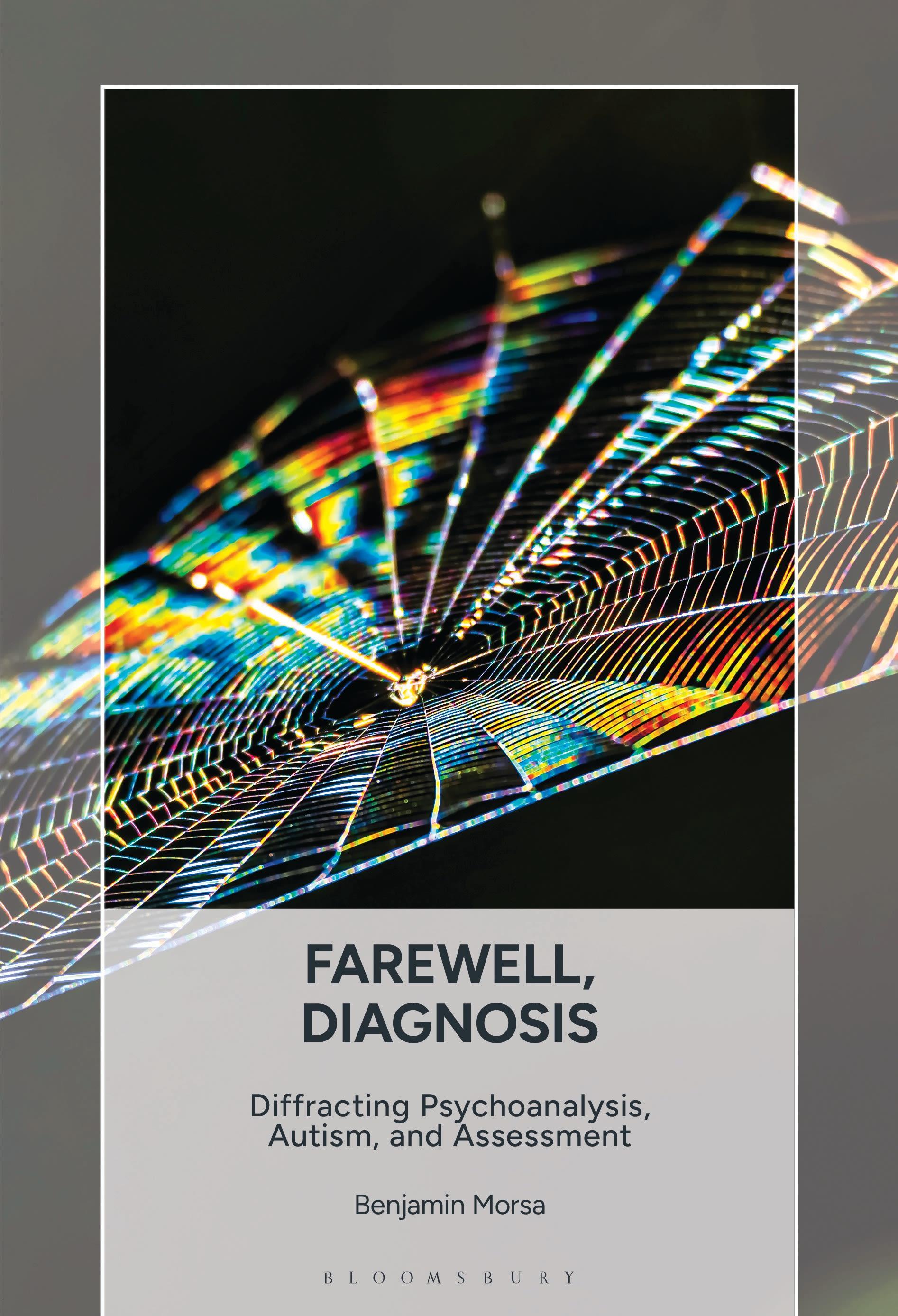
Farewell, Diagnosis examines the material urgencies of autism diagnosis alongside the conceptual and clinical problems that diagnosis can produce. Taking psychoanalysis as both a method and object of critique, Benjamin Morsa interrogates what happens when a discipline defined by curiosity, uncertainty, and attention to psychic life encounters autism.
Psychoanalysis traditionally advocates for curiosity in the clinical process, particularly about the patient's inner world. It suspends knowing and defining in favor of dynamism, surprise, and even chaos. Yet it seems to lose sight of these guiding principles and traditions the moment it encounters autism. While psychoanalysis is one of the few diagnostic frameworks that attempts to theorize an autistic mind and internal life, this project shows how core psychoanalytic concepts are frequently mobilized in ways that cast autism as lacking relationality, theory of mind, or psychic richness. Rather than expel psychoanalysis and its methods, Morsa highlights the value of psychoanalysis in supporting patients', including autistic patients', need to know more. This project invites psychoanalysis to the couch to receive interpretations from a neurodivergent mind. It invites the possibility of an autistic analyst.
Drawing on psychoanalysis, feminist science studies, and lived experience, this book approaches autism and assessment not as problems to be solved, but as entangled processes to be lived with. It engages the tensions between pathologizing logics and affirming frameworks, between open-ended listening and institutional constraint. Morsa asks: what comes after diagnosis - not only in systems of care, but in the patient's internal world? Farewell, Diagnosis challenges the idea that clinical or self-diagnosis reveals a singular truth. It explores the collective fantasies we invest in psychoanalysis, the ways we come by this honestly, and the limitations we introduce when privilege diagnosis as truth over the need to know more.
By tracking these contradictions, this book explores what becomes possible when we suspend the need for diagnostic certainty and attend instead to the sticky, dynamic, and relational terrain of meaning.Farewell, Diagnosis is an essential resource for scholars, psychologists, and psychoanalyts interested in neurodiversity, social systems, diagnosis, and psychological assessment as well as anyone seeking more spacious ways to think with - rather than through - diagnosis.
Psychoanalysis traditionally advocates for curiosity in the clinical process, particularly about the patient's inner world. It suspends knowing and defining in favor of dynamism, surprise, and even chaos. Yet it seems to lose sight of these guiding principles and traditions the moment it encounters autism. While psychoanalysis is one of the few diagnostic frameworks that attempts to theorize an autistic mind and internal life, this project shows how core psychoanalytic concepts are frequently mobilized in ways that cast autism as lacking relationality, theory of mind, or psychic richness. Rather than expel psychoanalysis and its methods, Morsa highlights the value of psychoanalysis in supporting patients', including autistic patients', need to know more. This project invites psychoanalysis to the couch to receive interpretations from a neurodivergent mind. It invites the possibility of an autistic analyst.
Drawing on psychoanalysis, feminist science studies, and lived experience, this book approaches autism and assessment not as problems to be solved, but as entangled processes to be lived with. It engages the tensions between pathologizing logics and affirming frameworks, between open-ended listening and institutional constraint. Morsa asks: what comes after diagnosis - not only in systems of care, but in the patient's internal world? Farewell, Diagnosis challenges the idea that clinical or self-diagnosis reveals a singular truth. It explores the collective fantasies we invest in psychoanalysis, the ways we come by this honestly, and the limitations we introduce when privilege diagnosis as truth over the need to know more.
By tracking these contradictions, this book explores what becomes possible when we suspend the need for diagnostic certainty and attend instead to the sticky, dynamic, and relational terrain of meaning.Farewell, Diagnosis is an essential resource for scholars, psychologists, and psychoanalyts interested in neurodiversity, social systems, diagnosis, and psychological assessment as well as anyone seeking more spacious ways to think with - rather than through - diagnosis.
Pages: 208
Catégorie: Psykologi
e-ISBN: 9781978763432
Poids d'expédition: 1.2 kg
Expédié sous: 1-2 jours
Payez facilement par carte, Klarna, Apple Pay ou Google Pay. Pas satisfait ? Vous avez toujours une garantie de remboursement de 14 jours. En savoir plus dans nos conditions. Si vous avez des questions, envoyez-nous un e-mail à hello@memmo.org.
Memmo facilite tes études, où que tu sois dans le monde. On rassemble tes manuels de cours et des outils d'étude intelligents au même endroit : résumés, quiz, podcasts et flashcards. Et il y a Ted, ton compagnon d'étude qui répond à toutes tes questions. Plus de 50 000 étudiants étudient déjà ici – conçu pour t'aider à apprendre plus vite et à moins stresser.