
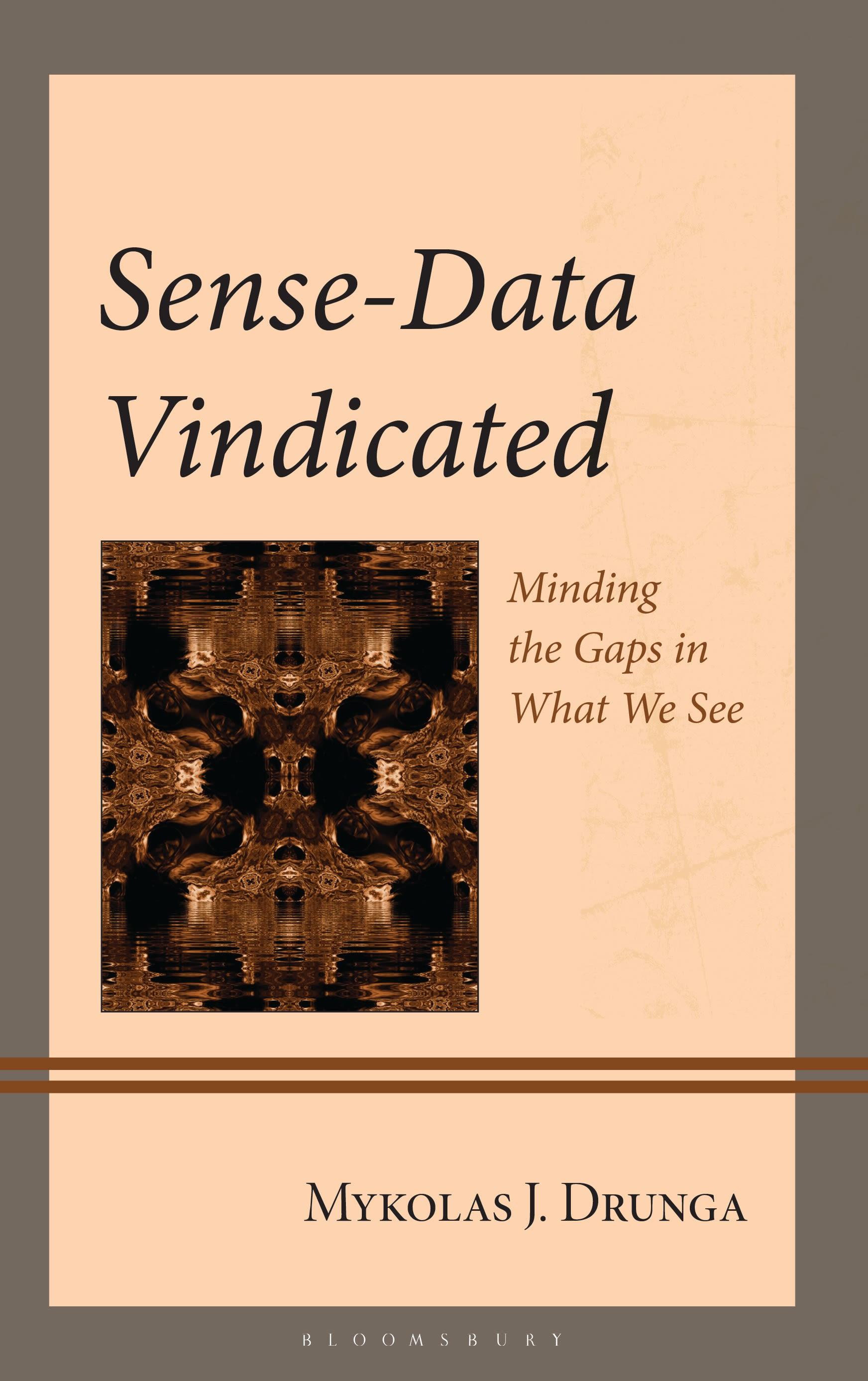
In order to solve the perceptual time-gap problem, this book embraces Idealism and acknowledges the existence of sense-data at the root of perceiving physical objects.
Of all the multiple arguments for introducing sense-data as objects of sensory awareness, the Time-Gap Argument remains persistently puzzling. Since the Middle Ages, scholars have wondered about phenomena such as the light we see from stars far away, and the time-gap problem has resisted a definitive solution.
Examining most of the arguments advanced since the beginning of the twentieth century both for and against the admission of sense-data, Mykolas J. Drunga argues that the problem cannot be solved by denying that the things we see must exist at the time we see them or by claiming we can see deeply into the past. Instead, we will solve it by realizing that what keeps the universe in existence is an eternal spirit. This radical conclusion, in conversation with the Idealist philosophers Leibniz and Berkeley, requires taking a first indispensable step––acknowledging the existence of sense-data at the root of perceiving physical objects.
Drunga vindicates a Direct Realist Subjective Idealism, which alone allows perception of the world to be both possible and understandable. If Subjective Idealism is thus a necessary condition for the possibility and intelligibility of sensory perception, we thereby have a strong proof of Idealism's truth. Ultimately, to be just is to perceive (to be on the way toward coming to know something) or to be perceived (to be on the way toward becoming known to someone).
Of all the multiple arguments for introducing sense-data as objects of sensory awareness, the Time-Gap Argument remains persistently puzzling. Since the Middle Ages, scholars have wondered about phenomena such as the light we see from stars far away, and the time-gap problem has resisted a definitive solution.
Examining most of the arguments advanced since the beginning of the twentieth century both for and against the admission of sense-data, Mykolas J. Drunga argues that the problem cannot be solved by denying that the things we see must exist at the time we see them or by claiming we can see deeply into the past. Instead, we will solve it by realizing that what keeps the universe in existence is an eternal spirit. This radical conclusion, in conversation with the Idealist philosophers Leibniz and Berkeley, requires taking a first indispensable step––acknowledging the existence of sense-data at the root of perceiving physical objects.
Drunga vindicates a Direct Realist Subjective Idealism, which alone allows perception of the world to be both possible and understandable. If Subjective Idealism is thus a necessary condition for the possibility and intelligibility of sensory perception, we thereby have a strong proof of Idealism's truth. Ultimately, to be just is to perceive (to be on the way toward coming to know something) or to be perceived (to be on the way toward becoming known to someone).
Payez facilement par carte, Klarna, Apple Pay ou Google Pay. Pas satisfait ? Vous avez toujours une garantie de remboursement de 14 jours. En savoir plus dans nos conditions. Si vous avez des questions, envoyez-nous un e-mail à hello@memmo.org.
Memmo facilite tes études, où que tu sois dans le monde. On rassemble tes manuels de cours et des outils d'étude intelligents au même endroit : résumés, quiz, podcasts et flashcards. Et il y a Ted, ton compagnon d'étude qui répond à toutes tes questions. Plus de 50 000 étudiants étudient déjà ici – conçu pour t'aider à apprendre plus vite et à moins stresser.