
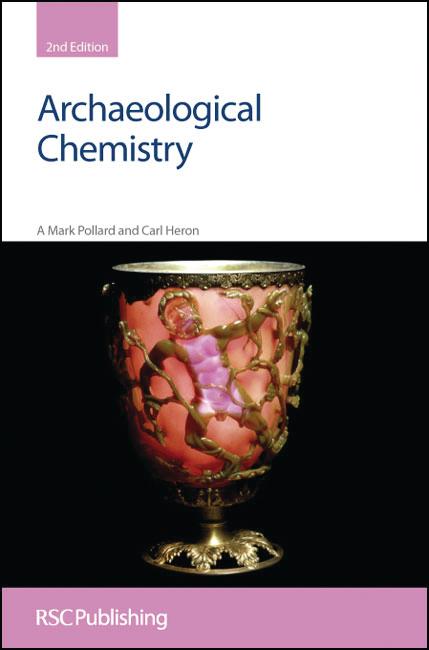
The application of chemistry within archaeology is an important and fascinating area. It allows the archaeologist to answer such questions as "what is this artefact made of?", "where did it come from?" and "how has it been changed through burial in the ground?", providing pointers to the earliest history of mankind. Archaeological Chemistry begins with a brief description of the goals and history of archaeological science, and the place of chemistry within it. It sets out the most widely used analytical techniques in archaeology and compares them in the light of relevant applications. The book includes an analysis of several specific archaeological investigations in which chemistry has been employed in tracing the origins of or in preserving artefacts. The choice of these investigations conforms to themes based on analytical techniques, and includes chapters on obsidian, ceramics, glass, metals and resins. Finally, it suggests a future role for chemical and biochemical applications in archaeology. Archaeological Chemistry enables scientists to tackle the fundamental issues of chemical change in the archaeological materials, in order to advance the study of the past. It will prove an essential companion to students in archaeological science and chemistry, field and museum archaeologists, and all those involved in conserving human artefacts.
Payez facilement par carte, Klarna, Apple Pay ou Google Pay. Pas satisfait ? Vous avez toujours une garantie de remboursement de 14 jours. En savoir plus dans nos conditions. Si vous avez des questions, envoyez-nous un e-mail à hello@memmo.org.
Memmo facilite tes études, où que tu sois dans le monde. On rassemble tes manuels de cours et des outils d'étude intelligents au même endroit : résumés, quiz, podcasts et flashcards. Et il y a Ted, ton compagnon d'étude qui répond à toutes tes questions. Plus de 50 000 étudiants étudient déjà ici – conçu pour t'aider à apprendre plus vite et à moins stresser.