
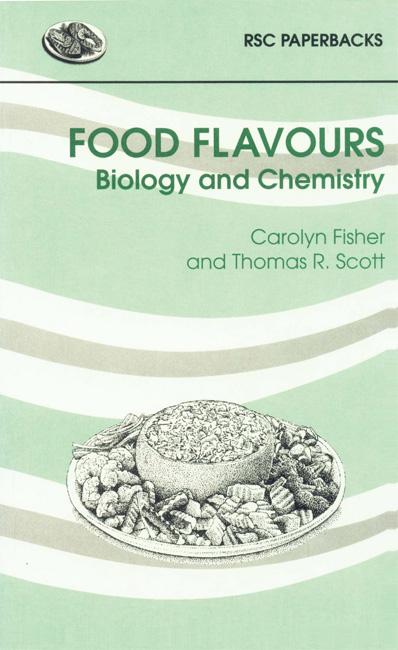
How does the nose know what it smells? How do we taste foods? What gives foods their characteristic flavours? How do the methods of food preparation and processing change the flavours of foods? Food Flavours answers these questions and much more, in a clear and understandable manner, describing the composition of flavour compounds and the contributions they make to our sensory experiences. The book begins with the chemical reactions by which chemical compounds develop in plants, and continues through the processing and preparation of foods. It then turns to our chemical sensory systems to describe the recognition and neural processing of these compounds in the nervous system, and the reactions that we have to flavours. The way that chemical qualities give foods their characteristic flavours, and the ways various methods of food preparation and preservation affect those compounds and the resulting flavours are dealt with in detail, both from a chemical and a biological aspect. Throughout, Food Flavours provides special in-depth coverage of taste/odour physiology, and it contains a unique chapter providing a learning and problem-solving technique that will prove invaluable to students in all areas of food science, as well as in biological, organic and analytical chemistry, and will be a good addition to any food technologist's bookshelf.
Payez facilement par carte, Klarna, Apple Pay ou Google Pay. Pas satisfait ? Vous avez toujours une garantie de remboursement de 14 jours. En savoir plus dans nos conditions. Si vous avez des questions, envoyez-nous un e-mail à hello@memmo.org.
Memmo facilite tes études, où que tu sois dans le monde. On rassemble tes manuels de cours et des outils d'étude intelligents au même endroit : résumés, quiz, podcasts et flashcards. Et il y a Ted, ton compagnon d'étude qui répond à toutes tes questions. Plus de 50 000 étudiants étudient déjà ici – conçu pour t'aider à apprendre plus vite et à moins stresser.