
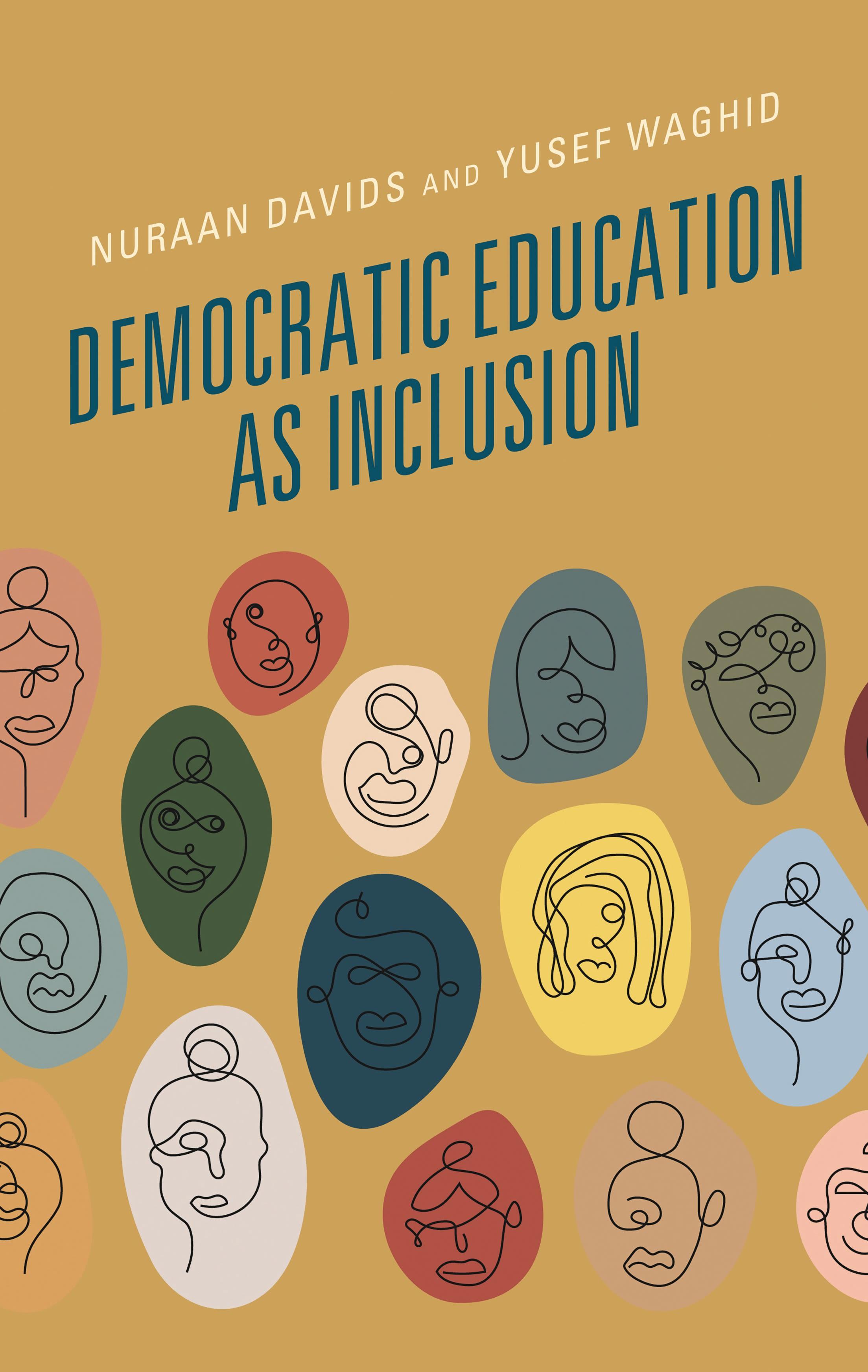
Political and social expectations are often stymied and distorted by individual and communal identities—creating vastly incongruent and unrelated lived experiences, often within the same context. Democratic Education as Inclusion explores how the existence and enactments of diversity continue to present ubiquitous epicenters of misreading, misrecognition, and missed opportunities for peaceful co-existence—whether in established, or nascent democracies. Nuraan Davids and Yusef Waghid study how the public sphere has never held the same meaning to all individuals or groups. As such, there are deep implications for differentiated experiences of citizenship, between those who are included in the center of the sphere, and those who are excluded on the margins. This book explains the dyadic relationship between inclusion and exclusion and how it is not limited to the public sphere, or to broader conceptions of democratic citizenship. It is as apparent in educational settings, presenting under-explored complexities not only for teaching and learning, but for the life experiences of participants in teaching-learning. Often the foundational norms put into place during educational initiations become the primary determinants of how young people conceive of themselves as citizens, and how they conceive of themselves in relation to others.
Payez facilement par carte, Klarna, Apple Pay ou Google Pay. Pas satisfait ? Vous avez toujours une garantie de remboursement de 14 jours. En savoir plus dans nos conditions. Si vous avez des questions, envoyez-nous un e-mail à hello@memmo.org.
Memmo facilite tes études, où que tu sois dans le monde. On rassemble tes manuels de cours et des outils d'étude intelligents au même endroit : résumés, quiz, podcasts et flashcards. Et il y a Ted, ton compagnon d'étude qui répond à toutes tes questions. Plus de 50 000 étudiants étudient déjà ici – conçu pour t'aider à apprendre plus vite et à moins stresser.