
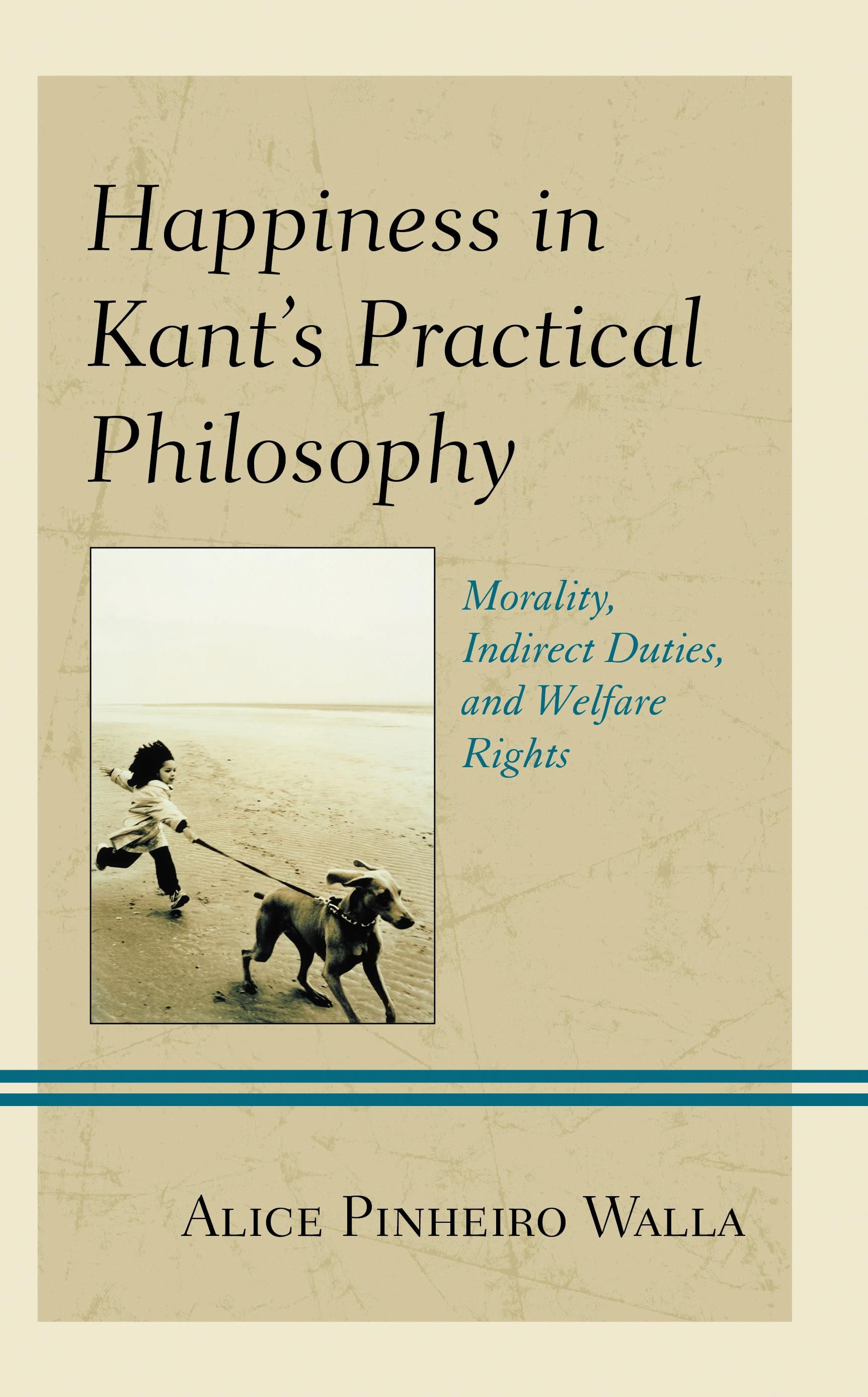
Happiness in Kant's Practical Philosophy: Morality, Indirect Duties, and Welfare Rights examines the role and normative implications of Kant's understanding of happiness for his moral, political, and legal philosophy. Kant's underlying assumptions about happiness are rarely overtly discussed or given much detail in his works. By bringing these assumptions to the fore, Alice Pinheiro Walla sheds light on some puzzling claims and on the scattered, sometimes contradictory remarks Kant makes about happiness. The book shows that happiness shapes or indirectly influences Kant's methodology and many of his conclusions, including his views on the nature of practical rationality, meta-ethics, the role of the state, and of political justification. The challenge with happiness is that it is impossible to know for certain what will make us happy, and what we take to be happiness changes over our lifetime. The book argues that Kant offers a distinctive strategy for dealing with this indeterminacy of happiness, one rooted in understanding our duties to ourselves and others. Happiness in Kant's Practical Philosophy provides a map of the areas in which the concept of happiness or considerations about the happiness of individuals appear in Kant's practical works and analyses the way they relate to central themes of his practical theory.
Payez facilement par carte, Klarna, Apple Pay ou Google Pay. Pas satisfait ? Vous avez toujours une garantie de remboursement de 14 jours. En savoir plus dans nos conditions. Si vous avez des questions, envoyez-nous un e-mail à hello@memmo.org.
Memmo facilite tes études, où que tu sois dans le monde. On rassemble tes manuels de cours et des outils d'étude intelligents au même endroit : résumés, quiz, podcasts et flashcards. Et il y a Ted, ton compagnon d'étude qui répond à toutes tes questions. Plus de 50 000 étudiants étudient déjà ici – conçu pour t'aider à apprendre plus vite et à moins stresser.