
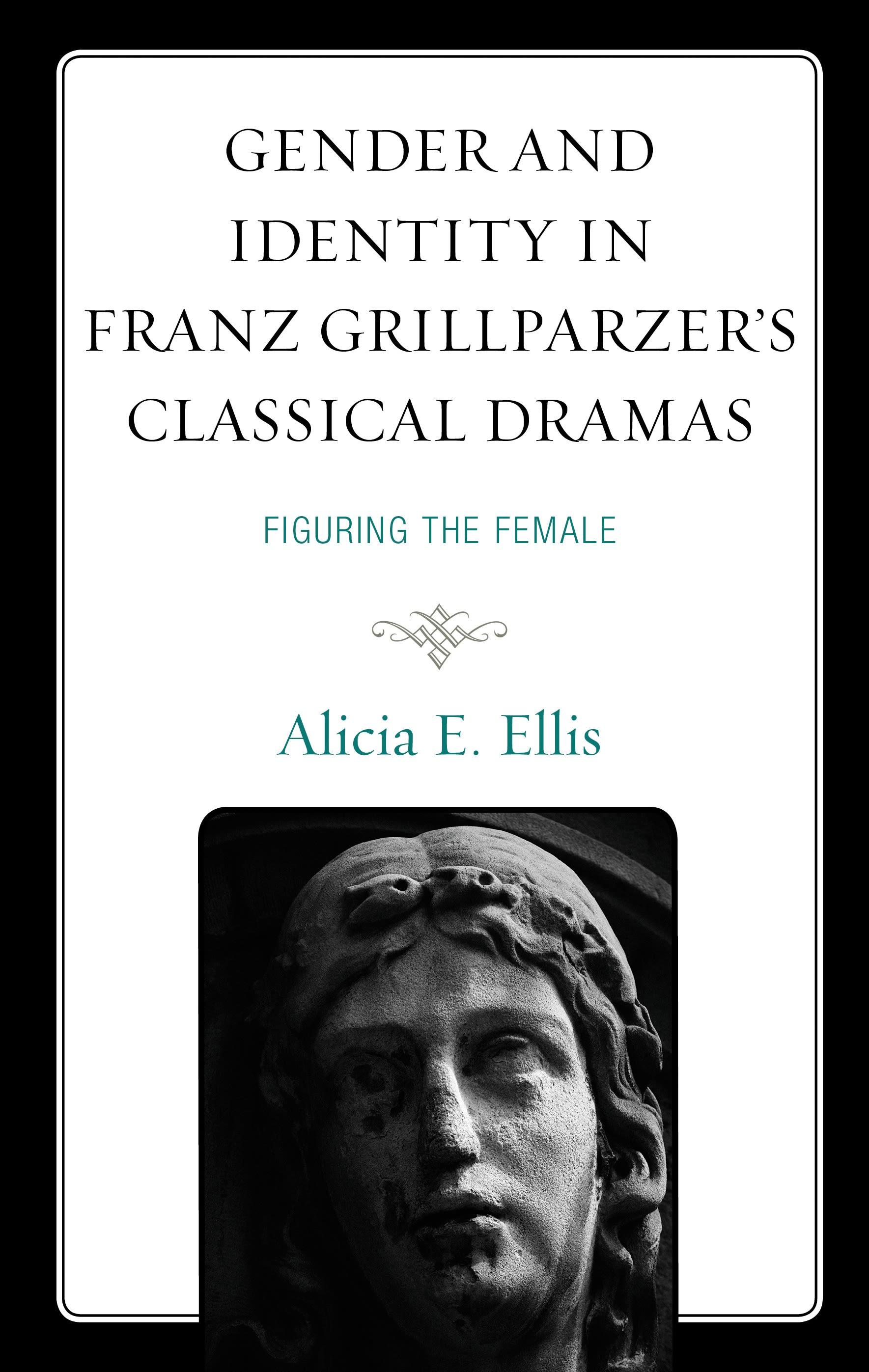
In this provocative work, Alicia E. Ellis provides readings of Franz Grillparzer’s dramas as proto-feminist formulations of female figures who refuse the gendered constraints of the ancient world. The revisionist perspectives of the tragedies recover a latent feminist impulse in the stories of Sappho, Medea, and Hero as identities marked by linguistic refusals. Activating new ideas of narrative experience, Ellis transports the figure of the female to the seat of language, testimony, and presence. Inflected by a taut impasse with a culture not produced to include female speech, Ellis shows how Grillparzer’s adaptations of classical materials offer a working theory about the ways in which new forms of language highlight female energy around autonomy and agency providing a corrective to previous cultural practices. A failure to comply with social and political norms demonstrates how the three assessed and then resolved exclusionary acts through rebellious discursive performances that frame how contested identities can be thought and reformulated. Readings in this study draw from the work of Sara Ahmed and Judith Butler on cultural framing and cultural translation in contemporary feminist critique. Ahmed and Butler direct attention to the language of the texts, what they mean, and how they produce that meaning.
Payez facilement par carte, Klarna, Apple Pay ou Google Pay. Pas satisfait ? Vous avez toujours une garantie de remboursement de 14 jours. En savoir plus dans nos conditions. Si vous avez des questions, envoyez-nous un e-mail à hello@memmo.org.
Memmo facilite tes études, où que tu sois dans le monde. On rassemble tes manuels de cours et des outils d'étude intelligents au même endroit : résumés, quiz, podcasts et flashcards. Et il y a Ted, ton compagnon d'étude qui répond à toutes tes questions. Plus de 50 000 étudiants étudient déjà ici – conçu pour t'aider à apprendre plus vite et à moins stresser.