
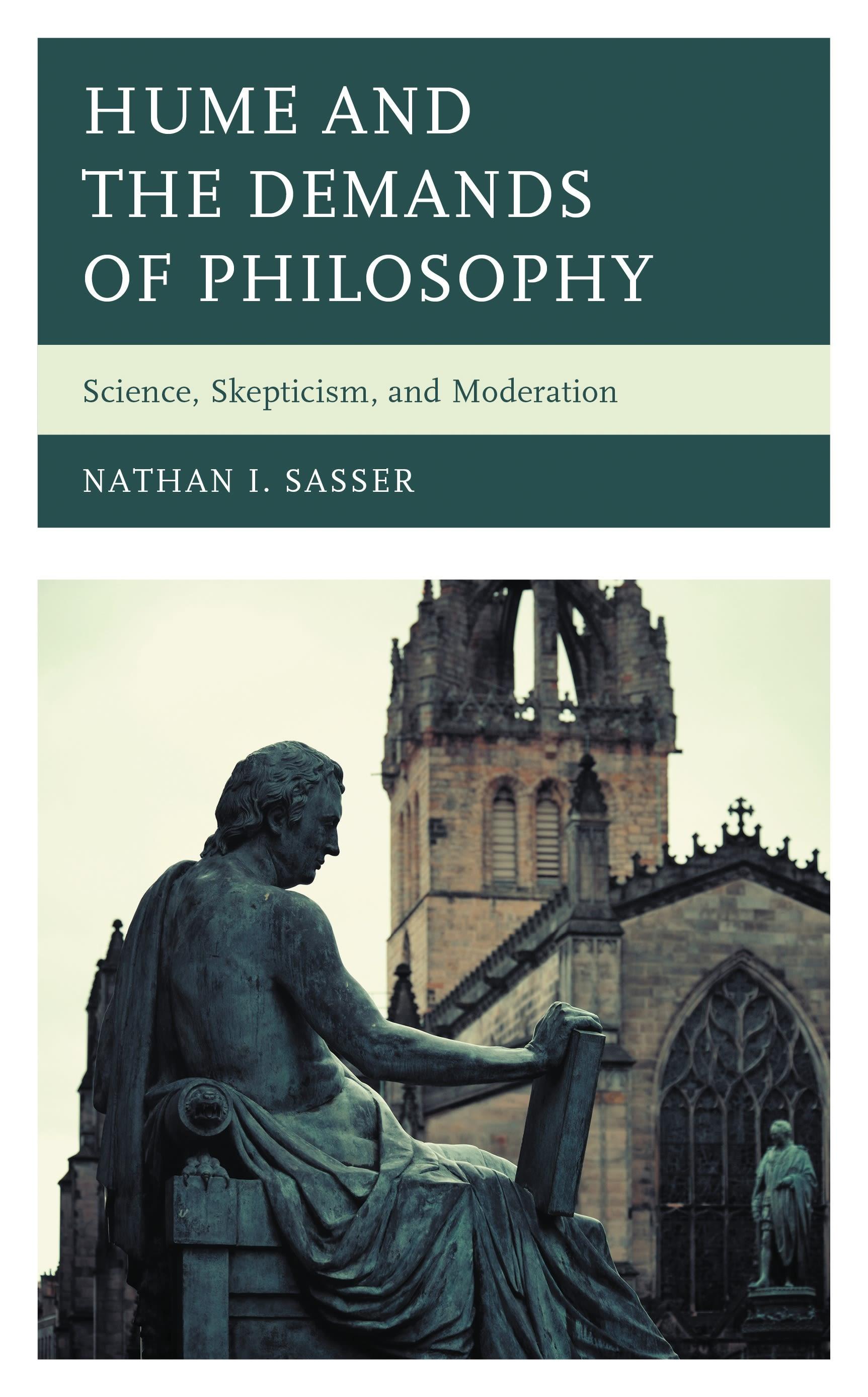
Hume and the Demands of Philosophy: Science, Skepticism, and Moderation offers a comprehensive interpretation of the relationship between Hume’s scientific project and his skepticism. Nathan I. Sasser argues that Hume is a radical epistemic skeptic who has purely practical reasons for retaining the beliefs that are essential for ordinary life and scientific research. On Sasser’s reading, the key to Hume’s epistemology is his conception of philosophy as a normative method of inquiry governing the special sciences. Philosophy approves of the mental faculties that produce reasoning and sensory beliefs. But sensory beliefs and the products of reason themselves face insuperable rational defeater arguments, and because they do, philosophy demands that we suspend these beliefs. Hume’s solution to this skeptical dilemma is to point out the fatal practical consequences of doing so. He advises us not to submit to the demands of philosophy when doing so is neither agreeable nor useful to ourselves or others. Hume’s moderate approach to philosophy recognizes that if the human mind is not created by a beneficent deity, then we must learn to live with the divergence between the epistemic demands of philosophy and the practical demands of life.
Payez facilement par carte, Klarna, Apple Pay ou Google Pay. Pas satisfait ? Vous avez toujours une garantie de remboursement de 14 jours. En savoir plus dans nos conditions. Si vous avez des questions, envoyez-nous un e-mail à hello@memmo.org.
Memmo facilite tes études, où que tu sois dans le monde. On rassemble tes manuels de cours et des outils d'étude intelligents au même endroit : résumés, quiz, podcasts et flashcards. Et il y a Ted, ton compagnon d'étude qui répond à toutes tes questions. Plus de 50 000 étudiants étudient déjà ici – conçu pour t'aider à apprendre plus vite et à moins stresser.