
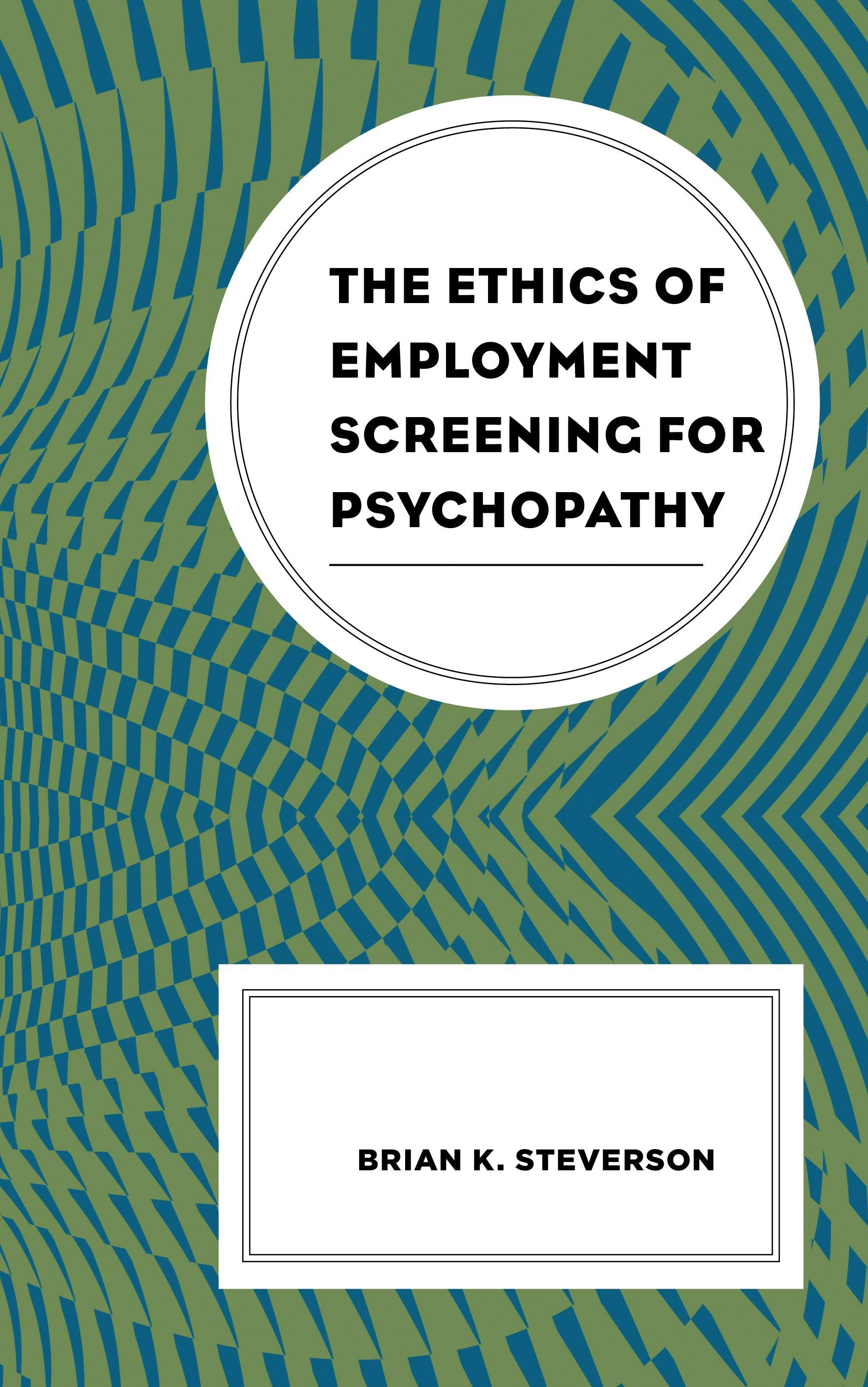
In 2006, Babiak and Hare alerted the public to the danger of “corporate psychopaths,” psychopathic individuals occupying positions of power in business organizations. Since then, academicians and the public media have advertised their presence, documented the harm they can cause, and issued a call to arms to identify corporate psychopaths and eliminate their presence in the workplace. Very little attention has been paid, however, to the ethics of such a “seek and destroy” mission. The Ethics of Employment Screening for Psychopathy argues that employment screening for psychopathy would be illegal and unethical. On legal grounds, Brian K Steverson argues that psychopathy would qualify as a protected disability under the Americans with Disabilities Act, and, hence, medical screening to identify potential corporate psychopaths would be in violation of the ADA. On ethical grounds, the case is made that such screening would violate a social commitment to equal opportunity, would constitute a morally unjustified violation of personal privacy, and would, in practice, not produce the intended benefits, while at the same time inflicting harm on the subjects of the screening.
Payez facilement par carte, Klarna, Apple Pay ou Google Pay. Pas satisfait ? Vous avez toujours une garantie de remboursement de 14 jours. En savoir plus dans nos conditions. Si vous avez des questions, envoyez-nous un e-mail à hello@memmo.org.
Memmo facilite tes études, où que tu sois dans le monde. On rassemble tes manuels de cours et des outils d'étude intelligents au même endroit : résumés, quiz, podcasts et flashcards. Et il y a Ted, ton compagnon d'étude qui répond à toutes tes questions. Plus de 50 000 étudiants étudient déjà ici – conçu pour t'aider à apprendre plus vite et à moins stresser.