
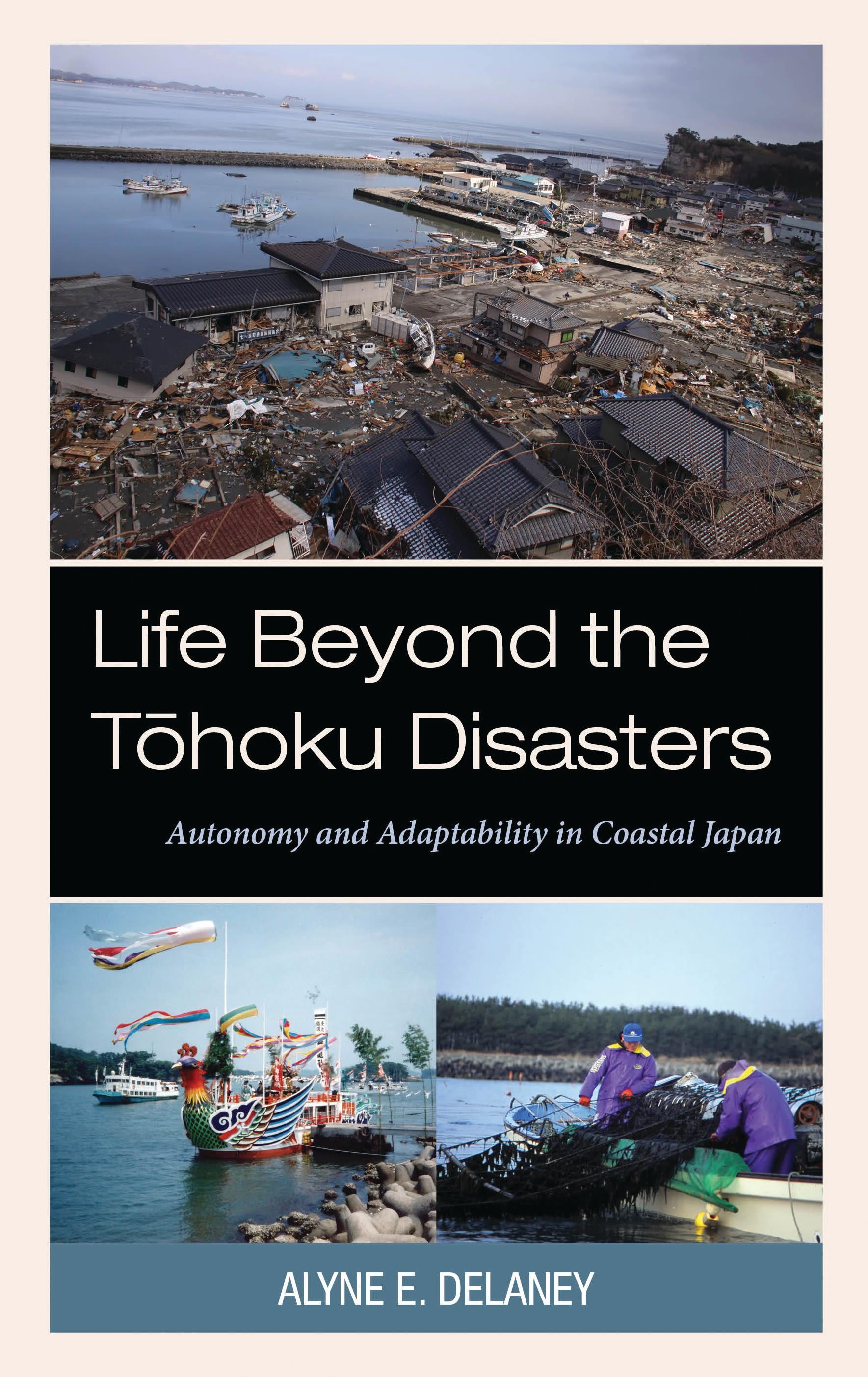
This book explores, in rich, ethnographic detail, the lives of a group of Japanese fishers and community residents in coastal Japan in the aftermath of the tsunami generated from the 2011 Great East Japan Earthquake. Focused on one town in Miyagi Prefecture near the epicenter of the 2011 quake, the text provides a singularly unique opportunity to hear, in their own voices, individuals’ reflections and experiences on life after the disasters while also drawing upon anthropological fieldwork data from many of the same individuals 10 years prior to the disaster.
Alyne E. Delaney skillfully contextualizes local culture and fishing livelihoods and lays out key impacts of disaster reconstruction policies on local society, illustrating the importance of people’s attachment to their places and seascapes, their connections with one another and shared traditions, and their sea-connected working ways of life.
Delaney reveals not only the heartbreak of the disasters and the strain placed on individuals and coastal communities when national policymakers fail to use good governance when rebuilding, but also provides insights into how some have managed to recover and learn the wisdom of knowing what real happiness is, offering readers an enlightening discourse of the potency of the local cultural traits of autonomy and adaptability.
Alyne E. Delaney skillfully contextualizes local culture and fishing livelihoods and lays out key impacts of disaster reconstruction policies on local society, illustrating the importance of people’s attachment to their places and seascapes, their connections with one another and shared traditions, and their sea-connected working ways of life.
Delaney reveals not only the heartbreak of the disasters and the strain placed on individuals and coastal communities when national policymakers fail to use good governance when rebuilding, but also provides insights into how some have managed to recover and learn the wisdom of knowing what real happiness is, offering readers an enlightening discourse of the potency of the local cultural traits of autonomy and adaptability.
Payez facilement par carte, Klarna, Apple Pay ou Google Pay. Pas satisfait ? Vous avez toujours une garantie de remboursement de 14 jours. En savoir plus dans nos conditions. Si vous avez des questions, envoyez-nous un e-mail à hello@memmo.org.
Memmo facilite tes études, où que tu sois dans le monde. On rassemble tes manuels de cours et des outils d'étude intelligents au même endroit : résumés, quiz, podcasts et flashcards. Et il y a Ted, ton compagnon d'étude qui répond à toutes tes questions. Plus de 50 000 étudiants étudient déjà ici – conçu pour t'aider à apprendre plus vite et à moins stresser.