
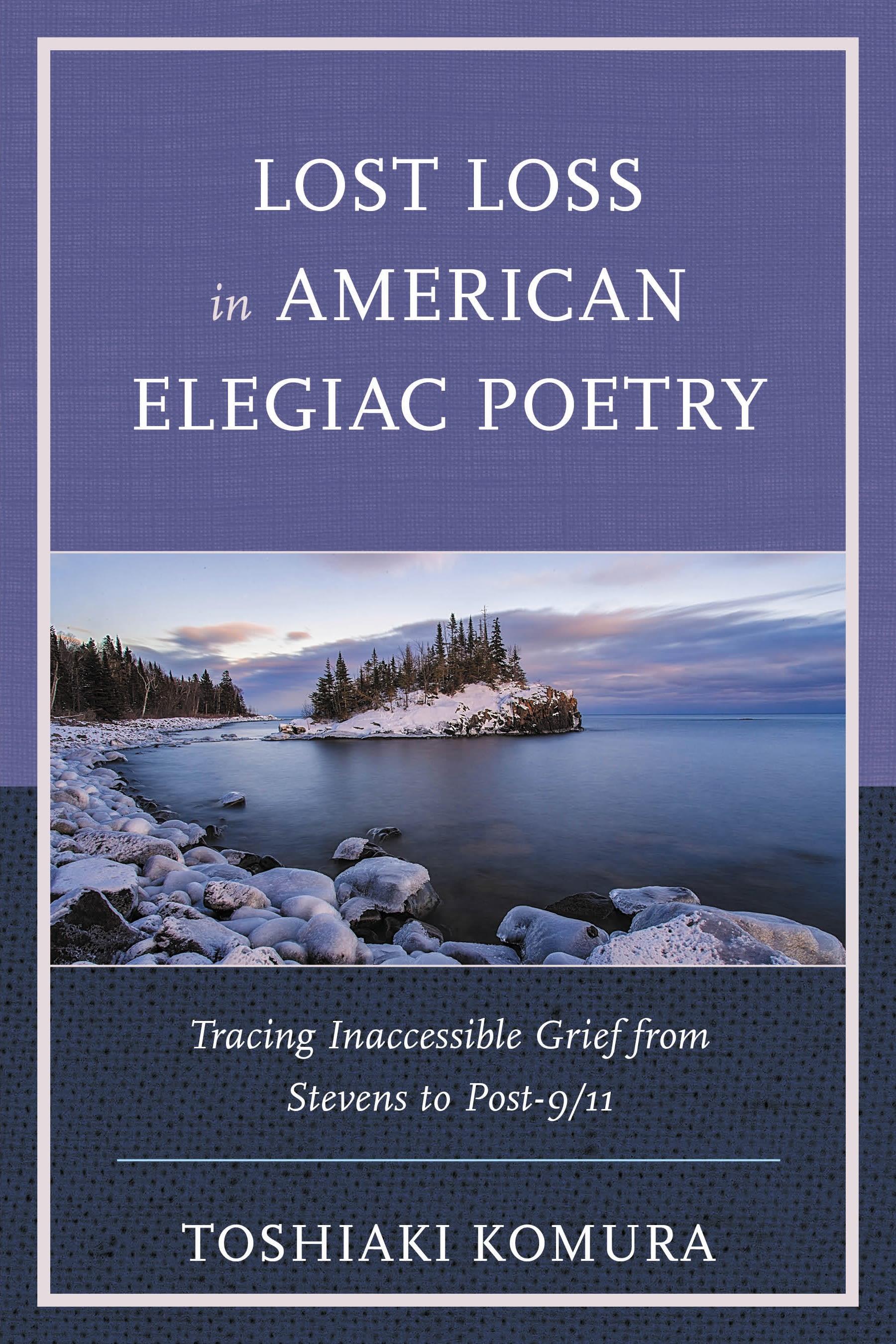
Lost Loss in American Elegiac Poetry: Tracing Inaccessible Grief from Stevens to Post-9/11 examines contemporary literary expressions of losses that are “lost” on us, inquiring what it means to “lose” loss and what happens when dispossessory experiences go unacknowledged or become inaccessible. Toshiaki Komura analyzes a range of elegiac poetry that does not neatly align with conventional assumptions about the genre, including Wallace Stevens’s “The Owl in the Sarcophagus,” Sylvia Plath’s last poems, Elizabeth Bishop’s Geography III, Sharon Olds’s The Dead and the Living, Louise Glück’s Averno, and poems written after 9/11. What these poems reveal at the intersection of personal and communal mourning are the mechanism of cognitive myth-making involved in denied grief and its social and ethical implications. Engaging with an assortment of philosophical, psychoanalytic, and psychological theories, Lost Loss in American Elegiac Poetry elucidates how poetry gives shape to the vague despondency of unrecognized loss and what kind of phantomic effects these equivocal grieving experiences may create.
Payez facilement par carte, Klarna, Apple Pay ou Google Pay. Pas satisfait ? Vous avez toujours une garantie de remboursement de 14 jours. En savoir plus dans nos conditions. Si vous avez des questions, envoyez-nous un e-mail à hello@memmo.org.
Memmo facilite tes études, où que tu sois dans le monde. On rassemble tes manuels de cours et des outils d'étude intelligents au même endroit : résumés, quiz, podcasts et flashcards. Et il y a Ted, ton compagnon d'étude qui répond à toutes tes questions. Plus de 50 000 étudiants étudient déjà ici – conçu pour t'aider à apprendre plus vite et à moins stresser.