
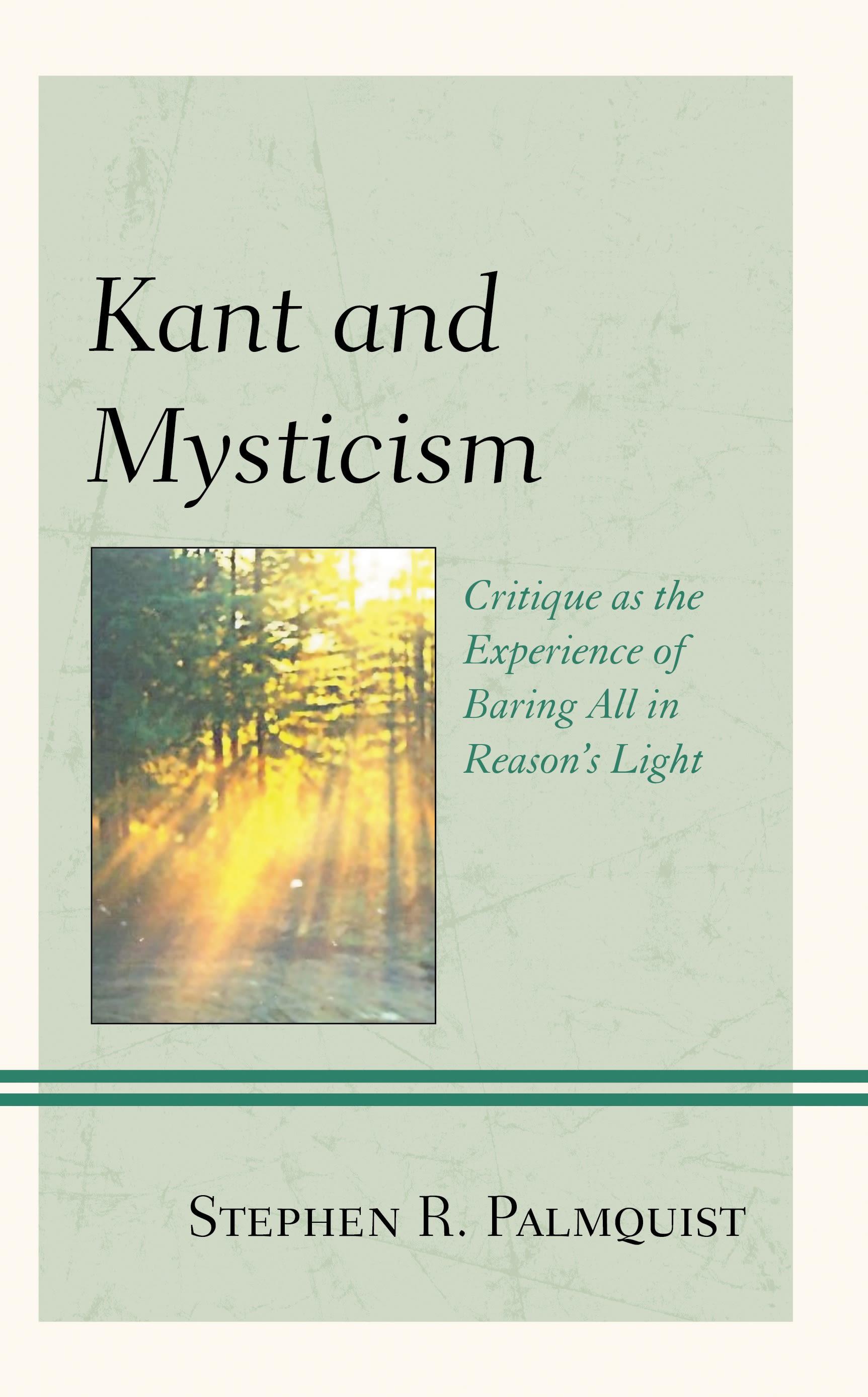
What is happening when someone has a mystical experience, such as “feeling at one with the universe” or “hearing God’s voice?” Does philosophy provide tools for assessing such claims? Which claims can be dismissed as delusions and which ones convey genuine truths that might be universally meaningful? Valuable insights into such pressing questions can be found in the writings of Immanuel Kant, though few philosophical commentators have appreciated the implications beyond his famous “Copernican hypothesis.” In Kant and Mysticism, Stephen R. Palmquist corrects this skewed view of Kant once and for all.
Beginning with a detailed analysis of Kant’s 1766 work Dreams of a Spirit-Seer, Palmquist demonstrates that in Dreams Kant first discovers and explains his plan to write a new, “critical” philosophy that will revolutionize metaphysics by laying bare the limits of human reason. Palmquist shows how the same metaphorical relationship—between reason’s dreams (metaphysics) and sensibility’s dreams (mysticism)—permeates Kant’s mature writings. Clarifying how Kant’s final (unfinished) book, Opus Postumum, completes this dual project, Palmquist explains how the “critical mysticism” entailed by Kant’s position has profound implications for contemporary understandings of religious and mystical experience, both by religious individuals and by philosophers seeking to understand such experiences.
Beginning with a detailed analysis of Kant’s 1766 work Dreams of a Spirit-Seer, Palmquist demonstrates that in Dreams Kant first discovers and explains his plan to write a new, “critical” philosophy that will revolutionize metaphysics by laying bare the limits of human reason. Palmquist shows how the same metaphorical relationship—between reason’s dreams (metaphysics) and sensibility’s dreams (mysticism)—permeates Kant’s mature writings. Clarifying how Kant’s final (unfinished) book, Opus Postumum, completes this dual project, Palmquist explains how the “critical mysticism” entailed by Kant’s position has profound implications for contemporary understandings of religious and mystical experience, both by religious individuals and by philosophers seeking to understand such experiences.
Payez facilement par carte, Klarna, Apple Pay ou Google Pay. Pas satisfait ? Vous avez toujours une garantie de remboursement de 14 jours. En savoir plus dans nos conditions. Si vous avez des questions, envoyez-nous un e-mail à hello@memmo.org.
Memmo facilite tes études, où que tu sois dans le monde. On rassemble tes manuels de cours et des outils d'étude intelligents au même endroit : résumés, quiz, podcasts et flashcards. Et il y a Ted, ton compagnon d'étude qui répond à toutes tes questions. Plus de 50 000 étudiants étudient déjà ici – conçu pour t'aider à apprendre plus vite et à moins stresser.