
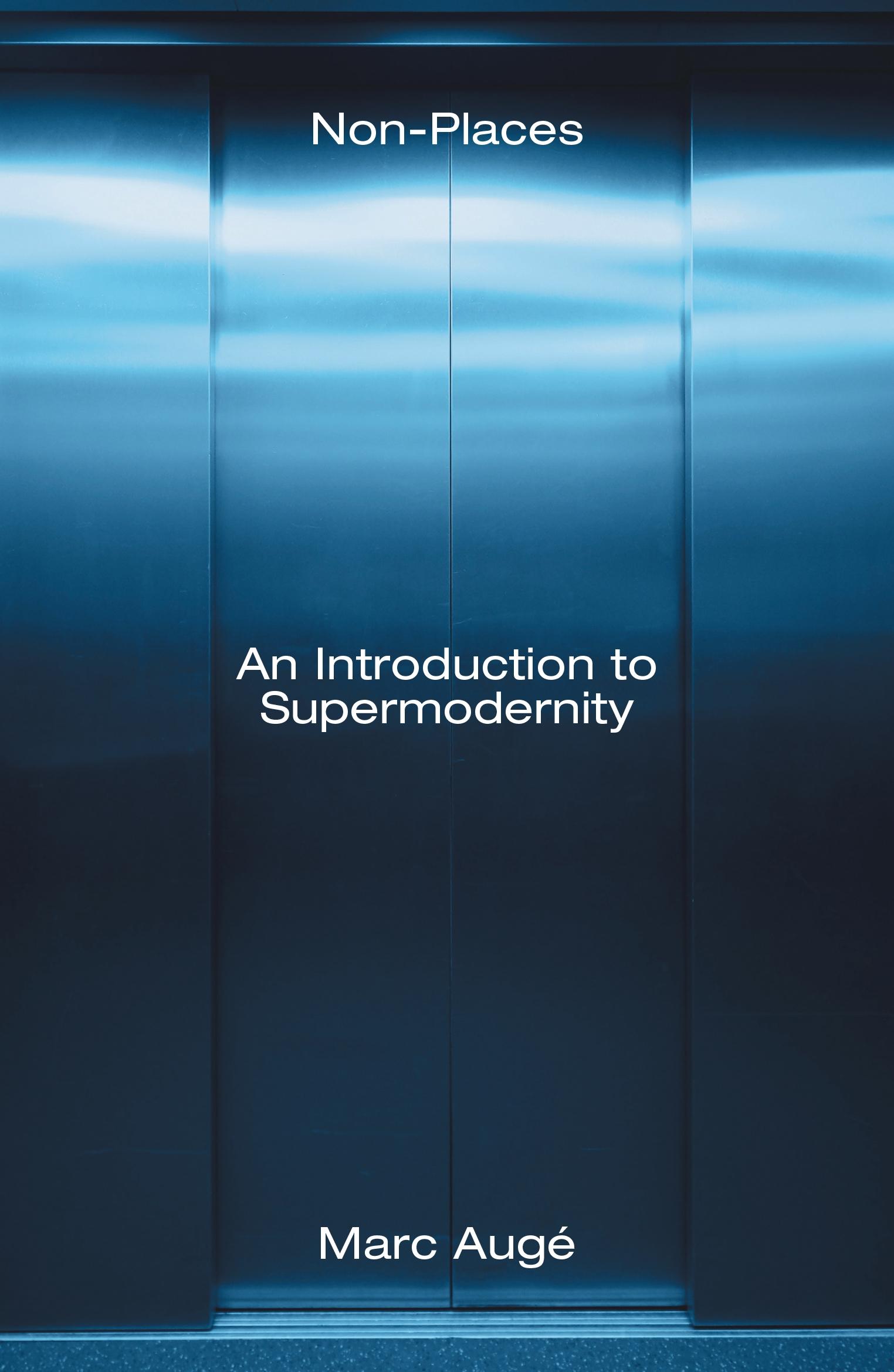
An ever-increasing proportion of our lives is spent in supermarkets, airports and hotels, on motorways or in front of TVs, computer and cash machines. This invasion of the world by what Marc Auge calls 'non-space' results in a profound alteration of awareness: something we perceive, but only in a partial and incoherent manner. Auge uses the concept of 'supermodernity' to describe the logic of these late-capitalist phenomena - a logic of excessive information and excessive space. In this fascinating and lucid essay he seeks to establish and intellectual armature for an anthropology of supermodernity. Starting with an attempt to disentangle anthropology from history, Auge goes on to map the distinction between place, encrusted with historical monuments and creative social life, and non-place, to which individuals are connected in a uniform manner and where no organic social life is possible.
Unlike Baudelairean modernity, where old and new are interwoven, supermodernity is self-contained: from the motorway or aircraft, local or exotic particularities are presented two-dimensionally as a sort of theme-park spectacle. Auge does not suggest that supermodernity is all-encompassing: place still exist outside non-place and tend to reconstitute themselves inside it. But he argues powerfully that we are in transit through non-place for more and more of our time, as if between immense parentheses, and concludes that this new form of solitude should become the subject of an anthropology of its own.
Unlike Baudelairean modernity, where old and new are interwoven, supermodernity is self-contained: from the motorway or aircraft, local or exotic particularities are presented two-dimensionally as a sort of theme-park spectacle. Auge does not suggest that supermodernity is all-encompassing: place still exist outside non-place and tend to reconstitute themselves inside it. But he argues powerfully that we are in transit through non-place for more and more of our time, as if between immense parentheses, and concludes that this new form of solitude should become the subject of an anthropology of its own.
Payez facilement par carte, Klarna, Apple Pay ou Google Pay. Pas satisfait ? Vous avez toujours une garantie de remboursement de 14 jours. En savoir plus dans nos conditions. Si vous avez des questions, envoyez-nous un e-mail à hello@memmo.org.
Memmo facilite tes études, où que tu sois dans le monde. On rassemble tes manuels de cours et des outils d'étude intelligents au même endroit : résumés, quiz, podcasts et flashcards. Et il y a Ted, ton compagnon d'étude qui répond à toutes tes questions. Plus de 50 000 étudiants étudient déjà ici – conçu pour t'aider à apprendre plus vite et à moins stresser.
Tu pourrais aussi aimer
Acheter le livre0