
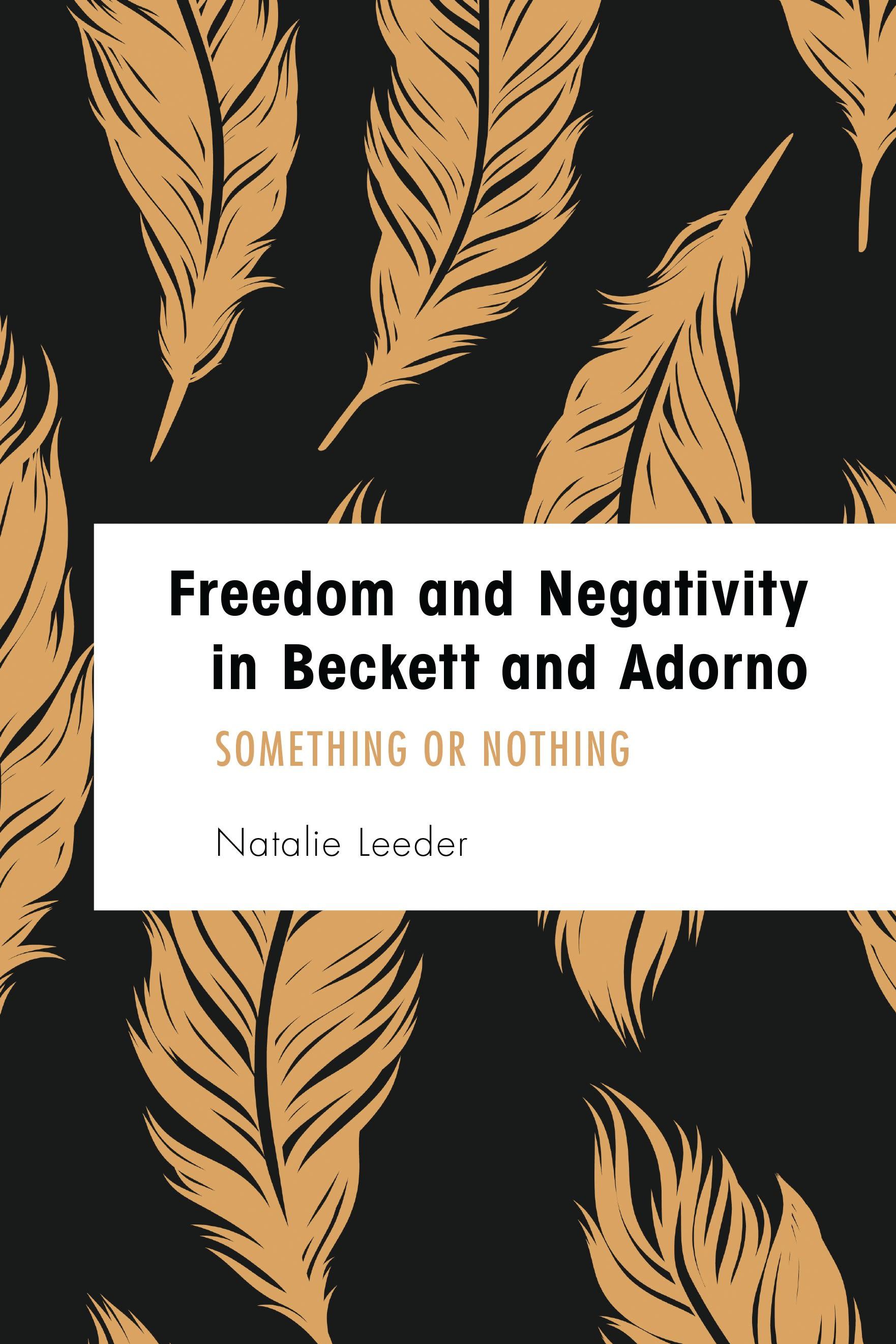
Since his notorious 1961 lecture, 'Trying to Understand Endgame', Theodor W. Adorno's name has been frequently coupled with that of Samuel Beckett. This book offers a radical reappraisal of the intellectual affinities between these two figures, whose paths crossed all too fleetingly. Specifically the book argues for a preoccupation with the concept of freedom in Beckett's works - one which situates him as a profoundly radical and even political writer. Adorno's own more explicit reconceptualization of freedom and its scarcity in modernity offers a unique lens through which to examine the way Beckett's works preserve a minimal space of freedom that acts in opposition to an unfree social totality. While acknowledging both the biographical encounters between Adorno and Beckett and the influence Beckett's writings had on Adorno's aesthetics, Natalie Leeder goes further to establish a dialogue between their intellectual positions, working with a range of texts from both writers and seeking insight in Adorno's less familiar works, as well as his magnum opera, Aesthetic Theory and Negative Dialectics.
Payez facilement par carte, Klarna, Apple Pay ou Google Pay. Pas satisfait ? Vous avez toujours une garantie de remboursement de 14 jours. En savoir plus dans nos conditions. Si vous avez des questions, envoyez-nous un e-mail à hello@memmo.org.
Memmo facilite tes études, où que tu sois dans le monde. On rassemble tes manuels de cours et des outils d'étude intelligents au même endroit : résumés, quiz, podcasts et flashcards. Et il y a Ted, ton compagnon d'étude qui répond à toutes tes questions. Plus de 50 000 étudiants étudient déjà ici – conçu pour t'aider à apprendre plus vite et à moins stresser.