
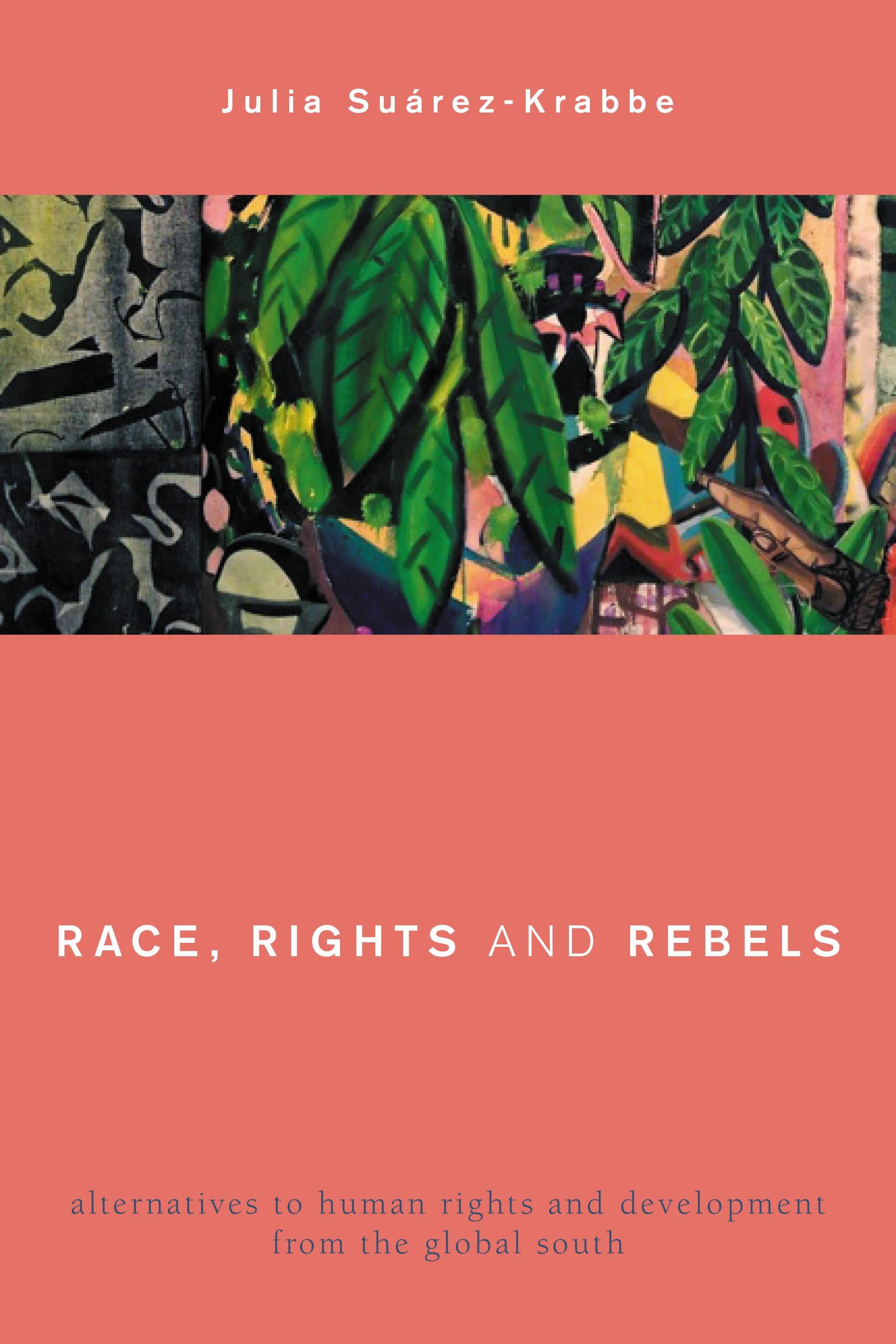
Human rights and development cannot be understood separately. They are historically connected by the idea of race, and have evolved concomitantly with the latter. As the tools of race, human rights and development have been forged in the effort to legitimize and maintain coloniality.
While rights and development can be used as tools to achieve protection, specific political goals, or access in the dominant society, they limit radical social change because they are framed within a specific dominant ontology, and sustain a particular political horizon. This book provides an original analysis of the evolution of the overlapping histories of human rights and development through the prism of coloniality, and offers an important contribution to the search for alternatives to these through the lens of indigenous and other southern theories and epistemologies. In this effort, Julia Suárez-Krabbe brings new perspectives to discussions pertaining to the decolonial perspective, race, knowledge, pluriversality, mestizaje and identity while elaborating on original philosophical concepts that can ground alternatives to human rights and development.
While rights and development can be used as tools to achieve protection, specific political goals, or access in the dominant society, they limit radical social change because they are framed within a specific dominant ontology, and sustain a particular political horizon. This book provides an original analysis of the evolution of the overlapping histories of human rights and development through the prism of coloniality, and offers an important contribution to the search for alternatives to these through the lens of indigenous and other southern theories and epistemologies. In this effort, Julia Suárez-Krabbe brings new perspectives to discussions pertaining to the decolonial perspective, race, knowledge, pluriversality, mestizaje and identity while elaborating on original philosophical concepts that can ground alternatives to human rights and development.
Pages: 224
Catégorie: Kultur-, Genus- & Postkoloniala studier
e-ISBN: 9781783484621
Poids d'expédition: 1.2 kg
Expédié sous: 1-2 jours
Payez facilement par carte, Klarna, Apple Pay ou Google Pay. Pas satisfait ? Vous avez toujours une garantie de remboursement de 14 jours. En savoir plus dans nos conditions. Si vous avez des questions, envoyez-nous un e-mail à hello@memmo.org.
Memmo facilite tes études, où que tu sois dans le monde. On rassemble tes manuels de cours et des outils d'étude intelligents au même endroit : résumés, quiz, podcasts et flashcards. Et il y a Ted, ton compagnon d'étude qui répond à toutes tes questions. Plus de 50 000 étudiants étudient déjà ici – conçu pour t'aider à apprendre plus vite et à moins stresser.