
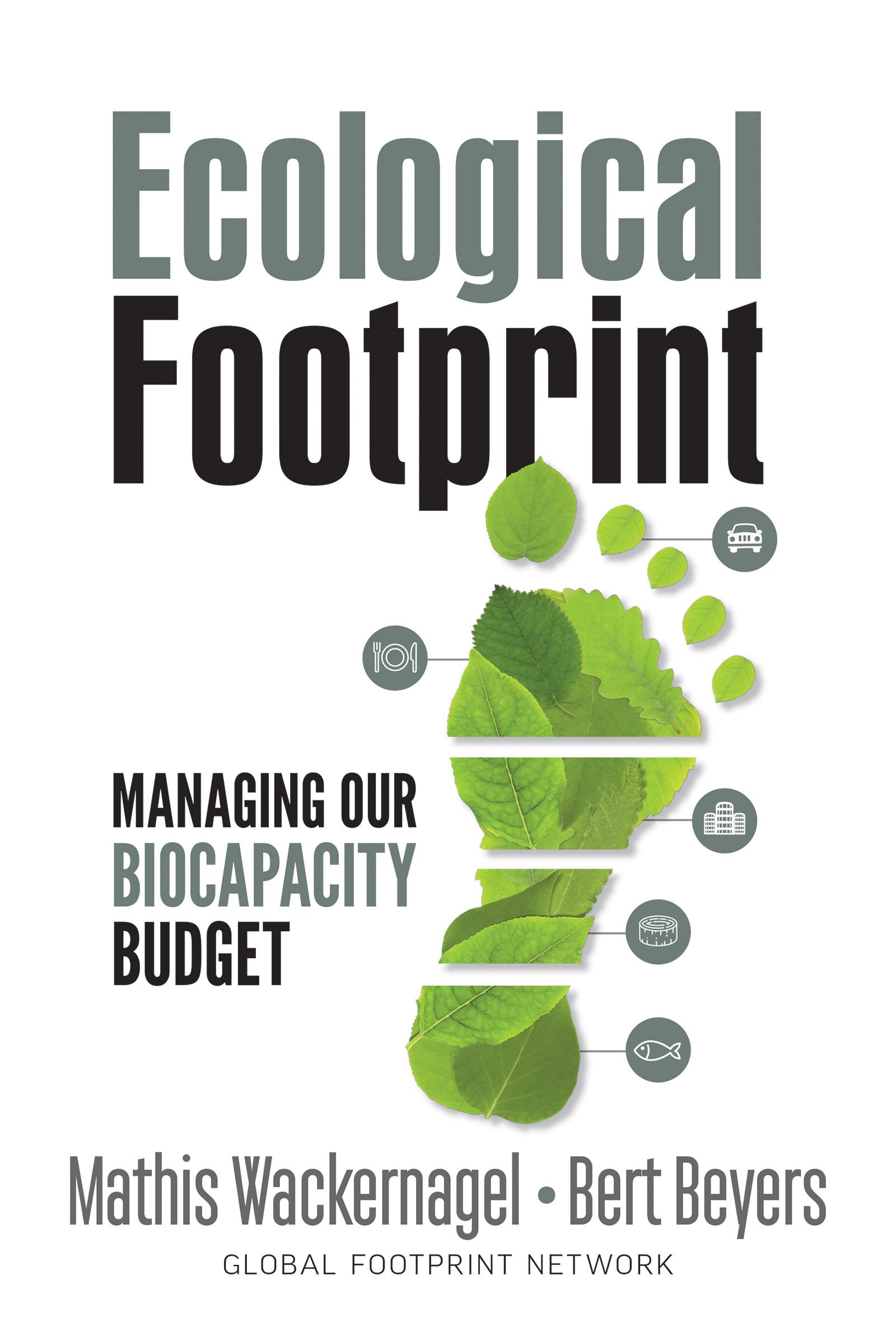
The only metric that tracks how much nature we have – and how much nature we use
Ecological Footprint accounting, first introduced in the 1990s and continuously developed, continues to be the only metric that compares overall human demand on nature with what our planet can renew — its biocapacity — and distils this into one number: how many Earths we use.
Our economy is running a Bernie Madoff-style Ponzi scheme with the planet. We use future resources to run the present, using more than Earth can replenish. Like any such scheme, this works for a limited time, followed by a crash.
Avoiding ecological bankruptcy requires rigorous resource accounting — a challenging task, but doable with the right tools.
Ecological Footprint provides a complete introduction, covering:
- Footprint and biocapacity accounting
- Data and key findings for nations
- Worldwide examples including businesses, cities, and countries
- Strategies for creating regenerative economies
Whether you’re a student, business leader, future-oriented city planner, economist, or have an abiding interest in humanity’s future, Footprint and biocapacity are key parameters to be reckoned with and Ecological Footprint is your essential guide.
AWARDS
- SILVER | 2020 Eric Zencey Prize
- SILVER | 2019 Nautilus Book Awards: Ecology & Environment
- FINALIST | 2019 Foreword INDIES: Ecology & Environment
Payez facilement par carte, Klarna, Apple Pay ou Google Pay. Pas satisfait ? Vous avez toujours une garantie de remboursement de 14 jours. En savoir plus dans nos conditions. Si vous avez des questions, envoyez-nous un e-mail à hello@memmo.org.
Memmo facilite tes études, où que tu sois dans le monde. On rassemble tes manuels de cours et des outils d'étude intelligents au même endroit : résumés, quiz, podcasts et flashcards. Et il y a Ted, ton compagnon d'étude qui répond à toutes tes questions. Plus de 50 000 étudiants étudient déjà ici – conçu pour t'aider à apprendre plus vite et à moins stresser.