
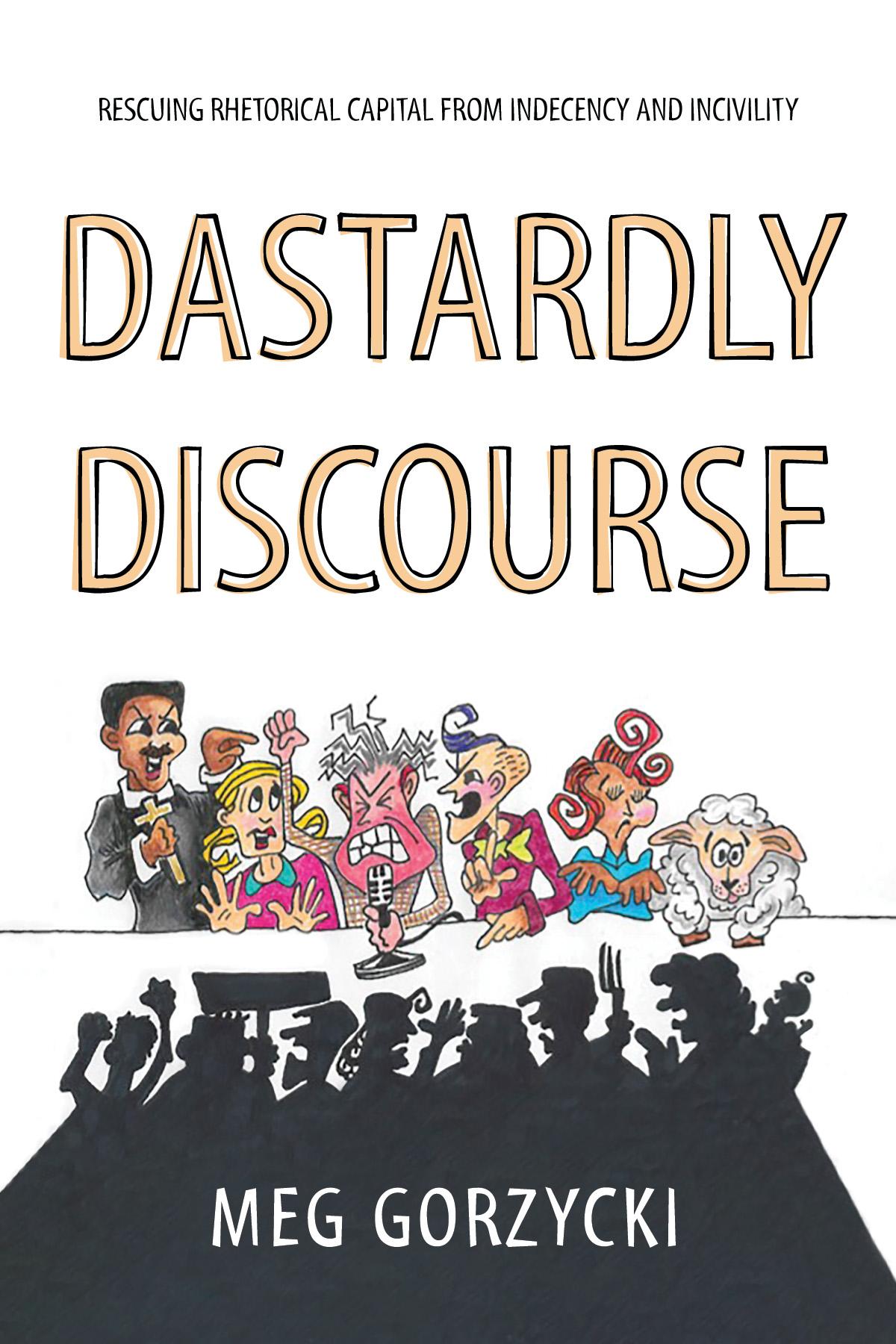
Screaming at the television, compulsively firing off tart little tweets, and blogging until we are blue; these signal that we are feeling the effects of dastardly discourse. We live in a world where people feel entitled to use words to hurt, exploit, and publicly degrade humanity. We daily consume rhetoric that makes a mockery of decency and civility. Leaders of key social institutions, including government, news media, and religious organizations, who are supposed to be role models of reasoned and compassionate communication are often the ones with the loudest lies and the hardest hate.
We can change the channel. We can unplug. We can even encourage others to do the same. We may not do so, however, until we grasp what is fundamentally at risk in our current norms of communication. Nasty words are just the tip of the dastardly discourse iceberg. What lies beneath is a steady flow of propaganda that aims to control our personal narratives. This book is about that propaganda, the importance of owning our own narratives, and improving our own rhetorical capital--the ability to analyze and evaluate information--for the sake of sustaining human dignity, decency, and civility.
Payez facilement par carte, Klarna, Apple Pay ou Google Pay. Pas satisfait ? Vous avez toujours une garantie de remboursement de 14 jours. En savoir plus dans nos conditions. Si vous avez des questions, envoyez-nous un e-mail à hello@memmo.org.
Memmo facilite tes études, où que tu sois dans le monde. On rassemble tes manuels de cours et des outils d'étude intelligents au même endroit : résumés, quiz, podcasts et flashcards. Et il y a Ted, ton compagnon d'étude qui répond à toutes tes questions. Plus de 50 000 étudiants étudient déjà ici – conçu pour t'aider à apprendre plus vite et à moins stresser.
Tu pourrais aussi aimer
Acheter le livre0