
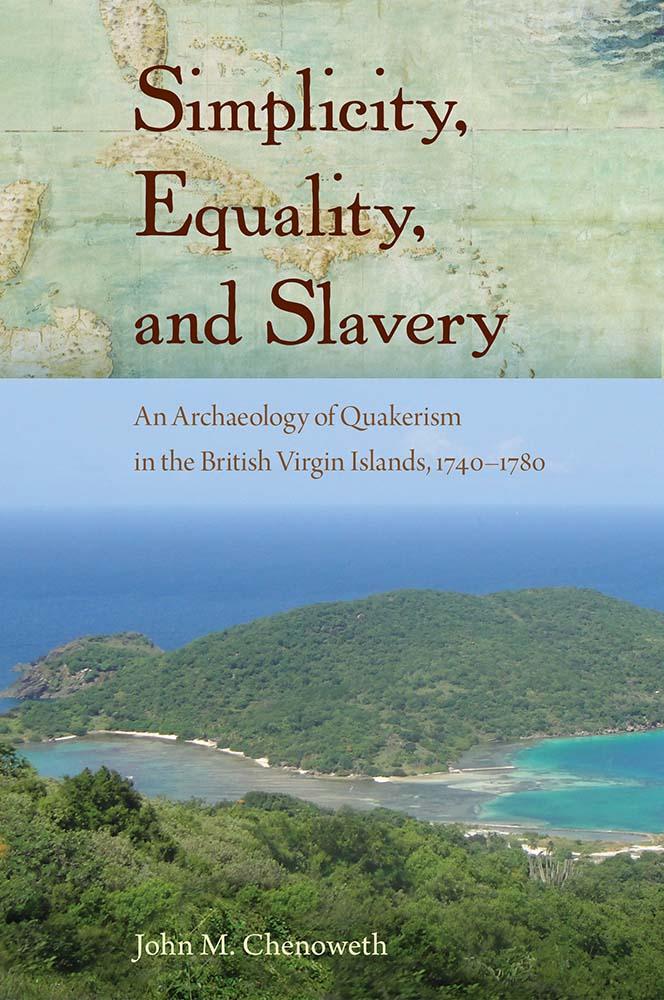
Inspired by the Quaker ideals of simplicity, equality, and peace, a group of white planters formed a community in the British Virgin Islands during the eighteenth century. Yet they lived in a slave society, and nearly all their members held enslaved people. In this book, John Chenoweth examines how the community navigated the contradictions of Quakerism and plantation ownership.
Using archaeological and archival information, Chenoweth reveals how a web of connections led to the community's establishment, how Quaker religious practices intersected with other aspects of daily life in the Caribbean, and how these practices were altered to fit a slavery-based economy and society. He also examines how dissent and schism eventually brought about the end of the community after just one generation. This is a fascinating study of the ways religious ideals can be interpreted in everyday practice to adapt to different local contexts.
A volume in the Florida Museum of Natural History: Ripley P. Bullen SeriesPayez facilement par carte, Klarna, Apple Pay ou Google Pay. Pas satisfait ? Vous avez toujours une garantie de remboursement de 14 jours. En savoir plus dans nos conditions. Si vous avez des questions, envoyez-nous un e-mail à hello@memmo.org.
Memmo facilite tes études, où que tu sois dans le monde. On rassemble tes manuels de cours et des outils d'étude intelligents au même endroit : résumés, quiz, podcasts et flashcards. Et il y a Ted, ton compagnon d'étude qui répond à toutes tes questions. Plus de 50 000 étudiants étudient déjà ici – conçu pour t'aider à apprendre plus vite et à moins stresser.