
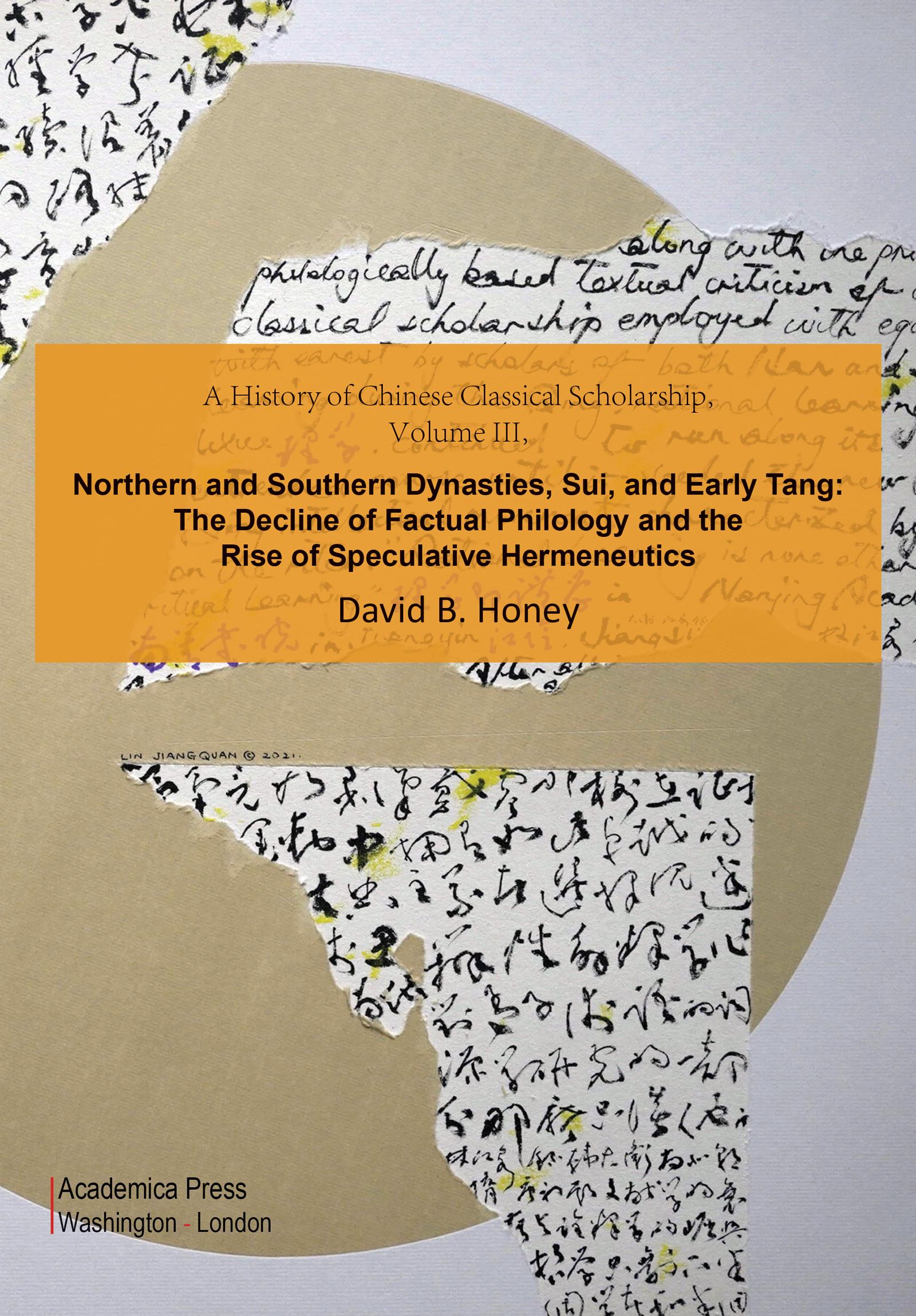
This exciting third volume of David B. Honey’s comprehensive history of Chinese thought begins with China after nomadic invaders overran the northern regions of the historic kingdom. The differentiation between scholarly emphases—northern focus on the traditional pedagogical commentary, and southern classical school’s more innovative commentary—led to an emphasis on the interpretation of the overall message of a text, not a close reading of smaller sections. As Honey explains, serious attention to the phonological nature of Chinese characters also began during in this long era. Based on the work of earlier Sui dynasty classicists, Kong Yinga and his committee produced the Correct Meaning commentary to the Five Classics during the early Tang Dynasty, which is still largely normative today. The book demonstrates that the brooding presence of Zheng Xuan, the great textual critic from the Eastern Han dynasty, still exerted enormous influence during this period, as his ritualized approach to the classics inspired intellectual followers to expand on his work or impelled opponents to break off in new directions.
Payez facilement par carte, Klarna, Apple Pay ou Google Pay. Pas satisfait ? Vous avez toujours une garantie de remboursement de 14 jours. En savoir plus dans nos conditions. Si vous avez des questions, envoyez-nous un e-mail à hello@memmo.org.
Memmo facilite tes études, où que tu sois dans le monde. On rassemble tes manuels de cours et des outils d'étude intelligents au même endroit : résumés, quiz, podcasts et flashcards. Et il y a Ted, ton compagnon d'étude qui répond à toutes tes questions. Plus de 50 000 étudiants étudient déjà ici – conçu pour t'aider à apprendre plus vite et à moins stresser.
Tu pourrais aussi aimer
Acheter le livre0