
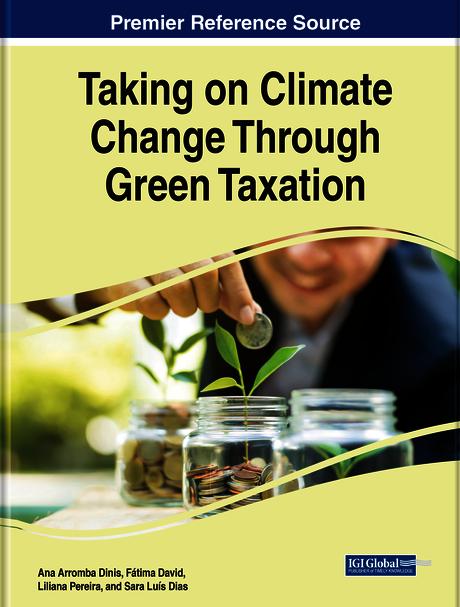
Since environmental issues entered the global agenda, governments have directing businesses towards sustainability. The term "sustainability" is commonly associated with a firm’s environmental attentiveness, although there are two other areas in which companies should be sustainable: social, to achieve an adequate relationship and fluid communication with their stakeholders, and economic, to accomplish transparent management and correct distribution of the wealth that is generated. The growing demand for corporate transparency encourages the publication of sustainability or corporate social responsibility (CSR) reports, providing information of a non-financial nature concerning the social and environmental dimensions of business activity, namely relations with local communities, the protection of human rights, corporate governance, and adaptation to climate change. Being no exception, and following the European agenda for sustainability development, several governments have implemented tax measures that promote sustainable consumption and production patterns to reduce energy dependence on external sources and efficiently achieve international targets, among others, within a context of neutrality of the tax system. This is where environmental tax incentives come in, underlying a paradigm shift. The relationship between tax policy and environmental policy is seen by governments as an opportunity to adjust the tax system to a more energy-efficient economy in the use of resources. For instance, green tax incentives motivate investors to invest in green properties, encouraging them to opt for greener solutions. That is, tax incentives should be viewed as a tool to empower taxpayers to change actions that may reduce carbon emissions and contribute to sustainability. Taking on Climate Change Through Green Taxation provides applied research on increasing green tax literacy to build the capacity of companies to adopt sustainable practices in favor of environmental protection, to raise companies' awareness of sustainable reporting, and to increase international discussion on the issue of environmental taxation and its impact on more sustainable business decisions. Led by business experts with over 20 years of experience, this book will cover topics such as corporate social responsibility, environmental tax management, and sustainable tax policy. This resource is ideal for policymakers, corporate governance and social responsibility professionals, and researchers interested in taxation, accounting, auditing, finance, corporate governance, and corporate social responsibility.
Pages: 419
Catégorie: Redovisning, Finans & Investering
e-ISBN: 9781668485958
Poids d'expédition: 1.2 kg
Expédié sous: 1-2 jours
Payez facilement par carte, Klarna, Apple Pay ou Google Pay. Pas satisfait ? Vous avez toujours une garantie de remboursement de 14 jours. En savoir plus dans nos conditions. Si vous avez des questions, envoyez-nous un e-mail à hello@memmo.org.
Memmo facilite tes études, où que tu sois dans le monde. On rassemble tes manuels de cours et des outils d'étude intelligents au même endroit : résumés, quiz, podcasts et flashcards. Et il y a Ted, ton compagnon d'étude qui répond à toutes tes questions. Plus de 50 000 étudiants étudient déjà ici – conçu pour t'aider à apprendre plus vite et à moins stresser.
Tu pourrais aussi aimer
Acheter le livre0