
Choice 2025 Outstanding Academic Title
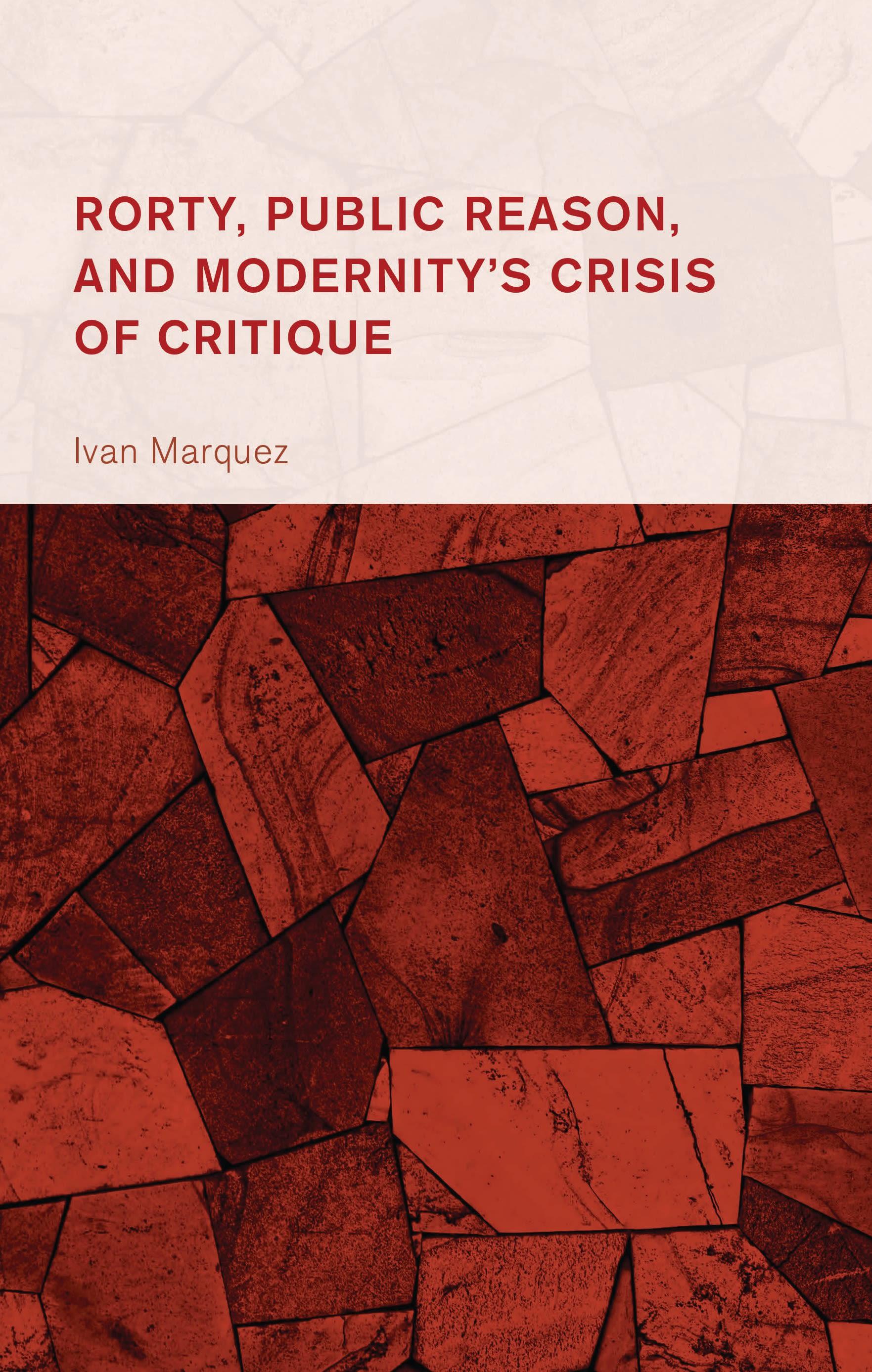
Starting with Richard Rorty's critique of reason, this book discusses modernity's legitimation crisis in political discourse. Rorty, Public Reason, and Modernity's Crisis of Critique explores the contemporary crisis of rational justification and collective will-formation in our current political institutions and the public sphere, arguing that there is an array of untapped rational resources that should be deployed to justify social, political, and economic views, agendas, and programs. It also identifies limits to the powers of public reason to generate rational agreement and collective will-formation. Using a critical analysis of Rorty's non-foundationalist perspective as a vehicle to study modernity's project of rational critique, Ivan Marquez highlights both the strengths and promise and the weaknesses and limitations of liberal and democratic societies-especially within pluralistic socio-cultural contexts-and some possible ways to work within this space of possibilities and constraints. Ultimately, this book can be seen as elaborating a political epistemology view that argues for a redefinition of philosophy and defends a type of post-metaphysical culture.
Starting with Richard Rorty's critique of reason, this book discusses modernity's legitimation crisis in political discourse. Rorty, Public Reason, and Modernity's Crisis of Critique explores the contemporary crisis of rational justification and collective will-formation in our current political institutions and the public sphere, arguing that there is an array of untapped rational resources that should be deployed to justify social, political, and economic views, agendas, and programs. It also identifies limits to the powers of public reason to generate rational agreement and collective will-formation. Using a critical analysis of Rorty's non-foundationalist perspective as a vehicle to study modernity's project of rational critique, Ivan Marquez highlights both the strengths and promise and the weaknesses and limitations of liberal and democratic societies-especially within pluralistic socio-cultural contexts-and some possible ways to work within this space of possibilities and constraints. Ultimately, this book can be seen as elaborating a political epistemology view that argues for a redefinition of philosophy and defends a type of post-metaphysical culture.
Payez facilement par carte, Klarna, Apple Pay ou Google Pay. Pas satisfait ? Vous avez toujours une garantie de remboursement de 14 jours. En savoir plus dans nos conditions. Si vous avez des questions, envoyez-nous un e-mail à hello@memmo.org.
Memmo facilite tes études, où que tu sois dans le monde. On rassemble tes manuels de cours et des outils d'étude intelligents au même endroit : résumés, quiz, podcasts et flashcards. Et il y a Ted, ton compagnon d'étude qui répond à toutes tes questions. Plus de 50 000 étudiants étudient déjà ici – conçu pour t'aider à apprendre plus vite et à moins stresser.