
Choice 2025 Outstanding Academic Title
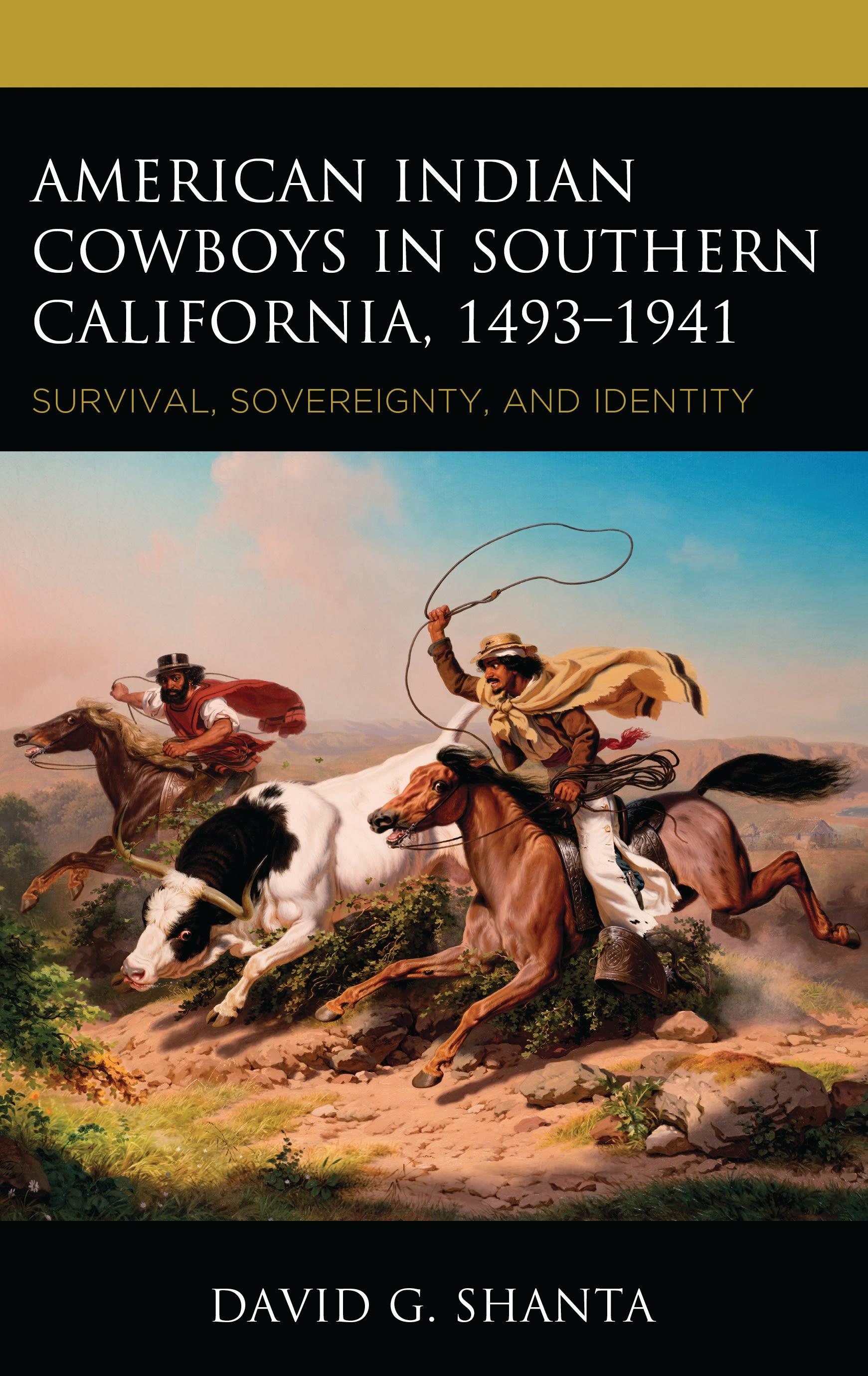
In 1769–1770, Spanish Catholic missionaries, soldiers, and Cochimí Indians of Baja California launched The Sacred Expedition to Alta California, to claim it for God and King. Domesticated animals like horses and cattle provided food security in the continual expansion of the Spanish empire. The rapidly increasing herds consumed traditional sources of Indigenous foods, medicines, tools, and weapons and soon outstripped the ability of soldiers and priests to control them. This reality forced the Spanish to train trusted Indian converts in the art of cowboying and cattle ranching. In this book, David G. Shanta provides new insights into the impact of horses and cattle on the Indigenous peoples of the Spanish Borderlands after early colonization. American Indian cowboys formed the backbone of Spanish mission economies, the international trade in cowhides and tallow that created the Mexican ranchero class known as Californios, and later on American cattle operations. Shanta shows that California Native peoples first adopted cowboying and cattle ranching, as a survival strategy. They acquired and ran their own herds, forming a new, California Indian economy based on cattle. This new economy reinforced their demands for sovereignty over their ancestral lands. This book affirms the innovative nature of American Indian Cowboys and brings to light how they survived, gained recognition of their sovereign status, and incorporated cowboying and cattle ranching into family traditions and tribal identities.
In 1769–1770, Spanish Catholic missionaries, soldiers, and Cochimí Indians of Baja California launched The Sacred Expedition to Alta California, to claim it for God and King. Domesticated animals like horses and cattle provided food security in the continual expansion of the Spanish empire. The rapidly increasing herds consumed traditional sources of Indigenous foods, medicines, tools, and weapons and soon outstripped the ability of soldiers and priests to control them. This reality forced the Spanish to train trusted Indian converts in the art of cowboying and cattle ranching. In this book, David G. Shanta provides new insights into the impact of horses and cattle on the Indigenous peoples of the Spanish Borderlands after early colonization. American Indian cowboys formed the backbone of Spanish mission economies, the international trade in cowhides and tallow that created the Mexican ranchero class known as Californios, and later on American cattle operations. Shanta shows that California Native peoples first adopted cowboying and cattle ranching, as a survival strategy. They acquired and ran their own herds, forming a new, California Indian economy based on cattle. This new economy reinforced their demands for sovereignty over their ancestral lands. This book affirms the innovative nature of American Indian Cowboys and brings to light how they survived, gained recognition of their sovereign status, and incorporated cowboying and cattle ranching into family traditions and tribal identities.
Payez facilement par carte, Klarna, Apple Pay ou Google Pay. Pas satisfait ? Vous avez toujours une garantie de remboursement de 14 jours. En savoir plus dans nos conditions. Si vous avez des questions, envoyez-nous un e-mail à hello@memmo.org.
Memmo facilite tes études, où que tu sois dans le monde. On rassemble tes manuels de cours et des outils d'étude intelligents au même endroit : résumés, quiz, podcasts et flashcards. Et il y a Ted, ton compagnon d'étude qui répond à toutes tes questions. Plus de 50 000 étudiants étudient déjà ici – conçu pour t'aider à apprendre plus vite et à moins stresser.