
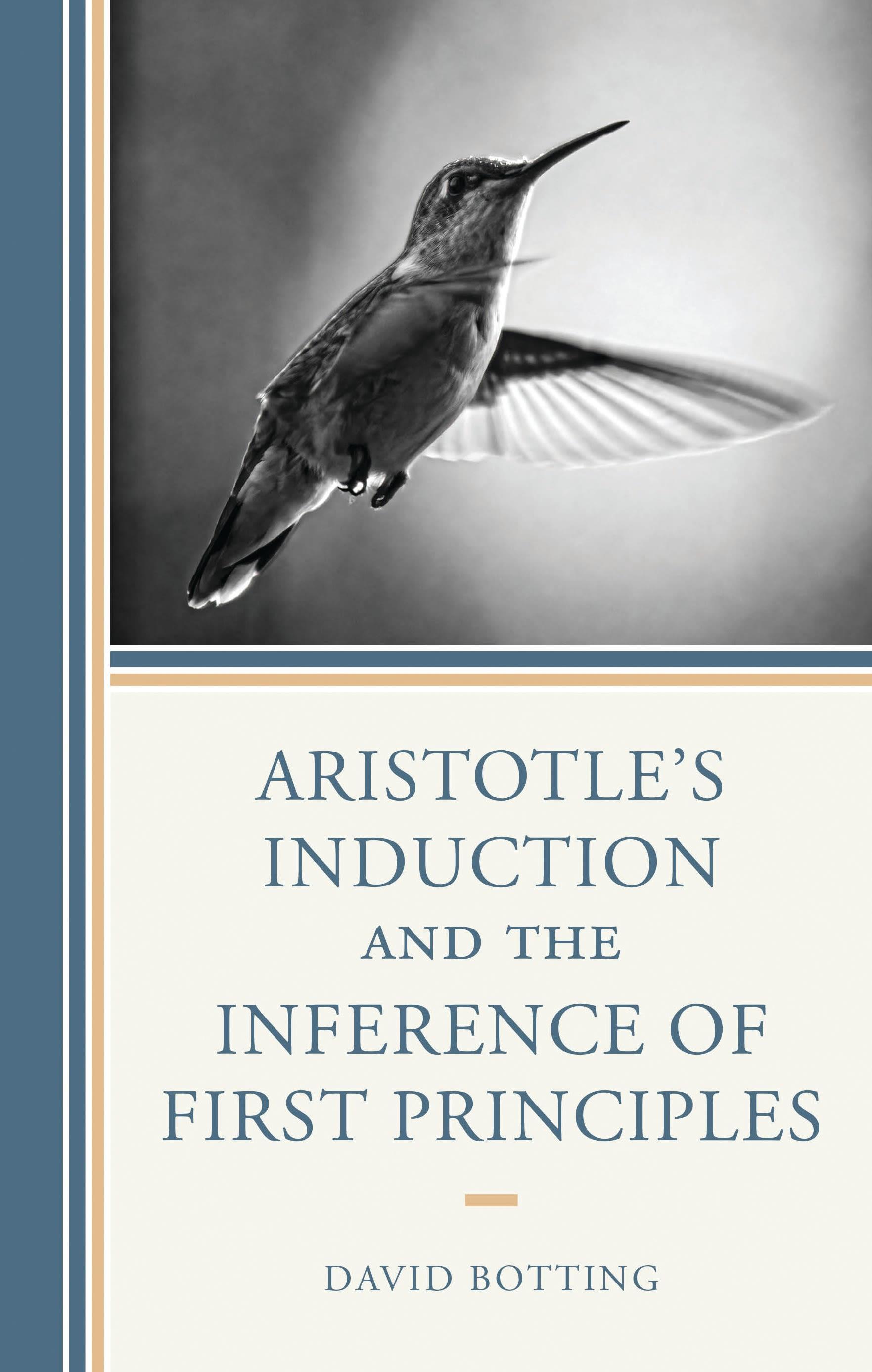
Aristotle's Induction and the Inference of First Principles observes that Aristotle’s reputation as an empiricist has come under threat. In the Posterior Analytics, Aristotle puts forward a foundationalist theory of scientific knowledge that problematizes knowing the science's first principles empirically. Aristotle states that we know the principles through induction but also that induction is inadequate for knowing essences. In response to this tension, rationalists claim that Aristotle equivocates between two conceptions of induction, enumerative and intuitive:"intuitive induction" being that which grasps the principles and provides direct knowledge of essences, “enumerative induction” being that which is said to be inadequate. Empiricists preserve an empiricist road to first principles by downplaying enumerative induction’s role.
In order to preserve Aristotle's avowals that it is by induction that we know the principles while avoiding the rationalist alternative, David Botting provides an inferentialist account of induction, showing how the content of a first principle is inferentially known but not its necessity, which must be proved by constructing the first principle from simpler elements. A world governed by natural necessities and not just brute regularities is knowable through the senses and without resorting to super-empirical acts or faculties of intuition.
In order to preserve Aristotle's avowals that it is by induction that we know the principles while avoiding the rationalist alternative, David Botting provides an inferentialist account of induction, showing how the content of a first principle is inferentially known but not its necessity, which must be proved by constructing the first principle from simpler elements. A world governed by natural necessities and not just brute regularities is knowable through the senses and without resorting to super-empirical acts or faculties of intuition.
Payez facilement par carte, Klarna, Apple Pay ou Google Pay. Pas satisfait ? Vous avez toujours une garantie de remboursement de 14 jours. En savoir plus dans nos conditions. Si vous avez des questions, envoyez-nous un e-mail à hello@memmo.org.
Memmo facilite tes études, où que tu sois dans le monde. On rassemble tes manuels de cours et des outils d'étude intelligents au même endroit : résumés, quiz, podcasts et flashcards. Et il y a Ted, ton compagnon d'étude qui répond à toutes tes questions. Plus de 50 000 étudiants étudient déjà ici – conçu pour t'aider à apprendre plus vite et à moins stresser.