
Since its establishment in Europe, capitalism has witnessed a shift in global politico-economic power dynamics. Some nations ascended to dominate the world economy, while others fell from prominence to poverty. This transformation was particularly evident in the case of China and India, which were once central to the pre-modern global economy with their respective empires but transitioned into peripheries of the capitalist world trade structure. These regions experienced occupation, colonization, de-industrialization, and resource exploitation for the industrialization and modernization of core countries, primarily Western Europe and the United States.
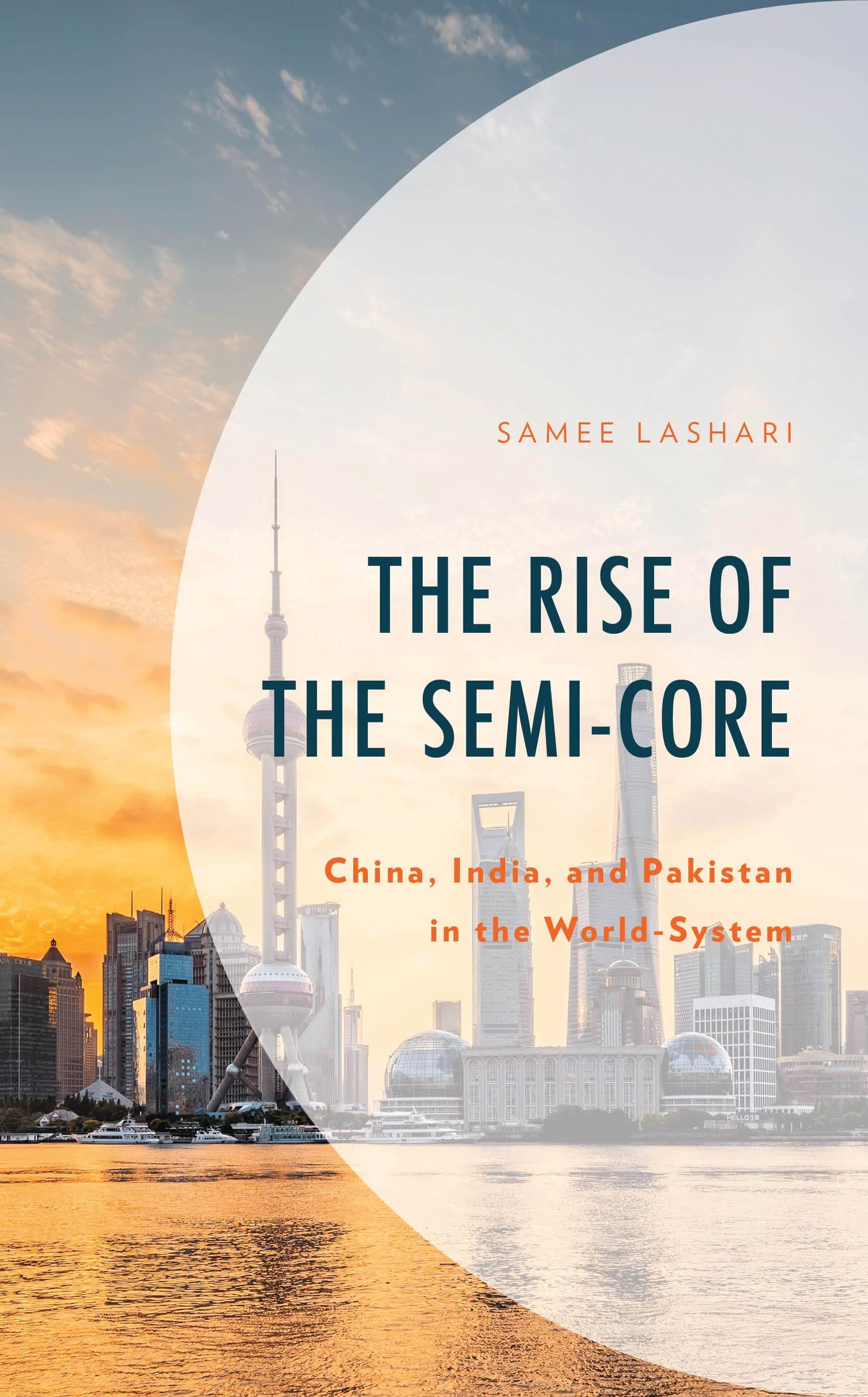
The Rise of the Semi-Core: China, India, and Pakistan in the World-System delves into modern capitalist history, unraveling the increasing complexities that give rise to the emergence of a semi-core. It argues that nations must possess both economic and strategic national powers to maintain their hierarchical position within the capitalist world-system. Western powers of the eighteenth century, equipped with superior military capabilities, expanded their dominion globally, including in China and India, converting these regions into peripheries that served the core's interests in terms of raw material provision, product consumption, and facilitating capital flow. Once decolonized, China and India initially adopted a statist model of development, nevertheless these nations could grow only when they aligned with core interests.
The Rise of the Semi-Core: China, India, and Pakistan in the World-System delves into modern capitalist history, unraveling the increasing complexities that give rise to the emergence of a semi-core. It argues that nations must possess both economic and strategic national powers to maintain their hierarchical position within the capitalist world-system. Western powers of the eighteenth century, equipped with superior military capabilities, expanded their dominion globally, including in China and India, converting these regions into peripheries that served the core's interests in terms of raw material provision, product consumption, and facilitating capital flow. Once decolonized, China and India initially adopted a statist model of development, nevertheless these nations could grow only when they aligned with core interests.
Payez facilement par carte, Klarna, Apple Pay ou Google Pay. Pas satisfait ? Vous avez toujours une garantie de remboursement de 14 jours. En savoir plus dans nos conditions. Si vous avez des questions, envoyez-nous un e-mail à hello@memmo.org.
Memmo facilite tes études, où que tu sois dans le monde. On rassemble tes manuels de cours et des outils d'étude intelligents au même endroit : résumés, quiz, podcasts et flashcards. Et il y a Ted, ton compagnon d'étude qui répond à toutes tes questions. Plus de 50 000 étudiants étudient déjà ici – conçu pour t'aider à apprendre plus vite et à moins stresser.