
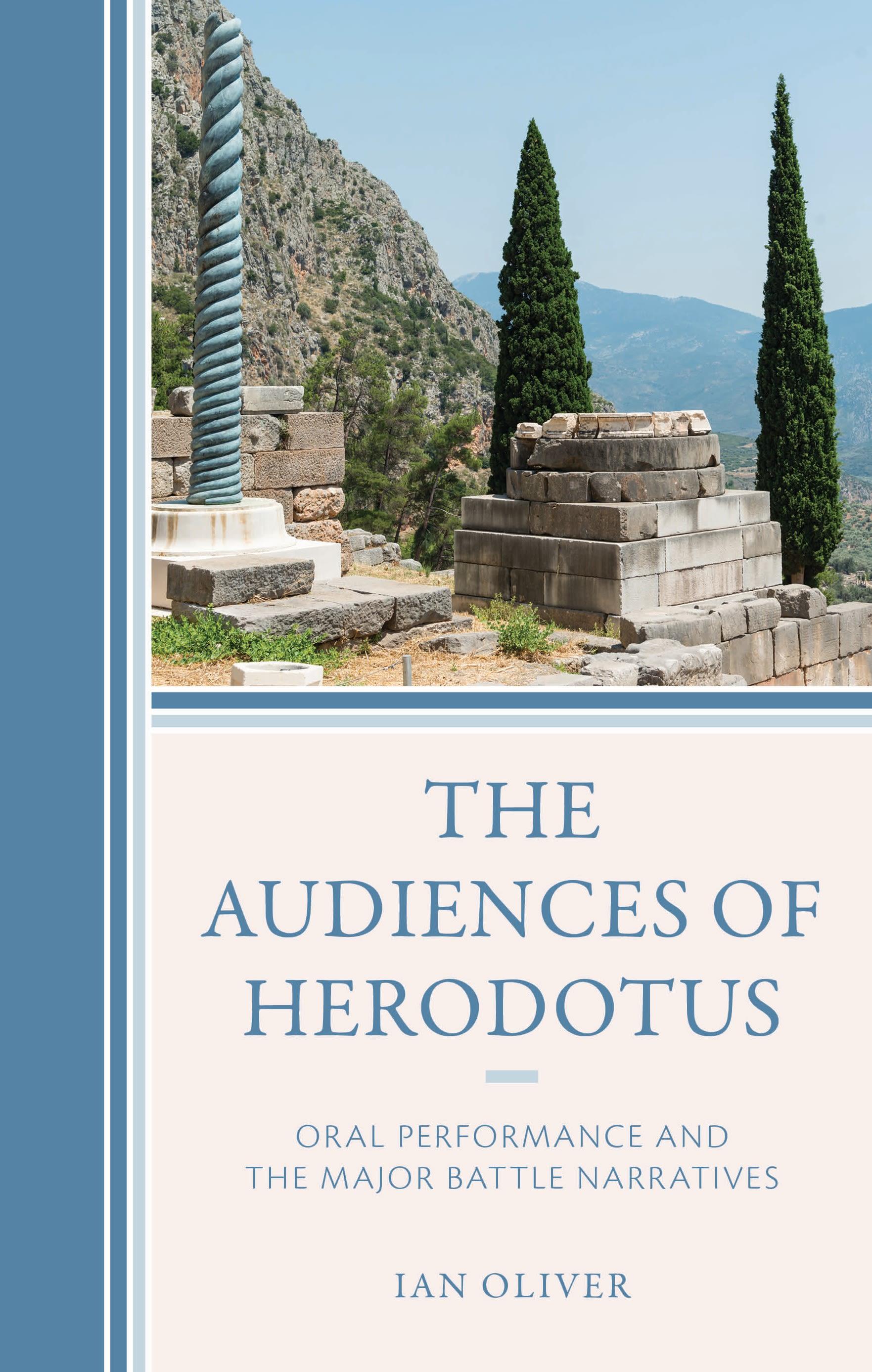
By recognizing the pervasive influence that Herodotus’s career as an oral performer had on his composition of the Histories, The Audiences of Herodotus: Oral Performance and the Battle Narratives argues that the Histories’ versions of the three most important battles in the Persian Wars—the battles of Thermopylae, Salamis, and Plataea—persistently and disproportionately advance the interests, biases, and political agendas of distinct audiences in the mid-fifth century, well before Herodotus assembled his famous work of history as it survives to us. The Salamis and Plataea narratives reflect a mid-century audience of Athenians and their allies; the Thermopylae narrative reflects an Amphictyonic audience gathered at the Pythian Festival. Ian Oliver concludes that, as a participant in a culture of wisdom performance (epideixis), Herodotus originally composed short, ideologically motivated performance pieces that he intended to promote tendentious reinterpretations of these momentous events, then relied on these narratives when he composed his final text: the unitary Histories.
Payez facilement par carte, Klarna, Apple Pay ou Google Pay. Pas satisfait ? Vous avez toujours une garantie de remboursement de 14 jours. En savoir plus dans nos conditions. Si vous avez des questions, envoyez-nous un e-mail à hello@memmo.org.
Memmo facilite tes études, où que tu sois dans le monde. On rassemble tes manuels de cours et des outils d'étude intelligents au même endroit : résumés, quiz, podcasts et flashcards. Et il y a Ted, ton compagnon d'étude qui répond à toutes tes questions. Plus de 50 000 étudiants étudient déjà ici – conçu pour t'aider à apprendre plus vite et à moins stresser.